Multi-Cat Households
The Best All-in-One Smart Cat Ecosystem (2026)
No brand sells a feeder, a fountain and a litter box that all answer to the same app. Here is what each one actually covers, and which two to combine.
Affiliate disclosure: we earn a commission if you buy through our links, at no extra cost to you. It never changes which product we rank first — here is how we're funded.
Everyone in this category says they tested twenty litter boxes. We have not tested any, and we say so. What we do instead: compile the published specs, read the manuals, and do the arithmetic on what this gear costs to run and how it behaves once there is more than one cat using it. Every spec is linked to the document it came from. Prices are checked daily — last verified October 19, 2026. Here is exactly how we pick.
Quick picks
Ranked on the published specs and the arithmetic below. Tap any row to jump to the full write-up. We have not tested these — here is exactly how we pick.
| # | Product | Best for | Score | Price |
|---|---|---|---|---|
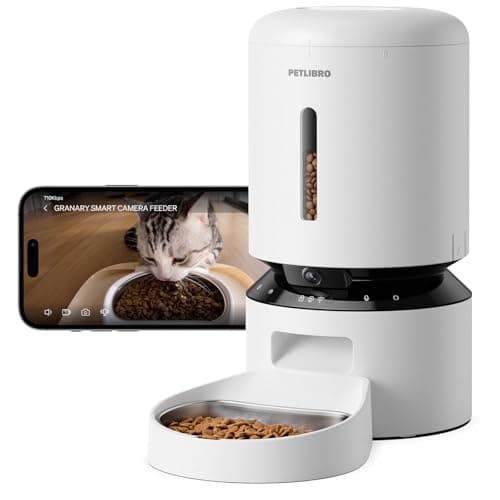
| 1 | PETLIBRO Granary Camera Feeder Publishes its portion size in milliliters rather than vague 'portions', which is the only way to work out whether a hopper will actually last a weekend. | Watching what actually happens at the bowl | 7.8 | |
| 2 | 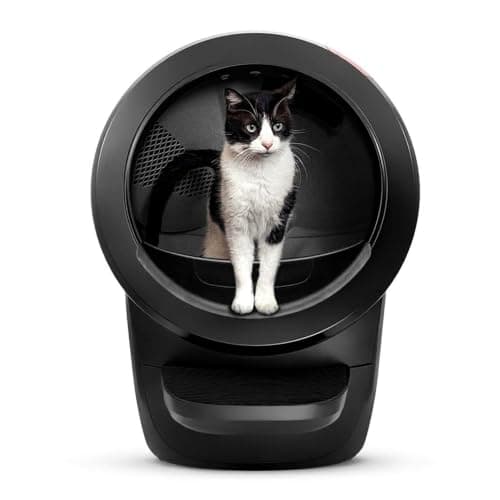 Whisker Litter-Robot 4 The biggest entryway and the largest published cat-weight range of the enclosed units, and the only one whose maker publishes an actual power-supply spec you can cost out. | Three or four cats | 8.1 | |
| 3 | 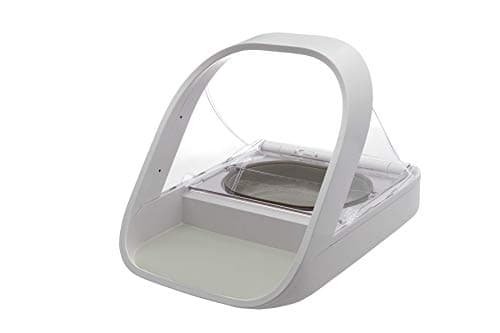 SureFeed Microchip Pet Feeder The only feeder here that solves the actual multi-cat feeding problem, which is not portioning -- it is one cat eating another cat's food. | One cat on a prescription diet | 8.5 |
#ad Buy links are affiliate links. Prices come from a live daily check; where we have no verified price we say "check price" rather than print a stale one.
The honest answer first: no brand sells a complete one. PETLIBRO is the best single ecosystem for food and water and makes no litter box; Whisker owns the litter box and makes no fountain; Sure Petcare owns the question of which cat and schedules nothing. For a multi-cat house, the right setup is PETLIBRO for feeding and water plus Whisker for the box — two apps, chosen so they never overlap.
The question assumes a product that does not exist
People ask for a single ecosystem because that is how the rest of the smart home works: one app for lights, one for locks, one hub that speaks to both. Pet hardware has no equivalent standard. There is no Matter for litter boxes, no shared account layer, and no sign of one coming — every brand here is a closed system with its own app, its own login and its own notifications.
So the realistic goal is not one app. It is two apps with no overlap, picked so that each brand covers a whole job rather than half of two. Here is who covers what.
| PETLIBRO | Whisker | Sure Petcare | |
|---|---|---|---|
| Automatic dry feeder | Yes -- incl. 1080p camera models | Yes -- Feeder-Robot | No -- it is a lid, not a timer |
| Wet food feeder | Yes -- refrigerated Polar | No | Yes -- sealed bowl, 2 wet pouches |
| Water fountain | Yes -- corded and cordless | No | Water via microchip access, not a fountain |
| Litter box | No | Yes -- Litter-Robot 4 | No |
| Identifies which cat | By camera | By weight | By registered microchip |
| Multi-cat separation | No | No | Yes -- up to 32 identities |
| Cat door / access control | No | No | Yes -- SureFlap range |
| Covers all three asked for? | Two of three | One of three | One and a half |
Based on each maker's published product range as named in our sources. "Covers" means the brand publishes a product in that category on its own app -- not that it is the best product in it.
The feature you are actually buying
Strip the apps away and these three brands differ on one thing that matters in a multi-cat house: how they tell your cats apart. Everything else is scheduling, which a $30 feeder also does.
- By camera (PETLIBRO). A 1080p sensor with night vision shows you which cat is at the bowl and for how long. It identifies and reports; it does not physically stop anybody.
- By weight (Whisker). Good enough to log usage and flag a change in frequency. It cannot distinguish two cats of similar weight, which in a multi-cat house is the common case rather than the edge case.
- By registered microchip (Sure Petcare). The only one that acts on the identification rather than reporting it: the lid opens for one cat and stays shut for the other, across up to 32 stored identities.
That ladder is the whole decision. If you need to know, a camera is enough. If you need to prevent — a prescription diet, a cat on a weight plan, a thief — only microchip control does it, and you need one unit per controlled cat. The Ohio State Indoor Pet Initiative covers resource competition between cats, and our resource competition guide works through the free fixes you should try before buying any of this.
What a full setup costs to run
All nameplate ratings, which are ceilings on draw rather than measurements, at the US residential average of 18.34 cents/kWh.
Litter-Robot 4: 15 V at up to 1,000 mA = 15 W = $24.10 a year.
PETLIBRO 5 W fountain: $8.03 a year.
PETLIBRO Granary camera feeder: a 5 V DC adapter, so single-digit dollars a year.
Call the electricity for the whole connected setup $35 to $40 a year at the ceilings. Now the part nobody budgets: fountain filters at $97.44 a year on PETLIBRO’s own published two-week interval and $14.99 four-pack. The consumable costs more than twice the electricity for everything.
And if the wet food feeder is the refrigerated Polar, its 60 W adapter is up to $96.40 a year on its own — more than the other three appliances combined.
The anchor product of each ecosystem
The PETLIBRO Granary Camera Feeder is the pick to start an ecosystem with, because PETLIBRO is the only brand here that covers two of the three categories in the question. 5 L hopper, 20 ml portions up to 50 per meal, up to 10 meals a day, 2-15 mm kibble, a stainless food tray, D-cell backup, a 24-month warranty, and a 1080p camera with night vision that answers which cat without a microchip. Add a Dockstream cordless fountain and the same app covers food and water. The honest cons: no litter box in the range at all, so this can never be the whole answer; dry food only on this model; it identifies but does not separate; and a camera in a feeding area is a household decision, not just a feature.
The Litter-Robot 4 is the pick for the half PETLIBRO does not make, and Whisker is the right second app precisely because its range barely overlaps. A 15.75 by 15.75 inch entryway — the largest published opening in the category — a 3 to 25 lb published cat range, weight sensing that logs which cat went in and how often, and a 6-15 W supply that makes it about $24.10 a year at the ceiling. In a multi-cat house the usage log is the real feature: a cat visiting more often is information you would not otherwise have. The honest cons: Whisker publishes neither a globe nor a drawer capacity; weight sensing cannot separate two similar cats; no fountain in the range; and one year of warranty unless you pay for three.
The SureFeed Microchip Pet Feeder is the pick when the problem is not convenience but control, and it is the only product here that physically enforces anything. Sure Petcare keys feeders, cat doors and water access to the same registered microchip identities — up to 32 of them — so one cat eats the prescription diet and the other genuinely cannot. A 400 ml bowl that takes two wet pouches, a three-year warranty, and six months on four C cells. The honest cons: it schedules nothing at all, so it is not a feeder in the sense the question means; you need one unit per controlled cat, which multiplies cost fast; the stainless bowls are a separate purchase; and it makes no litter box or fountain either.
How to assemble this without ending up with four apps
- Write down the actual problem first. “One cat eats the other’s food” and “I want to feed them from work” are different purchases, and only one of them needs microchips.
- Pick the brand that owns food and water. PETLIBRO, on range. That is app one.
- Pick the brand that owns the litter box. Whisker, or PETKIT if published specification depth matters more than running cost — our Litter-Robot against Purobot Max Pro comparison settles that one. That is app two.
- Stop at two. A third app for a camera or a cat door is the point where a convenience becomes an administrative burden.
- Add microchip control only for a real access problem. It is a different job, it needs one unit per cat, and it is worth every penny when the alternative is a cat eating medication it should not have.
- Count the resources before the appliances. One litter box per cat plus one, separate feeding stations, water in more places again — our multi-cat household guide sets the counts, and no app substitutes for them.
When the ecosystem is the wrong purchase
If cats are fighting over food or a box, buy more boxes and more stations before you buy anything connected. Resource competition is a counting problem first and a hardware problem a distant second; our litter setup page and feeding station setup cover the free version, and stopping cats fighting over food handles the specific case.
If you are buying a camera or a weight log because you are worried about a cat, that is a reason to call a vet rather than to buy an appliance. Usage data from any of these machines is a prompt, not a diagnosis, and the Cornell Feline Health Center is the place to read about what a change in eating or litter box habits can mean. We read specification sheets; we are not veterinarians.
See the gear
For the single-product recommendations across every category in a multi-cat house, best gear for multi-cat homes is the roundup, with feeders for multiple cats and automatic boxes for multiple cats going deeper on the two appliances that matter most.
The picks in full
Specs are the manufacturer's own, linked to the page they came from. Prices come from a live daily check; where we have no verified price we say so rather than print a stale one.
PETLIBRO Granary Camera Feeder
PETLIBRO · Automatic feeder · Our score 7.8/10
#ad Price as of October 19, 2026. Prices move; we check daily. How we're funded.
Publishes its portion size in milliliters rather than vague 'portions', which is the only way to work out whether a hopper will actually last a weekend.
Published specs
| Hopper capacity | 5 L |
|---|---|
| Portion size | 20 ml per portion, 1-50 portions per meal |
| Meals per day | Up to 10 |
| Camera | 1080p, 145-degree lens, night vision |
| Power | DC 5 V adapter plus 3 x D cells backup |
| Kibble size | 2-15 mm diameter |
| Dimensions / weight | 13 x 7.5 x 7.5 in / 4.3 lb |
Source: PETLIBRO -- Granary Smart Camera Feeder product page
5 L hopper, 20 ml per portion, so 250 portions. Two cats on two meals a day at five portions a meal is 20 portions daily -- about 12 days of food. That is the number that tells you whether it covers a holiday, and it comes straight from PETLIBRO's own published portion volume.
What the specs favor
- Portion published as a real volume (20 ml), not an abstract 'portion'
- 5 L hopper -- roughly 12 days for two cats on the arithmetic above
- Battery backup on D cells if the power drops
- Kibble compatibility published as 2-15 mm
What they don't
- One bowl, so it cannot separate two cats' food
- Dry food only
- Camera means a cloud account and a phone in the loop
One of your cats eats the other's food. A single-bowl dispenser with a camera lets you watch the theft happen in 1080p without stopping it.
How it scores
Scores are our editorial weighting of the published specs above, not a test result. They are deliberately kept out of this page's structured data.
Whisker Litter-Robot 4
Whisker · Automatic litter box · Our score 8.1/10
#ad Price as of October 19, 2026. Prices move; we check daily. How we're funded.
The biggest entryway and the largest published cat-weight range of the enclosed units, and the only one whose maker publishes an actual power-supply spec you can cost out.
Published specs
| Entryway | 15.75" x 15.75" |
|---|---|
| Footprint / height | 22" W x 27" D x 29.5" H |
| Weight, empty | 24 lb |
| Cat weight range | 3-25 lb |
| Power supply | 15 V DC, 400-1000 mA (6-15 W) |
| Warranty | 1 year, 3-year plan optional |
| Globe / drawer capacity | Not published by Whisker |
Source: Whisker -- Litter-Robot 4 product page and power supply spec article
Whisker's own spec sheet accepts a 15 V supply between 0.4 A and 1.0 A. Take the 1.0 A ceiling: 15 W x 24 h x 365 = 131.4 kWh, x $0.1834 = $24.10. That assumes the motor runs flat out every hour of the year, which it does not -- so the real figure is well below this. The consumables are the actual cost.
What the specs favor
- Largest published entryway of the enclosed units here, at 15.75 inches square
- Whisker publishes a real power-supply rating, so running cost is computable
- Cat weight range published as 3-25 lb
- Three-year extended warranty available at purchase
What they don't
- Whisker does not publish globe or waste-drawer capacity, which is the number that actually decides how often you empty it with three cats
- Waste drawer liners are a proprietary consumable at $25 per 25-pack
- Carbon filter is a separate monthly consumable
- Whisker publishes no cat-count rating for this unit at all, so sizing it for a multi-cat house is guesswork
You have five cats. Whisker rates the newer Litter-Robot 5 for up to five and this one carries no published cat-count rating at all -- buying the older unit for a bigger household is guessing.
How it scores
Scores are our editorial weighting of the published specs above, not a test result. They are deliberately kept out of this page's structured data.
SureFeed Microchip Pet Feeder
Sure Petcare · Microchip feeder · Our score 8.5/10
#ad Price as of October 19, 2026. Prices move; we check daily. How we're funded.
The only feeder here that solves the actual multi-cat feeding problem, which is not portioning -- it is one cat eating another cat's food.
Published specs
| Bowl capacity | 400 ml, or two pouches of wet food |
|---|---|
| Pets stored | Up to 32 identities |
| Food types | Wet and dry |
| Power | 4 x C cells, 6-month stated battery life |
| Warranty | 3 years from date of purchase |
| Opens for | Registered microchips or a collar tag |
Source: Sure Petcare -- SureFeed Microchip Pet Feeder product page
Sure Petcare states 6 months from a set of 4 C cells, so 8 cells a year per feeder. In a three-cat house you need one feeder per cat on a controlled diet -- 24 cells a year for three. That is the running cost nobody mentions.
What the specs favor
- Stores up to 32 pet identities -- more than any household needs
- Works with an existing microchip, no new collar required
- Takes wet food, which almost no automatic feeder does
- Three-year warranty, the longest here
What they don't
- Battery only -- 8 C cells a year, per feeder
- One feeder feeds one cat, so a three-cat house needs three
- 400 ml bowl is a meal, not a hopper -- it does not solve holidays
Your problem is being out all day rather than food stealing. This is a lid that opens for the right cat, not a scheduled dispenser -- it will not feed anyone at 6pm on its own.
How it scores
Scores are our editorial weighting of the published specs above, not a test result. They are deliberately kept out of this page's structured data.
Common questions
What is the best all-in-one pet ecosystem with feeders, fountains and litter boxes?
Does any brand make a smart feeder, fountain and litter box?
Is a smart cat ecosystem worth it in a multi-cat home?
How many apps will a smart cat setup need?
What does a smart cat setup cost to run?
Sources
- PETLIBRO -- Granary Smart Camera Feeder product page
- PETLIBRO -- Dockstream 2 Smart Fountain product page (3 L, up to 30 days per charge for one pet in sensor mode, 23 dB)
- Whisker -- Litter-Robot 4 product page and power supply spec article
- Sure Petcare -- SureFeed Microchip Pet Feeder product page
- Sure Petcare -- product range (SureFeed microchip feeders, SureFlap microchip cat doors and the Sure Petcare app, all keyed to the same registered microchip identities)
- U.S. Energy Information Administration, Electric Power Monthly Table 5.3 -- residential average 18.34 cents/kWh, June 2026
- Ohio State University Indoor Pet Initiative -- Problem solving for indoor cats
- Cornell Feline Health Center -- feline health information
Read next
- Best Gear for Multi-Cat Homes (2026)
The complete multi-cat kit list: one pick per category, with what each one costs to run and what to fix for free first.
- The Multi-Cat Household Guide
The pillar guide: resource counts by household size, why separation beats quantity, and the order to fix things in.
- Best Automatic Cat Feeders for Multiple Cats (2026)
Ranked on whether a feeder can actually separate two cats' food, plus the battery and hopper arithmetic nobody publishes.
- Best Automatic Litter Boxes for Multiple Cats (2026)
Five automatic boxes ranked on published litter and waste capacity, and on what a year of consumables actually costs with three cats.
- Resource Competition Between Cats
How to recognize resource guarding, why it rarely looks like fighting, and the environmental changes that reduce it.