Feeders, Fountains & Bowls
How to Set Up a Cat Feeding Station
Most food guarding in a multi-cat house is a floor plan problem. Moving a bowl six feet costs nothing and fixes more than a feeder does.
Affiliate disclosure: we earn a commission if you buy through our links, at no extra cost to you. It never changes which product we rank first — here is how we're funded.
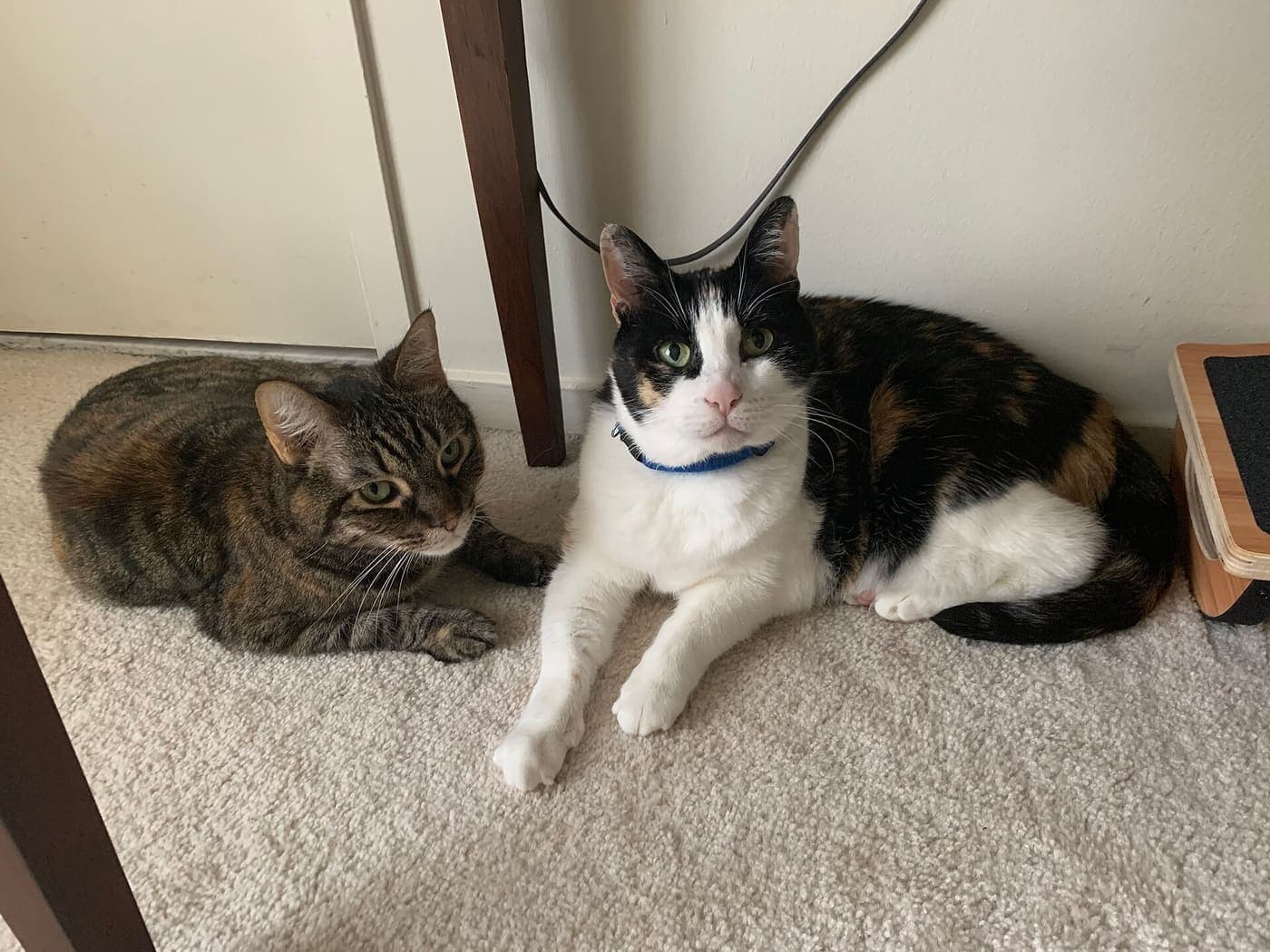
Everyone in this category says they tested twenty litter boxes. We have not tested any, and we say so. What we do instead: compile the published specs, read the manuals, and do the arithmetic on what this gear costs to run and how it behaves once there is more than one cat using it. Every spec is linked to the document it came from. Prices are checked daily — last verified October 22, 2026. Here is exactly how we pick.
Before buying a feeder that controls who eats, it is worth spending an afternoon on the thing that costs nothing: where the bowls are.
The counts
| Cats | Feeding stations | Water sources | Rooms involved |
|---|---|---|---|
| 1 | 1 | 2 | 2 |
| 2 | 2 | 3 | 2 or more |
| 3 | 3 | 4 | 3 or more |
| 4 | 4 | 5 | 3 or more |
Our figures, extrapolated from the resource-competition principle the Ohio State Indoor Pet Initiative sets out. Only the litter box equivalent of this rule is a published veterinary recommendation.
The geometry that stops guarding
The Ohio State Indoor Pet Initiative treats multi-cat tension as competition over resources. Guarding is the visible form of that, and it is enabled by layout more than by temperament.
- Two approach routes per station. A cat that can only be reached one way can be blocked one way.
- No dead ends. A bowl in an alcove or under a counter gives the eating cat nowhere to retreat to.
- Out of sight of each other. Cats that can see each other eat faster. Around a corner is enough; different rooms is better.
- Different heights. One station on the floor, one on a shelf. The less confident cat will take the elevated one and stop being interrupted.
Water is a separate system
Put water where the cat already spends time, not where the food is. Cats do not associate the two the way people assume, and a bowl beside a feeding station gets fewer visits than one across the room.
Cornell Feline Health Center links water intake to lower urinary tract disease, which makes extra water sources one of the highest-value free changes in the whole house. Our water bowls page makes the case that several bowls beat one fountain in a lot of households.
Then the bowl itself
Wide and shallow is the geometry that keeps whiskers off the sides. Raised suits a cat that has to crouch to reach the floor. Both are covered properly on our bowls page; neither matters as much as getting the layout right first.
When layout is not enough
If one cat is on a different diet, or one is losing weight while another gains, the layout has done what it can and you need selective access. A microchip feeder is the instrument; our microchip feeder page covers what it does and where it still fails.
The gear discussed here
Specs are the manufacturer's own, linked to the page they came from. Prices come from a live daily check; where we have no verified price we say so rather than print a stale one.
Dr. Catsby's Food Bowl for Whisker Relief
Dr. Catsby · Cat bowl · Our score 8.2/10
#ad No verified live price right now, so we show none rather than a stale one. How we're funded.
A single piece of stainless 7.08 inches across and only 1.25 inches deep -- the shallow-and-wide geometry the whisker-fatigue argument actually calls for.
Published specs
| Diameter | 7.08" |
|---|---|
| Depth | 1.25" |
| Weight | 14.1 oz |
| Capacity | Holds a 5 oz can of wet food |
| Material | Stainless steel, one piece |
| Included | Silicone non-slip mat for the base |
| Cleaning | Dishwasher safe |
Source: Amazon -- Dr. Catsby's Food Bowl for Whisker Relief listing
7.08 inches wide divided by 1.25 inches deep = 5.7. A typical deep ceramic cat dish is nearer 2:1. That ratio is the entire whisker-fatigue argument expressed as a number you can check on any bowl before buying -- and almost no listing publishes both figures.
What the specs favor
- Published width and depth, so the ratio above is checkable
- One piece of stainless -- nothing to scratch and harbor residue
- Silicone mat included rather than sold separately
- Dishwasher safe
What they don't
- 1.25 inches deep is shallow for a large dry-food portion
- Stainless is light enough that a determined cat can move it
- One bowl per cat gets expensive in a multi-cat house
You free-feed a big daily ration of dry food. A 1.25-inch dish is sized around a 5 oz can, not around a cup of kibble.
How it scores
Scores are our editorial weighting of the published specs above, not a test result. They are deliberately kept out of this page's structured data.
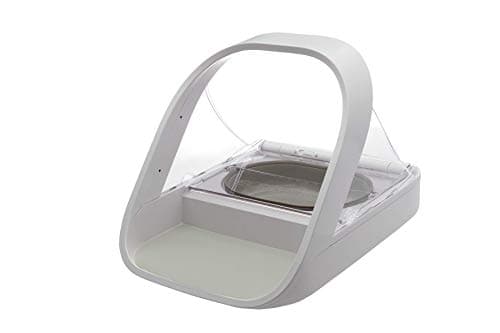
SureFeed Microchip Pet Feeder
Sure Petcare · Microchip feeder · Our score 8.5/10
#ad Price as of October 22, 2026. Prices move; we check daily. How we're funded.
The only feeder here that solves the actual multi-cat feeding problem, which is not portioning -- it is one cat eating another cat's food.
Published specs
| Bowl capacity | 400 ml, or two pouches of wet food |
|---|---|
| Pets stored | Up to 32 identities |
| Food types | Wet and dry |
| Power | 4 x C cells, 6-month stated battery life |
| Warranty | 3 years from date of purchase |
| Opens for | Registered microchips or a collar tag |
Source: Sure Petcare -- SureFeed Microchip Pet Feeder product page
Sure Petcare states 6 months from a set of 4 C cells, so 8 cells a year per feeder. In a three-cat house you need one feeder per cat on a controlled diet -- 24 cells a year for three. That is the running cost nobody mentions.
What the specs favor
- Stores up to 32 pet identities -- more than any household needs
- Works with an existing microchip, no new collar required
- Takes wet food, which almost no automatic feeder does
- Three-year warranty, the longest here
What they don't
- Battery only -- 8 C cells a year, per feeder
- One feeder feeds one cat, so a three-cat house needs three
- 400 ml bowl is a meal, not a hopper -- it does not solve holidays
Your problem is being out all day rather than food stealing. This is a lid that opens for the right cat, not a scheduled dispenser -- it will not feed anyone at 6pm on its own.
How it scores
Scores are our editorial weighting of the published specs above, not a test result. They are deliberately kept out of this page's structured data.
Necoichi Raised Cat Food Bowl
Necoichi · Cat bowl · Our score 8.3/10
#ad Price as of October 22, 2026. Prices move; we check daily. How we're funded.
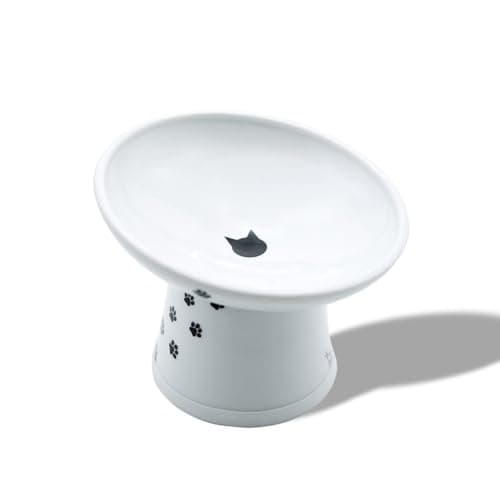
Elevated porcelain on a 2.75-inch leg with a published lead-and-cadmium-free glaze -- the one bowl here that addresses neck posture as well as whisker clearance.
Published specs
| Extra-wide dimensions | 6.1" W x 4.13" L x 1.18" D |
|---|---|
| Leg height | 2.75" |
| Base width | 4.17" |
| Weight | 1.2 lb |
| Material | Porcelain, free from lead and cadmium |
| Cleaning | Dishwasher and microwave safe |
| Included | Removable non-slip silicone ring |
Source: Chewy -- Necoichi Extra Wide Raised Cat Food Bowl listing
1.2 lb of porcelain against 14.1 oz (0.88 lb) for the stainless Dr. Catsby, plus a wider 4.17-inch base. Roughly 36 percent more mass on a wider footprint is why a ceramic bowl stays where you put it and a light stainless one travels across the kitchen.
What the specs favor
- Raised 2.75 inches, which changes eating posture as well as whisker contact
- Published lead-free and cadmium-free porcelain
- Heaviest bowl here, on the widest base -- it does not slide
- Dishwasher and microwave safe
What they don't
- Porcelain chips if it is dropped; stainless does not
- 1.18 inches deep in the extra-wide version is shallow for dry food
- Costs more than a plain dish
Your cat is a kitten or has mobility problems that make reaching up awkward. Elevation helps some cats and is simply an obstacle for others.
How it scores
Scores are our editorial weighting of the published specs above, not a test result. They are deliberately kept out of this page's structured data.
Common questions
How many feeding stations do cats need?
Should cat food and water bowls be next to each other?
How far should a litter box be from food?
Why does one cat guard the food bowl?
Should cats eat up high?
Sources
Read next
- Best Cat Food Mats (2026)
Cat feeding mats compared on published size and raised-edge height, with the sizing arithmetic for a two-bowl station.
- Resource Competition Between Cats
How to recognize resource guarding, why it rarely looks like fighting, and the environmental changes that reduce it.
- Best Cat Water Bowls (2026)
Plain water bowls compared on width, material and stability, with the running-cost case against a fountain.
- Feeding Cats on Different Diets
Four ways to feed cats different diets in one household, ranked by whether they still work when nobody is home.
- Best Cat Food Bowls (2026)
Bowls compared on published width-to-depth ratio, material and elevation, with the whisker-fatigue claim handled carefully.
- Are Elevated Cat Bowls Worth It?
Elevation against width-and-depth, worked from published bowl dimensions -- with a clear line between what specs can settle and what they cannot.