Feeders, Fountains & Bowls
Best Cat Water Bowls (2026)
A fountain costs about $105 a year to run. A bowl costs nothing and, in several situations, works better.
Affiliate disclosure: we earn a commission if you buy through our links, at no extra cost to you. It never changes which product we rank first — here is how we're funded.
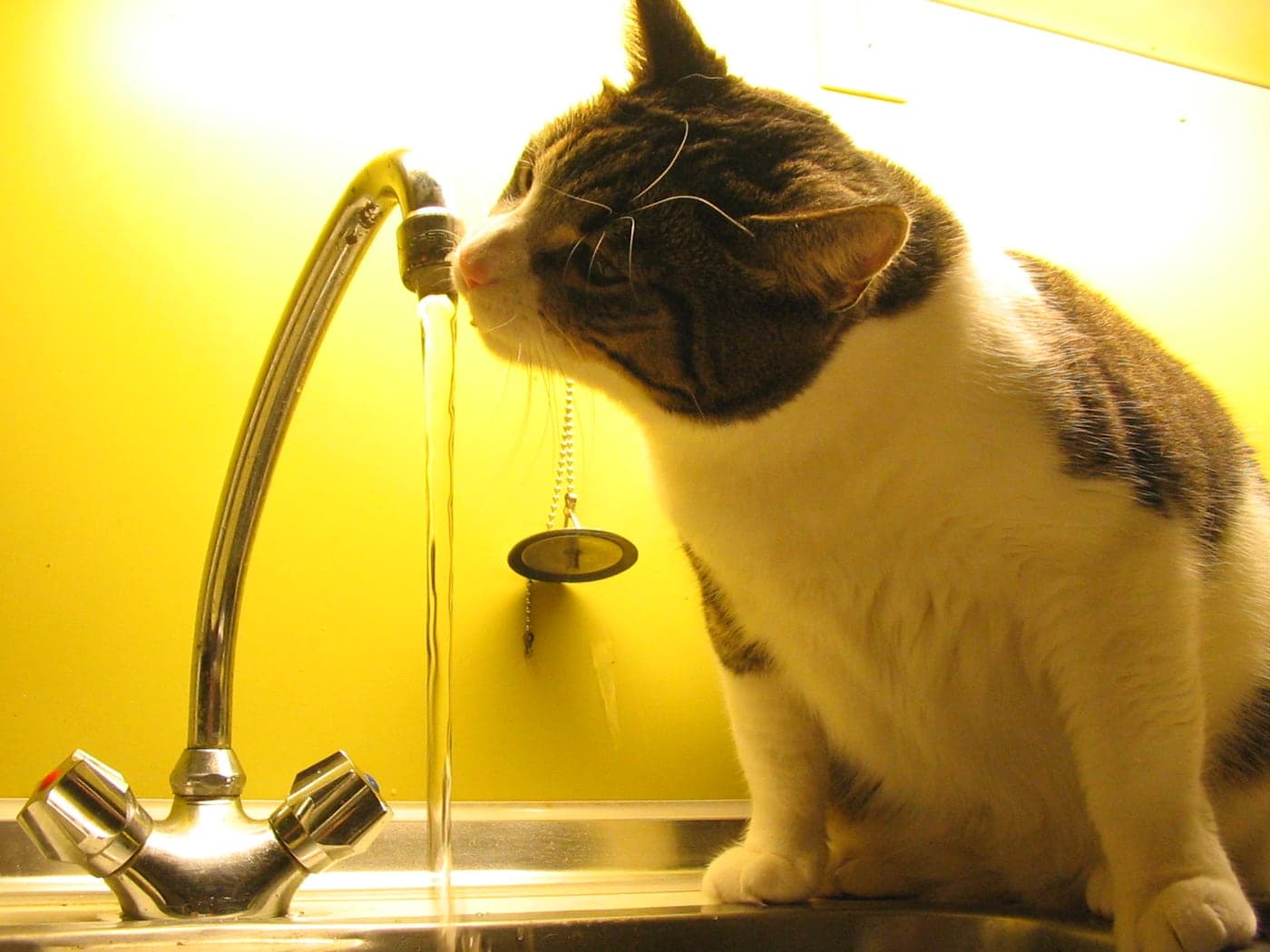
Everyone in this category says they tested twenty litter boxes. We have not tested any, and we say so. What we do instead: compile the published specs, read the manuals, and do the arithmetic on what this gear costs to run and how it behaves once there is more than one cat using it. Every spec is linked to the document it came from. Prices are checked daily — last verified October 22, 2026. Here is exactly how we pick.
Quick picks
Ranked on the published specs and the arithmetic below. Tap any row to jump to the full write-up. We have not tested these — here is exactly how we pick.
| # | Product | Best for | Score | Price |
|---|---|---|---|---|
| 1 | No photo Dr. Catsby's Food Bowl for Whisker Relief A single piece of stainless 7.08 inches across and only 1.25 inches deep -- the shallow-and-wide geometry the whisker-fatigue argument actually calls for. | A cat that paws food out of the dish | 8.2 | |
| 2 | 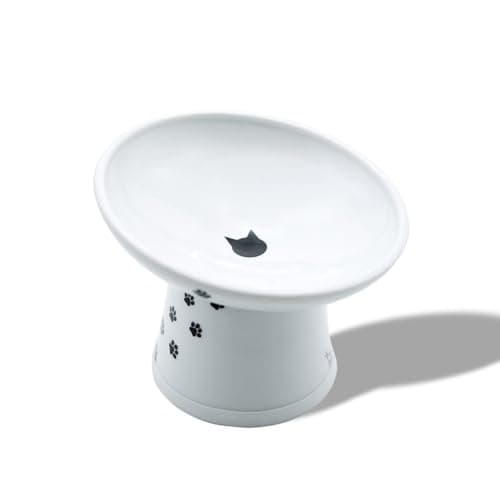 Necoichi Raised Cat Food Bowl Elevated porcelain on a 2.75-inch leg with a published lead-and-cadmium-free glaze -- the one bowl here that addresses neck posture as well as whisker clearance. | Cats that bring food back up after eating | 8.3 | |
| 3 | 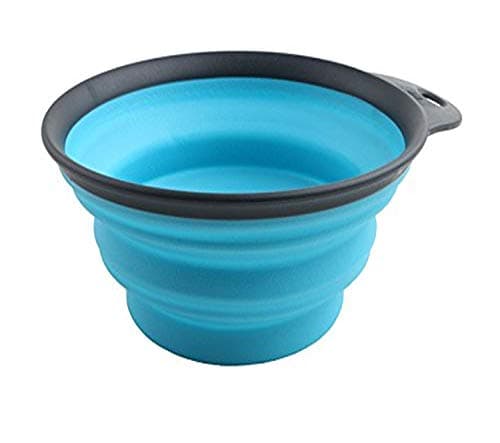 Dexas Popware Collapsible Travel Cup Publishes both capacities and both folded thicknesses, so you can work out whether it fits the gap beside the cat rather than guessing. | A carrier that has to hold water too | 7.7 |
#ad Buy links are affiliate links. Prices come from a live daily check; where we have no verified price we say "check price" rather than print a stale one.
This site has five pages about water fountains. This is the one arguing that a large number of households should buy bowls instead, and the arithmetic is not close.
What a fountain costs that a bowl does not
From our running costs page: a PETLIBRO stainless fountain draws about $8.03 a year in electricity at the EIA residential average of 18.34 cents per kWh, and roughly $97.44 a year in filters at the published two-week interval.
Total: about $105 a year, every year. A bowl costs its purchase price once and then nothing.
When a bowl is the better buy
- Your cat already drinks well. The whole argument for a fountain is encouraging intake. A cat that drinks freely from a bowl has nothing to gain.
- The pump noise is a problem. Some cats avoid a fountain they can hear, and quiet models are covered on our quiet fountains page.
- Nobody is going to strip the pump weekly. An unmaintained fountain is worse than a bowl, because biofilm accumulates where no cloth reaches.
- You want water in four places. Four fountains is four pumps and four filter subscriptions. Four bowls is four bowls.
What to look for in the bowl itself
Dr. Catsby’s stainless bowl is the width answer: wide and shallow enough that whiskers clear the sides, in a material that stays smooth for years. For water that matters as much as it does for food, because a cat that dislikes the dish drinks less from it.
Necoichi’s raised ceramic adds elevation, which suits cats that have to crouch awkwardly to reach floor level. Ceramic is heavy enough not to slide, which is its own argument — a bowl that travels across the floor gets abandoned.
A collapsible cup is the fourth bowl you can put in a bag. Not a daily bowl, but the one that means a cat has water in a carrier.
Placement does most of the work
Cornell Feline Health Center associates water intake with lower urinary tract disease, which makes the free intervention the important one: put out more bowls, in more places, away from food and litter. That is a bigger lever than any product on this page.
Our hydration guide covers station counts and placement, and it applies whether you use bowls, fountains or both.
The picks in full
Specs are the manufacturer's own, linked to the page they came from. Prices come from a live daily check; where we have no verified price we say so rather than print a stale one.
Dr. Catsby's Food Bowl for Whisker Relief
Dr. Catsby · Cat bowl · Our score 8.2/10
#ad No verified live price right now, so we show none rather than a stale one. How we're funded.
A single piece of stainless 7.08 inches across and only 1.25 inches deep -- the shallow-and-wide geometry the whisker-fatigue argument actually calls for.
Published specs
| Diameter | 7.08" |
|---|---|
| Depth | 1.25" |
| Weight | 14.1 oz |
| Capacity | Holds a 5 oz can of wet food |
| Material | Stainless steel, one piece |
| Included | Silicone non-slip mat for the base |
| Cleaning | Dishwasher safe |
Source: Amazon -- Dr. Catsby's Food Bowl for Whisker Relief listing
7.08 inches wide divided by 1.25 inches deep = 5.7. A typical deep ceramic cat dish is nearer 2:1. That ratio is the entire whisker-fatigue argument expressed as a number you can check on any bowl before buying -- and almost no listing publishes both figures.
What the specs favor
- Published width and depth, so the ratio above is checkable
- One piece of stainless -- nothing to scratch and harbor residue
- Silicone mat included rather than sold separately
- Dishwasher safe
What they don't
- 1.25 inches deep is shallow for a large dry-food portion
- Stainless is light enough that a determined cat can move it
- One bowl per cat gets expensive in a multi-cat house
You free-feed a big daily ration of dry food. A 1.25-inch dish is sized around a 5 oz can, not around a cup of kibble.
How it scores
Scores are our editorial weighting of the published specs above, not a test result. They are deliberately kept out of this page's structured data.
Necoichi Raised Cat Food Bowl
Necoichi · Cat bowl · Our score 8.3/10
#ad Price as of October 22, 2026. Prices move; we check daily. How we're funded.
Elevated porcelain on a 2.75-inch leg with a published lead-and-cadmium-free glaze -- the one bowl here that addresses neck posture as well as whisker clearance.
Published specs
| Extra-wide dimensions | 6.1" W x 4.13" L x 1.18" D |
|---|---|
| Leg height | 2.75" |
| Base width | 4.17" |
| Weight | 1.2 lb |
| Material | Porcelain, free from lead and cadmium |
| Cleaning | Dishwasher and microwave safe |
| Included | Removable non-slip silicone ring |
Source: Chewy -- Necoichi Extra Wide Raised Cat Food Bowl listing
1.2 lb of porcelain against 14.1 oz (0.88 lb) for the stainless Dr. Catsby, plus a wider 4.17-inch base. Roughly 36 percent more mass on a wider footprint is why a ceramic bowl stays where you put it and a light stainless one travels across the kitchen.
What the specs favor
- Raised 2.75 inches, which changes eating posture as well as whisker contact
- Published lead-free and cadmium-free porcelain
- Heaviest bowl here, on the widest base -- it does not slide
- Dishwasher and microwave safe
What they don't
- Porcelain chips if it is dropped; stainless does not
- 1.18 inches deep in the extra-wide version is shallow for dry food
- Costs more than a plain dish
Your cat is a kitten or has mobility problems that make reaching up awkward. Elevation helps some cats and is simply an obstacle for others.
How it scores
Scores are our editorial weighting of the published specs above, not a test result. They are deliberately kept out of this page's structured data.
Dexas Popware Collapsible Travel Cup
Dexas · Travel bowl · Our score 7.7/10
#ad Price as of October 22, 2026. Prices move; we check daily. How we're funded.
Publishes both capacities and both folded thicknesses, so you can work out whether it fits the gap beside the cat rather than guessing.
Published specs
| Small | 1 cup / 8 oz, 5.25" x 4.5" x 0.5" |
|---|---|
| Large | 2 cup / 16 oz, 6.75" x 5.875" x 0.625" |
| Folded | Under half an inch tall |
| Dishwasher | Safe |
| Material | Non-stick, wipes clean by hand |
A cat drinks a few ounces a day and eats a fraction of a cup per meal. The 8 oz small covers both with room to spare, folds to half an inch, and is the size that actually fits in the pocket of a carrier bag. The 2 cup exists for dogs.
What the specs favor
- Folds under half an inch, so it travels in a carrier pocket
- Dishwasher safe, which a travel bowl rarely is
- Two published capacities in real units
- Non-stick surface wipes clean when there is no sink
What they don't
- Flexible sides tip if a cat leans on the rim
- Shallow, so water sloshes in a moving car
- Not a daily-use bowl -- our bowls page explains why width and rigidity matter at home
You want one bowl for everything. This is a travel item, and a soft collapsible cup is the wrong daily bowl for a cat.
How it scores
Scores are our editorial weighting of the published specs above, not a test result. They are deliberately kept out of this page's structured data.
Common questions
Are water bowls better than fountains for cats?
What is the best material for a cat water bowl?
How wide should a cat water bowl be?
How many water bowls does a cat need?
Where should you put a cat's water bowl?
Sources
- Amazon -- Dr. Catsby's Food Bowl for Whisker Relief listing
- Chewy -- Necoichi Extra Wide Raised Cat Food Bowl listing
- Dexas -- Popware Collapsible Travel Cup listing (1 cup 5.25 x 4.5 x 0.5 in, 2 cup 6.75 x 5.875 x 0.625 in, dishwasher safe)
- Cornell Feline Health Center -- Feline Lower Urinary Tract Disease
- U.S. Energy Information Administration -- Electric Power Monthly, Table 5.3 (residential average 18.34 cents/kWh, June 2026)
Read next
- Are Cat Water Fountains Worth It?
The fountain-versus-bowl trade laid out in a table, with the year-one running cost of doing it properly.
- Cat Hydration: Setup, Not Medicine
Water station counts and placement for multi-cat homes, plus a clear line on which questions belong to a vet.
- Best Cat Food Bowls (2026)
Bowls compared on published width-to-depth ratio, material and elevation, with the whisker-fatigue claim handled carefully.
- What a Cat Water Fountain Actually Costs to Run
Electricity and filters costed from published adapter ratings and manufacturers' own filter prices, with every sum shown.
- How to Set Up a Cat Feeding Station
Counts, distances and sightlines for feeding and water stations in a multi-cat home, with the free fixes first.
- Best Filterless Cat Water Fountains (2026)
Filterless water options compared: a separated-tank dispenser and two bowls, with the filter arithmetic that makes the question worth asking.