Litter & Litter Tech
Best Automatic Litter Boxes for Multiple Cats (2026)
Ranked on the two numbers that decide a multi-cat house: how much the drawer holds, and what the consumables cost you every year.
Affiliate disclosure: we earn a commission if you buy through our links, at no extra cost to you. It never changes which product we rank first — here is how we're funded.
Everyone in this category says they tested twenty litter boxes. We have not tested any, and we say so. What we do instead: compile the published specs, read the manuals, and do the arithmetic on what this gear costs to run and how it behaves once there is more than one cat using it. Every spec is linked to the document it came from. Prices are checked daily — last verified October 19, 2026. Here is exactly how we pick.
Quick picks
Ranked on the published specs and the arithmetic below. Tap any row to jump to the full write-up. We have not tested these — here is exactly how we pick.
| # | Product | Best for | Score | Price |
|---|---|---|---|---|
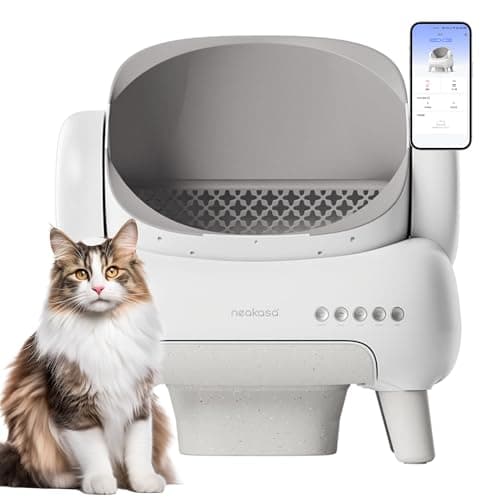
| 1 | Neakasa M1 Open-Top Self-Cleaning Litter Box The only automatic box here that publishes both its litter capacity and its noise figure, and the only open-top design -- which matters because cats prefer uncovered boxes. | Cats that refuse an enclosed box | 8.6 | |
| 2 | No photo Whisker Litter-Robot 5 The only enclosed automatic box here that carries a published cat-count rating, and the rating is five -- which is the whole reason to pay the extra $100 over the 4. | Four or five cats | 8.4 | |
| 3 | 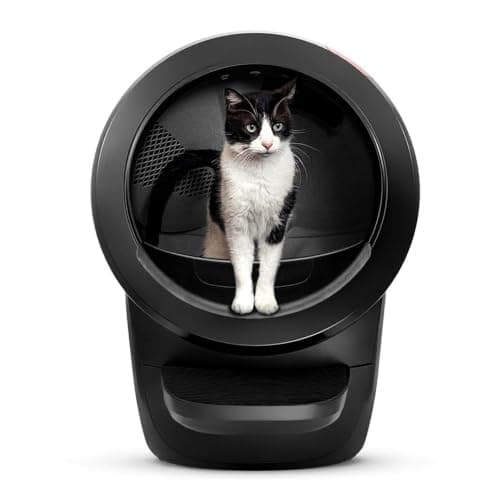 Whisker Litter-Robot 4 The biggest entryway and the largest published cat-weight range of the enclosed units, and the only one whose maker publishes an actual power-supply spec you can cost out. | Three or four cats | 8.1 | |
| 4 | 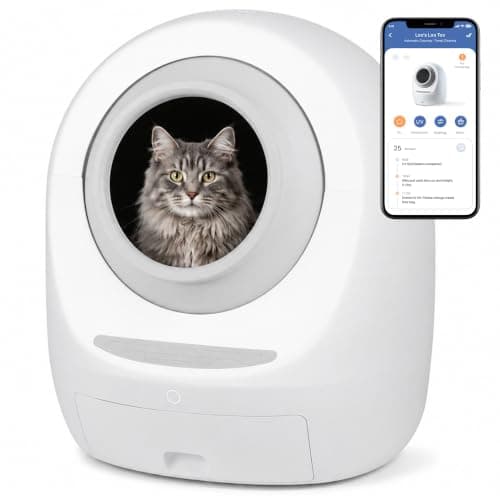 Casa Leo Leo's Loo Too Publishes both litter and waste capacity at 1.5 gallons each, which is more than Whisker will tell you about either of its units. | Households that want published capacities | 7.9 | |
| 5 | 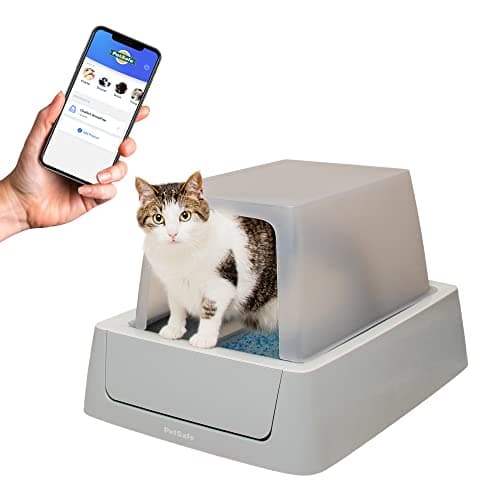 PetSafe ScoopFree Crystal Smart The cheapest automatic box here at $269.99 and by a wide margin the most expensive to run, because the disposable tray is the entire consumable model. | One cat, low effort | 6.2 |
#ad Buy links are affiliate links. Prices come from a live daily check; where we have no verified price we say "check price" rather than print a stale one.
Buy an automatic litter box for the right reason and it is one of the best purchases a multi-cat household can make. Buy it for the wrong reason and you have spent several hundred dollars to make one of your four boxes slightly more convenient while the other three still need scooping.
The reason this category is confusing is that the specification that matters most — how much waste the unit holds before somebody has to empty it — is the one manufacturers are least willing to publish. Whisker gives no globe or drawer capacity for the Litter-Robot 4 or the 5. PetSafe’s multi-cat guidance for the ScoopFree is, in its own words, that “your mileage may vary.” Neakasa and Casa Leo do publish theirs, and that transparency is genuinely why they rank where they do below.
The second thing nobody puts on a box is the running cost. Every unit here has a consumable, and with three cats the consumable is the expensive part of owning it — in one case more expensive per year than the machine was to buy. We have worked all of it out below, from manufacturers’ own listed prices, with the sums shown.
How we ranked these
Four criteria, weighted for a house with more than one cat:
- Published capacity. Litter volume and waste volume, in liters or gallons. If a maker will not publish it, that costs them here.
- Consumable model. Does it take ordinary clumping litter and an ordinary bin bag, or has the manufacturer built a subscription into the hardware?
- Published cat range. Weight range, and where it exists, a cat-count rating. Only one unit here publishes a cat count.
- Entryway and access. A large cat that has to fold itself through an opening will use the bath mat instead.
We did not weight app features at all. Every unit here has an app, none of the apps are the reason the box is or is not working, and no household has ever been rescued by push notifications about a cat.
Published capacity, side by side
| Unit | Litter capacity | Waste capacity | Cat weight | Cat count |
|---|---|---|---|---|
| Neakasa M1 | 7.17 L | 11.23 L | 2.2-33 lb | Not published |
| Casa Leo Leo's Loo Too | 1.5 gal (6 L) | 1.5 gal (6 L) | 1-20 lb typical | Not published |
| Litter-Robot 5 | Not published | Not published | 3-30 lb | Up to 5 |
| Litter-Robot 4 | Not published | Not published | 3-25 lb | Not published |
| PetSafe ScoopFree Crystal Smart | One disposable tray | In the tray | Not published | "Mileage may vary" |
Every figure here is the manufacturer's own, from the pages cited in Sources. Blank cells are blank because the maker does not publish the number -- we have not filled them in with estimates.
Read that table for what is missing rather than what is there. Two of the five best-known units in this category will not tell you how much waste they hold. In a single-cat house that is a curiosity. In a four-cat house it is the only question worth asking.
What a year actually costs
Electricity first, because it is the thing people worry about and it turns out to be irrelevant. Whisker publishes an acceptable supply range for the Litter-Robot of 15 V DC at 400–1000 mA. Take the ceiling:
And that assumes the motor runs flat out every hour of the year, which it obviously does not — Whisker will accept a 6 W supply, so standby draw sits below that. The real electricity bill is somewhere under ten dollars. Now the consumables, which are the actual cost:
This is the whole argument for the Neakasa M1 topping the list. It takes ordinary clumping litter and an ordinary bin bag, so its consumable cost is the litter you were buying anyway. Over three years that difference is larger than the price gap between any two units on this page.
The verdict by how many cats you have
Two cats
Any of the top four work. Buy on entryway size and on whether you want an open top. The Litter-Robot 4 at $699 is a lot of money for a two-cat house when the Neakasa M1 publishes more capacity for less — but if odor containment is the priority, the enclosed drawer genuinely does contain it better than the open-top design.
Three cats
Capacity starts to bind. The Neakasa M1’s 11.23 L bin is the largest published figure here and works out at roughly four days between emptyings on the arithmetic in its write-up. Pair it with two ordinary pans elsewhere in the house to satisfy the n+1 count.
Four or more cats
The Litter-Robot 5 is the only unit on this page that carries a published rating for a specific number of cats, and the number is five. When you are at the edge of a category, a maker who commits to a figure is worth a premium over one who does not — that is most of the reason it ranks second here despite Whisker withholding capacity data.
What an automatic box will not fix
Three things, and they account for most of the disappointment in this category:
- Box count. Cornell Feline Health Center recommends one more box than you have cats. An automatic unit is one box. It does not do the work of four.
- Litter the cat dislikes. The Ohio State Indoor Pet Initiative notes that most cats prefer fine-grained, unscented litter and are deterred by scented and deodorant products. Automating a litter the cat is avoiding automates the avoidance.
- Placement. Four boxes in a row along one wall is one resource with four doors. See the multi-cat litter setup.
If any of those three is your real problem, fix it first. It costs less than any product on this page and it works more reliably.
How we picked
We have not used any of these units. Every specification above was read off the manufacturer’s own page or the retailer listing named against each product, on 3 September 2026, and every computed figure shows its inputs so you can redo it with your own cat count and your own electricity rate. Where a maker does not publish a number, we say so instead of estimating. The full method is here.
The picks in full
Specs are the manufacturer's own, linked to the page they came from. Prices come from a live daily check; where we have no verified price we say so rather than print a stale one.
Neakasa M1 Open-Top Self-Cleaning Litter Box
Neakasa · Automatic litter box · Our score 8.6/10
#ad Price as of October 19, 2026. Prices move; we check daily. How we're funded.
The only automatic box here that publishes both its litter capacity and its noise figure, and the only open-top design -- which matters because cats prefer uncovered boxes.
Published specs
| Litter capacity | 7.17 L |
|---|---|
| Waste bin capacity | 11.23 L |
| Footprint / height | 23.26" x 20.67", 20.2" H |
| Entry height | 13.86" |
| Weight, empty | 22.81 lb |
| Cat weight range | 2.2-33 lb |
| Operating noise | Not more than 50 dB (published) |
Source: Neakasa -- M1 product page
11.23 L bin. Whisker's own guidance for its comparable drawer is emptying twice a week for two cats, i.e. roughly 3.5 days per two cats. Scale that to three and the bin needs emptying about every 4 days on published volumes -- an extrapolation from a competitor's published interval, not a measurement of this unit.
What the specs favor
- Publishes litter capacity (7.17 L) and waste bin capacity (11.23 L) -- almost nobody else does
- Publishes an operating noise figure of 50 dB or less
- Open top, which is the design cats are documented to prefer
- Takes ordinary clumping litter and ordinary bin bags -- no proprietary tray or liner
- Widest published cat weight range here at 2.2-33 lb
What they don't
- Open top means odor is not contained the way an enclosed drawer contains it
- 20.2 inches tall with a 13.86-inch entry -- a big step for an arthritic cat
- Bigger footprint than the enclosed units at 23.26 x 20.67 inches
Odor is your main problem. An open top vents into the room by design; if the smell is what you are trying to fix, an enclosed drawer with a carbon filter is the shape you want.
How it scores
Scores are our editorial weighting of the published specs above, not a test result. They are deliberately kept out of this page's structured data.
Whisker Litter-Robot 5
Whisker · Automatic litter box · Our score 8.4/10
Reference link This one sells direct and we earn nothing on it. We link it anyway because it belongs in the comparison. How we're funded.
The only enclosed automatic box here that carries a published cat-count rating, and the rating is five -- which is the whole reason to pay the extra $100 over the 4.
Published specs
| Cats supported | Up to 5 (published) |
|---|---|
| Cat weight range | 3-30 lb |
| Entryway | 15.75" x 15.75" |
| Footprint / height | 22" x 27", 29.9" H |
| Weight, empty | 28.7 lb |
| Warranty | 1 year WhiskerCare, 3-year plan $100 |
| Drawer capacity | Not published; described only as larger than LR4 |
Source: Whisker -- Litter-Robot 5 product page
$799 list divided by the five cats Whisker rates it for. The Litter-Robot 4 at $699 carries no published cat rating, so the same sum cannot be done for it -- which is itself the argument for the 5 in a big household.
What the specs favor
- Published rating for up to five cats -- the only unit here that states one
- Cat weight range extended to 30 lb, up from 25 lb on the LR4
- Same 15.75-inch square entryway as the LR4
- Larger waste drawer than the LR4, per Whisker
What they don't
- $100 more than the LR4 for a household that does not need the extra rating
- Whisker still does not publish a drawer volume in liters or gallons
- 4.7 lb heavier than the LR4, which matters if you move it to clean
- Direct-sale, so no reliable Amazon price history
You have one or two cats. Everything the 5 adds over the 4 -- bigger drawer, higher weight ceiling, five-cat rating -- is headroom a two-cat house will never reach.
How it scores
Scores are our editorial weighting of the published specs above, not a test result. They are deliberately kept out of this page's structured data.
Whisker Litter-Robot 4
Whisker · Automatic litter box · Our score 8.1/10
#ad Price as of October 19, 2026. Prices move; we check daily. How we're funded.
The biggest entryway and the largest published cat-weight range of the enclosed units, and the only one whose maker publishes an actual power-supply spec you can cost out.
Published specs
| Entryway | 15.75" x 15.75" |
|---|---|
| Footprint / height | 22" W x 27" D x 29.5" H |
| Weight, empty | 24 lb |
| Cat weight range | 3-25 lb |
| Power supply | 15 V DC, 400-1000 mA (6-15 W) |
| Warranty | 1 year, 3-year plan optional |
| Globe / drawer capacity | Not published by Whisker |
Source: Whisker -- Litter-Robot 4 product page and power supply spec article
Whisker's own spec sheet accepts a 15 V supply between 0.4 A and 1.0 A. Take the 1.0 A ceiling: 15 W x 24 h x 365 = 131.4 kWh, x $0.1834 = $24.10. That assumes the motor runs flat out every hour of the year, which it does not -- so the real figure is well below this. The consumables are the actual cost.
What the specs favor
- Largest published entryway of the enclosed units here, at 15.75 inches square
- Whisker publishes a real power-supply rating, so running cost is computable
- Cat weight range published as 3-25 lb
- Three-year extended warranty available at purchase
What they don't
- Whisker does not publish globe or waste-drawer capacity, which is the number that actually decides how often you empty it with three cats
- Waste drawer liners are a proprietary consumable at $25 per 25-pack
- Carbon filter is a separate monthly consumable
- Whisker publishes no cat-count rating for this unit at all, so sizing it for a multi-cat house is guesswork
You have five cats. Whisker rates the newer Litter-Robot 5 for up to five and this one carries no published cat-count rating at all -- buying the older unit for a bigger household is guessing.
How it scores
Scores are our editorial weighting of the published specs above, not a test result. They are deliberately kept out of this page's structured data.
Casa Leo Leo's Loo Too
Casa Leo · Automatic litter box · Our score 7.9/10
#ad Price as of October 19, 2026. Prices move; we check daily. How we're funded.
Publishes both litter and waste capacity at 1.5 gallons each, which is more than Whisker will tell you about either of its units.
Published specs
| Litter capacity | 1.5 gal (6 L) |
|---|---|
| Waste drawer capacity | 1.5 gal (6 L) |
| Dimensions | 22" x 24" x 27.6" |
| Weight | 27.5 lb |
| Noise | About 30 dB (Casa Leo) |
| Weight sensors | Four, accurate to plus or minus 1 lb |
| Cat weight | 1-20 lb typical; 55 lb maximum load |
| Odor control | Bamboo carbon filter plus UV |
Published 6 L litter capacity. At the 2-inch depth the Ohio State Indoor Pet Initiative recommends, that is a full charge of litter every time you strip it -- roughly a 12 lb bag of clumping clay every two changes on package volumes.
What the specs favor
- Publishes litter AND waste capacity, both 1.5 gallons
- Four weight sensors with a published accuracy of plus or minus 1 lb
- Bamboo carbon filter is a standard consumable, not a proprietary tray
- Takes ordinary clumping litter
What they don't
- 27.6 inches tall and 27.5 lb -- awkward in a small bathroom
- Published cat range tops out around 20 lb for comfortable use
- 6 L waste drawer is smaller than the Neakasa M1's 11.23 L
You have a Maine Coon or a Ragdoll over 20 lb. The published comfortable range stops around 20 lb and a large cat in a rotating drum is not a place to find out where the limit is.
How it scores
Scores are our editorial weighting of the published specs above, not a test result. They are deliberately kept out of this page's structured data.
PetSafe ScoopFree Crystal Smart
PetSafe · Automatic litter box · Our score 6.2/10
#ad Price as of October 19, 2026. Prices move; we check daily. How we're funded.
The cheapest automatic box here at $269.99 and by a wide margin the most expensive to run, because the disposable tray is the entire consumable model.
Published specs
| Dimensions, uncovered | 27.6" x 19.1" x 6.2" |
|---|---|
| Dimensions, front-entry | 27.6" x 19.1" x 15.6" |
| Litter | ScoopFree crystal litter only |
| Tray life | Up to one month for a single cat (PetSafe) |
| Tray price | $73.49 per 3-pack (PetSafe list) |
| Power | Plug-in; wattage not published |
| Multi-cat guidance | PetSafe: "your mileage may vary" |
Source: PetSafe -- ScoopFree Crystal Smart product page and tray 3-pack listing
PetSafe lists the 3-pack at $73.49, so $24.50 a tray, and says one tray covers one cat for up to a month. Twelve trays a year is $294 -- more than the $269.99 box. With three cats the tray fills three times as fast, which is roughly $880 a year on the same arithmetic.
What the specs favor
- Lowest purchase price of the automatic boxes here
- Largest floor area of the automatic boxes at 27.6 x 19.1 inches
- Available uncovered, which is the shape cats prefer
- No scooping and no litter handling at all
What they don't
- Locked to PetSafe's own crystal litter -- no substitution
- Disposable trays cost more per year than the box costs to buy
- PetSafe publishes no wattage, so electricity cannot be computed
- PetSafe declines to give multi-cat guidance beyond 'mileage may vary'
You have more than one cat. The tray is the product, and with three cats the tray arithmetic runs to roughly $880 a year -- three or four times what a clumping-litter automatic box costs to feed.
How it scores
Scores are our editorial weighting of the published specs above, not a test result. They are deliberately kept out of this page's structured data.
Common questions
Is one automatic litter box enough for three cats?
Which automatic litter box has the biggest waste drawer?
How much does an automatic litter box cost to run per year?
Do automatic litter boxes work with any litter?
Are automatic litter boxes safe for a large cat?
Will an automatic box stop my house smelling?
Sources
- Whisker -- Litter-Robot 4 product page
- Whisker -- Litter-Robot 5 product page
- Whisker -- Litter-Robot power supply specifications
- Whisker -- Litter-Robot waste drawer liners, 25-pack
- Whisker -- Litter-Robot accessories (carbon filters, liners, ramps)
- Neakasa -- M1 open-top self-cleaning litter box product page
- PetSafe -- ScoopFree Crystal Smart self-cleaning litter box
- PetSafe -- ScoopFree Crystal disposable litter trays, 3-pack
- Cornell Feline Health Center -- Feline Lower Urinary Tract Disease
- Ohio State University Indoor Pet Initiative -- Litter Boxes
- U.S. Energy Information Administration -- Electric Power Monthly, Table 5.3 (residential average 18.34 cents/kWh, June 2026)
Read next
- What an Automatic Litter Box Actually Costs to Run
The full year-one and year-two running cost of every major automatic litter box, computed from published prices with the arithmetic shown.
- Are Automatic Litter Boxes Worth It?
Break-even arithmetic against ordinary boxes, worked from published prices, with a clear answer for one, two and three cat households.
- Litter-Robot 4 vs Litter-Robot 5
The $100 difference explained from Whisker's own spec sheets, with a clear verdict by household size.
- How Many Litter Boxes Per Cat?
The n+1 rule, its published source, a count-by-household table, and why four boxes in a row is really only one box.
- Litter Setup for Multiple Cats
Box counts, room-by-room placement, which box types to mix and why, for households with two or more cats.