Litter & Litter Tech
Cat Litter Types Compared
Crystal against clumping, crystal against tofu, everything against clay. Seven materials, and only some of their published numbers can honestly be set beside each other.
Affiliate disclosure: we earn a commission if you buy through our links, at no extra cost to you. It never changes which product we rank first — here is how we're funded.
Everyone in this category says they tested twenty litter boxes. We have not tested any, and we say so. What we do instead: compile the published specs, read the manuals, and do the arithmetic on what this gear costs to run and how it behaves once there is more than one cat using it. Every spec is linked to the document it came from. Prices are checked daily — last verified October 22, 2026. Here is exactly how we pick.
Quick picks
Ranked on the published specs and the arithmetic below. Tap any row to jump to the full write-up. We have not tested these — here is exactly how we pick.
| # | Product | Best for | Score | Price |
|---|---|---|---|---|
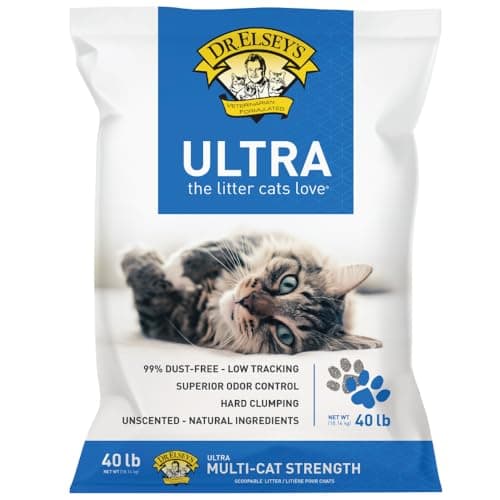
| 1 | Dr. Elsey's Ultra Unscented Clumping Clay Litter Unscented, medium-grain, 99.9 percent dust-free -- which is the exact specification the veterinary guidance on litter preference describes, rather than a marketing claim. | Cats that reject scented litter | 8.8 | |
| 2 | 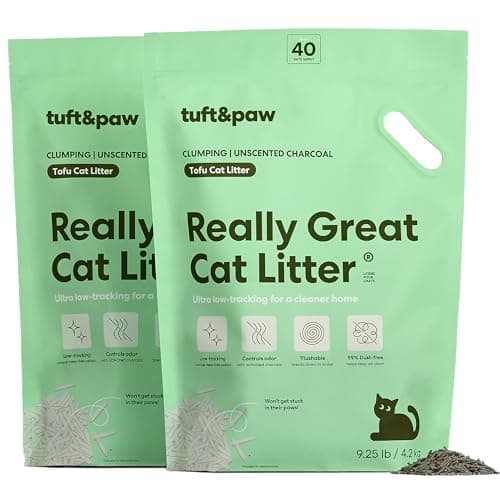 Tuft & Paw Really Great Cat Litter The only substrate here with a published third-party flushability test and a published duration figure, which together make it the most checkable claim set in the category. | Flushing, and carrying less up a flight of stairs | 8.0 | |
| 3 | 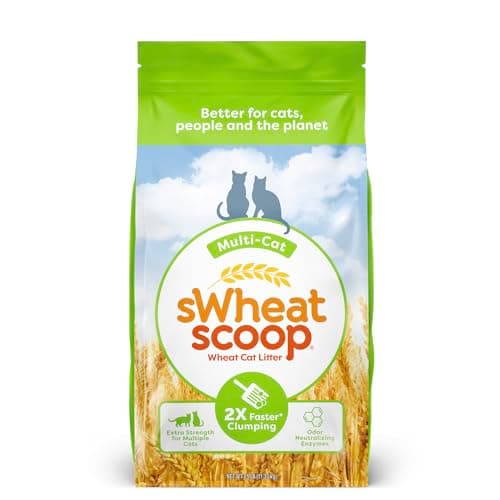 sWheat Scoop Multi-Cat The plant-based substrate that actually clumps hard, because wheat starch does the job bentonite does and the enzymes are a separate mechanism from the clumping. | Clumping performance without clay | 7.4 | |
| 4 | 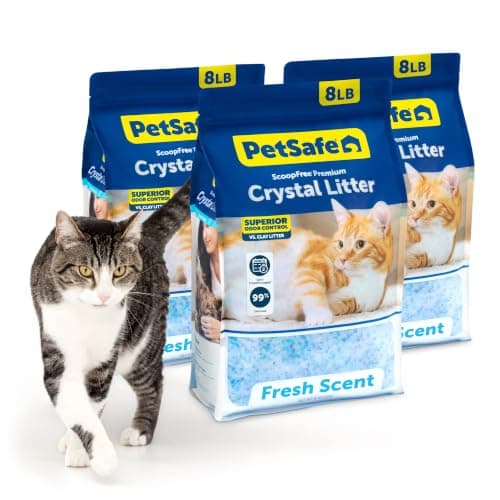 PetSafe ScoopFree Premium Crystal Litter The only substrate here whose maker publishes a direct weight-for-weight replacement ratio against clay, and it is 5 to 1. | Odor control without scooping clumps | 7.6 | |
| 5 | 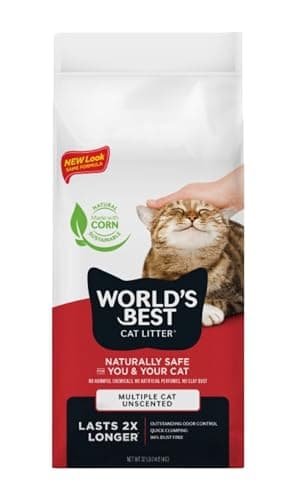 World's Best Cat Litter Multiple Cat Clumping Formula Whole-kernel corn rather than clay, which makes the bag light enough to carry up stairs and the litter light enough that a cat carries it out on its feet. | Lighter bags, multi-cat formula | 8.0 |
#ad Buy links are affiliate links. Prices come from a live daily check; where we have no verified price we say "check price" rather than print a stale one.
There are seven materials on sale and one honest way to compare them: line up what each manufacturer publishes, and be clear about which of those numbers were measured the same way. Very few of them were.
The four criteria, and why they are in this order
Every substrate decision is a trade between the same four things. We rank them in this order because that is the order in which getting one wrong costs you the most.
- Does urine leave the box? Clumping lets you lift it out. Every non-clumping substrate absorbs it into the bed instead, which means the whole box has to be stripped rather than scooped. This is the biggest single difference on the page and it changes the daily job, not just the bag.
- Will the cat use it? Cats form substrate preferences and hold them for life. A litter the cat refuses is worth nothing at any dust figure, and Cornell Feline Health Center links litter box avoidance to lower urinary tract disease, so this is not a preference to override.
- Weight and disposal. Clay is heavy and goes in the bin. The plant-based substrates are dramatically lighter and some are flushable, subject to local rules.
- Dust. Last, deliberately. It is the most-claimed and least-substantiated property in the category, for reasons we come to below.
What each maker publishes
| Material | Clumps | Published dust | Other published figures |
|---|---|---|---|
| Clay (sodium bentonite) | Yes | Marketed low-dust; no figure | Hardest clumps of any substrate here |
| Crystal (silica gel) | No | 99 percent | 8 lb replaces 40 lb of clay; 8 lb lasts up to 2 months, one cat |
| Corn (whole kernel) | Yes | Marketed low-dust; no figure | Plant-based; flushability varies by formula |
| Wheat | Yes | 99.5 percent | Odor-neutralizing enzymes; 14/25/28 lb bags |
| Tofu (soybean) | Yes | 99 percent | 58 percent lighter than clay; up to 40 days per 9.25 lb bag, one cat; third-party flushability testing |
| Pine (wood) | No | Minimal dust (wording, not a figure) | Absorbs 4x more odor-causing liquid; fill at least 3 in |
| Paper (recycled) | No | 99.7 percent | 3x more moisture-absorbing than clay; low tracking |
Every figure in this table is the manufacturer's own. Blank or vague cells are the finding, not an omission on our part.
The dust figures are not comparable
Paper publishes 99.7 percent dust-free. Wheat publishes 99.5 percent. Crystal publishes 99 percent.
Those look like a ranking and they are not one. Not a single manufacturer in this category publishes the test method, the particle size threshold or the sampling conditions behind its number. Three figures measured by three different undisclosed methods cannot be placed in order.
What they do tell you is that all three makers consider dust worth claiming, and that clay makers largely do not publish a figure at all. That is a real difference. The 0.7 percentage points between paper and crystal is not.
Our low dust page goes further into this, including the handling changes that cut airborne dust more than a brand switch does — pouring from two inches rather than two feet is free and addresses the largest single source.
The clumping group
Clay is still the benchmark for clump strength, and that is a material property rather than a brand one: sodium bentonite swells on contact with liquid and locks it into a solid you can lift. Nothing else on this page clumps as hard. The costs are weight, a mined non-renewable material, and the dust that comes from granules abrading against each other.
Wheat is the closest plant-based equivalent, and it works by a different mechanism worth understanding. Clay does two jobs with one material — the clump traps the odor as it forms. Wheat splits them: starch forms the clump, and separate naturally occurring enzymes work on odor. When a wheat clump breaks up, the enzyme is still in the bed; when a clay clump breaks up, the odor comes back with it.
Corn is the other plant-based clumper, and its structural advantage shows up on the dust question: whole-kernel corn deforms under a cat’s weight where bentonite shatters into fines. That is a mechanical reason rather than a marketing claim, which is why it appears on our dust page as well.
Tofu is the newest of the four and the one with the most checkable claim set: a published duration per bag, a published weight comparison against clay, and third-party flushability testing stated as third-party rather than implied. It is also the most expensive per pound of anything here, and the flushing advantage evaporates if your water authority discourages flushing pet waste — many do.
The non-clumping group
These three change the routine rather than the shopping list, and that is the thing to understand before switching.
- Crystal absorbs urine into silica and dries solid waste. Odor control is strong while the bed has capacity left, and you cannot see when that capacity is gone. PetSafe publishes up to two months per 8 lb bag for one cat; a multi-cat box saturates far sooner and gives no visible warning.
- Pine uses reclaimed lumber shavings that collapse to sawdust as they absorb. You sift rather than scoop. Feline Pine publishes a fill depth of at least three inches, which almost no litter does, and no added fragrance — which matters for a cat that has already refused a scented litter.
- Paper is the soft-pellet option, and it is the one veterinary practices most often suggest after paw surgery. It is also the weakest here on odor once saturated, because paper absorbs without neutralizing anything.
The weight arithmetic, which is the clearest real difference
Clay: from our own scoop arithmetic, roughly a 20 lb bag every three to four weeks — call it about 280 lb a year.
Tofu: Tuft & Paw publishes up to 40 days per 9.25 lb bag. 365 / 40 = 9.1 bags, or about 84 lb a year.
Crystal: PetSafe publishes 8 lb lasting up to two months, so six bags — about 48 lb a year.
Those are the makers’ duration figures with our division applied, all for a single cat. The spread is not marginal: it is the difference between carrying two and a half hundredweight of litter up a flight of stairs each year and carrying under fifty pounds.
What changes with more than one cat
Every duration figure quoted on this page is published for one cat, and volume scales roughly linearly with cat count. Three cats gets about a third of the published duration from the same bag — and none of the packaging says so.
The bigger multi-cat point is about clumping. In a shared box, urine that stays in the bed rather than being lifted out reaches the base sooner, and once it bonds to the plastic no amount of sifting recovers it. That is the practical reason our multi-cat litter page keeps coming back to clump integrity rather than to odor claims.
The Ohio State Indoor Pet Initiative adds the other half: in a multi-cat house, offering more than one substrate across your boxes is a legitimate strategy. Cats have preferences, and a household with three boxes has room to let two cats disagree.
How to switch without causing a problem
- Change one box first, not all of them. Every cat keeps an unchanged option while it makes up its mind.
- Mix about a quarter new into the old for a week, then half, then three quarters.
- Go back a step at the first sign of avoidance. Going beside the box, hesitating at the entrance, or using it less are all reasons to slow down.
- Expect non-clumping switches to take longer. The texture change underfoot is larger than the smell change, and texture is what cats are choosing on.
- Do not switch during anything else stressful — a move, a new cat, building work. One change at a time.
Where we would start
Most multi-cat households: a hard-clumping litter, clay or wheat. Clump integrity is what keeps urine off the base of the box, and that governs odor more than any additive does.
If carrying the bag is the problem: tofu or crystal, on the published duration figures above. The weight difference is real, published and large.
If your cat has refused clay: corn or wheat first, because they clump and the routine does not change. Pine and paper only if a vet has suggested them or the cat has refused everything else.
If dust is your reason: read our dust page before spending anything. The published percentages are not comparable, and handling changes are free.
The picks in full
Specs are the manufacturer's own, linked to the page they came from. Prices come from a live daily check; where we have no verified price we say so rather than print a stale one.
Dr. Elsey's Ultra Unscented Clumping Clay Litter
Dr. Elsey's · Cat litter · Our score 8.8/10
#ad Price as of October 22, 2026. Prices move; we check daily. How we're funded.
Unscented, medium-grain, 99.9 percent dust-free -- which is the exact specification the veterinary guidance on litter preference describes, rather than a marketing claim.
Published specs
| Material | Natural clay |
|---|---|
| Scent | None; no perfumes or deodorants |
| Dust | 99.9 percent dust-free (Dr. Elsey's) |
| Grain | Medium grain with heavier non-tracking granules |
| Bag size | 40 lb |
| Additives | Free of plant proteins, perfumes and deodorants |
Source: Dr. Elsey's -- Ultra Litter product page
The Ohio State Indoor Pet Initiative says most cats prefer fine-grained, unscented litter and are deterred by scented or deodorant products. This litter is unscented, deodorant-free and fine-to-medium grain -- it meets all three published criteria. Very few litters marketed for odor control do.
What the specs favor
- Unscented and deodorant-free, matching the documented feline preference
- 99.9 percent dust-free by the maker's own measure
- Heavier granules specifically to reduce tracking
- Hard clumping, so waste leaves the box intact
What they don't
- Clay, so it is heavy to carry and heavy to lift out
- No added fragrance means it does nothing to mask odor between scoops
- 40 lb bag is awkward to store in a flat
You want the litter to do the odor work for you. This one is deliberately inert -- it relies on you scooping daily, which is what the veterinary guidance asks for anyway.
How it scores
Scores are our editorial weighting of the published specs above, not a test result. They are deliberately kept out of this page's structured data.
Tuft & Paw Really Great Cat Litter
Tuft & Paw · Tofu litter · Our score 8.0/10
#ad Price as of October 22, 2026. Prices move; we check daily. How we're funded.
The only substrate here with a published third-party flushability test and a published duration figure, which together make it the most checkable claim set in the category.
Published specs
| Material | Soybean-based (tofu) pellets |
|---|---|
| Bag size | 9.25 lb |
| Published duration | Up to 40 days for a single cat |
| Weight | 58 percent lighter than traditional clay litter |
| Dust | 99 percent dust-free |
| Flushable | Yes -- third-party tested, breaks down in water |
| Clumping | Yes |
| Scent options | Unscented charcoal, lightly scented lavender |
Tuft & Paw publishes up to 40 days per 9.25 lb bag for one cat. 365 / 40 = 9.1 bags a year, or about 84 lb of litter carried home. A clay household at our own scoop arithmetic goes through roughly a 20 lb bag every three to four weeks -- around 280 lb a year. The weight difference is the argument, and it is theirs, not ours.
What the specs favor
- Publishes a duration figure per bag, which very few litters do
- Third-party tested for flushability, stated as such rather than implied
- 58 percent lighter than clay on the maker's own figure
- Clumps, so the daily routine is unchanged from clay
What they don't
- Premium price per pound -- the most expensive substrate on this page
- Flushing cat waste is prohibited or discouraged in many municipalities regardless of the litter
- Published duration is for one cat, and multi-cat households will not see 40 days
- Pellets are large, which some cats dislike underfoot
Your local water authority discourages flushing pet waste, which many do. Without flushing you are paying a premium for weight savings alone, and wheat or corn gets you most of that for less.
How it scores
Scores are our editorial weighting of the published specs above, not a test result. They are deliberately kept out of this page's structured data.
sWheat Scoop Multi-Cat
sWheat Scoop · Wheat litter · Our score 7.4/10
#ad Price as of October 22, 2026. Prices move; we check daily. How we're funded.
The plant-based substrate that actually clumps hard, because wheat starch does the job bentonite does and the enzymes are a separate mechanism from the clumping.
Published specs
| Material | Domestically sourced wheat, no dyes, perfumes or chemicals |
|---|---|
| Bag sizes | 14 lb, 25 lb, 28 lb |
| Clumping | Yes -- wheat starch |
| Odor mechanism | Naturally occurring wheat enzymes |
| Published dust | 99.5 percent dust-free |
| Weight | Naturally lightweight |
Clay does both jobs with one material: bentonite swells to clump and the clump traps the odor with it. Wheat splits them -- starch forms the clump and the enzymes work on odor separately. That matters when a clump breaks up, because in clay a failed clump releases the odor with it and in wheat the enzyme is still in the bed.
What the specs favor
- Genuine clumping from a plant-based substrate, so the scooping routine does not change
- 99.5 percent dust-free published figure
- No dyes, perfumes or added chemicals, stated plainly
- Much lighter than clay per bag
What they don't
- Wheat clumps are softer than bentonite and break up if left too long
- It is a food grain, so it attracts pantry pests if the bag is left open
- Not suitable in a household where anyone has a wheat allergy
- The enzyme claim has no published test behind it
Anyone in the household has a wheat allergy, or you leave the box more than a day between scoops -- softer clumps do not survive being left.
How it scores
Scores are our editorial weighting of the published specs above, not a test result. They are deliberately kept out of this page's structured data.
PetSafe ScoopFree Premium Crystal Litter
PetSafe · Crystal litter · Our score 7.6/10
#ad Price as of October 22, 2026. Prices move; we check daily. How we're funded.
The only substrate here whose maker publishes a direct weight-for-weight replacement ratio against clay, and it is 5 to 1.
Published specs
| Material | Silica gel crystals |
|---|---|
| Bag sizes | 4.3 lb, 8 lb, 10 lb |
| Published duration | 8 lb lasts up to 2 months for one cat |
| Replacement ratio | 8 lb replaces 40 lb of traditional clay clumping litter |
| Dust | 99 percent dust-free |
| Mechanism | Absorbs urine, dries solid waste |
| Clumping | No |
PetSafe publishes that an 8 lb bag replaces 40 lb of traditional clay clumping litter. That is a 5 to 1 weight ratio for the same duration, and it is the clearest published argument for crystal: the difference is 32 lb you do not carry from a car to a flat every two months.
What the specs favor
- Publishes an explicit replacement ratio against clay, which no other substrate here does
- 99 percent dust-free on the maker's own figure
- Very light to carry for the coverage it gives
- Solid waste dries rather than sitting wet
What they don't
- Does not clump, so urine is absorbed into the bed rather than lifted out
- Crystals are sharp underfoot and some cats refuse them outright
- Not flushable and not biodegradable
- The published duration figure is for one cat only
You have more than one cat and want to scoop urine out. Crystal absorbs rather than clumps, so multi-cat volume saturates the bed on a schedule you cannot see.
How it scores
Scores are our editorial weighting of the published specs above, not a test result. They are deliberately kept out of this page's structured data.
World's Best Cat Litter Multiple Cat Clumping Formula
World's Best Cat Litter · Cat litter · Our score 8.0/10
#ad Price as of October 22, 2026. Prices move; we check daily. How we're funded.
Whole-kernel corn rather than clay, which makes the bag light enough to carry up stairs and the litter light enough that a cat carries it out on its feet.
Published specs
| Material | Whole-kernel corn |
|---|---|
| Scent | Unscented |
| Form | Compressed granules |
| Dust | 99 percent dust-free (maker) |
| Formulation | Multi-cat, with an added plant derivative for odor |
| Clumping | Clumps on contact |
Source: Chewy -- World's Best Multi-Cat Unscented Clumping Corn Litter listing
The multi-cat corn formula ships in a 28 lb bag against Dr. Elsey's 40 lb clay. Same job, 12 lb less to carry, because corn is less dense than clay -- and less dense is also why it tracks further.
What the specs favor
- Unscented, matching the documented preference
- Corn base is markedly lighter than clay per bag
- Clumps on contact rather than needing time to set
- Multi-cat formulation with an added plant derivative for odor
What they don't
- Light granules track further through the house than clay
- Corn attracts pantry pests if the bag is left open in a warm room
- Costs more per pound than commodity clay
Tracking is already your worst problem. Lighter granules travel further, and this is a lighter granule than any clay on this page.
How it scores
Scores are our editorial weighting of the published specs above, not a test result. They are deliberately kept out of this page's structured data.
Common questions
Is crystal litter better than clumping litter?
Crystal litter or tofu litter -- which should I choose?
What is the best type of cat litter?
Which cat litter has the least dust?
Can you flush cat litter?
How do you switch cat litter types?
Sources
- Dr. Elsey's -- Ultra Litter product page
- Chewy -- World's Best Multi-Cat Unscented Clumping Corn Litter listing
- PetSafe -- ScoopFree Premium Crystal Litter product page (8 lb bag, up to 2 months for one cat, 99 percent dust-free, replaces 40 lb of clay)
- Chewy -- Feline Pine Original Non-Clumping Wood Cat Litter listing (100 percent natural pine, 7/20/40 lb, fill at least 3 in)
- Amazon -- Purina Yesterday's News Non-Clumping Paper Cat Litter, Unscented, 30 lb listing (99.7 percent dust-free, 3x more moisture-absorbing than clay)
- Chewy -- sWheat Scoop Multi-Cat Natural Clumping Wheat Cat Litter, 28 lb listing (wheat starch clumping, odor-neutralizing enzymes, 99.5 percent dust-free)
- Tuft & Paw -- Really Great Cat Litter product page (soybean pellets, 9.25 lb, up to 40 days for one cat, 58 percent lighter than clay, third-party flushability testing)
- Cornell Feline Health Center -- Feline Lower Urinary Tract Disease
- Ohio State University Indoor Pet Initiative -- For Cat Owners
Read next
- Clumping vs Non-Clumping Cat Litter
An attribute-by-attribute comparison of clumping and non-clumping litter, and why multi-cat homes almost always want clumping.
- Low Dust Cat Litter, Compared
Dust claims on the major clumping litters, what each is conditioned on, and the handling changes that reduce dust more than a brand switch.
- Best Cat Litter for Multiple Cats (2026)
Why the best odor-control litter is often the wrong buy for three cats, and which specification to rank on instead.
- Best Cat Litter for Odor Control (2026)
Ranked on the only two published odor guarantees in the category, against the documented feline preference for unscented litter.
- How Often to Clean a Litter Box
The three separate cleaning jobs a litter box needs, on three different schedules, with the litter volume arithmetic per cat.
- Best Unscented Cat Litter (2026)
Unscented litters compared on published dust, grain and clumping, with the published guidance on what cats prefer underfoot.
- How to Switch Cat Litter
The gradual mix, the two-box method and the rule that keeps a failed switch diagnosable -- plus which litters cats accept most readily.