Litter & Litter Tech
How to Switch Cat Litter
Litter texture is one of the strongest preferences a cat has. Change it overnight and a percentage of cats simply decline.
Affiliate disclosure: we earn a commission if you buy through our links, at no extra cost to you. It never changes which product we rank first — here is how we're funded.

Everyone in this category says they tested twenty litter boxes. We have not tested any, and we say so. What we do instead: compile the published specs, read the manuals, and do the arithmetic on what this gear costs to run and how it behaves once there is more than one cat using it. Every spec is linked to the document it came from. Prices are checked daily — last verified September 25, 2026. Here is exactly how we pick.
Litter is the one purchase in this hub the cat has a strong opinion about, and the opinion is about texture rather than brand.
Why the slow method is the fast method
The Ohio State Indoor Pet Initiative reports that most cats prefer fine-grained, unscented litter and that many are deterred by scented or deodorant products. That preference is set early and is remarkably stable, which is why an abrupt swap is the most common cause of a cat going just outside the box.
A refused box is expensive: cleaning, an enzyme treatment, and a cat that now associates the box with something unpleasant. Two weeks of gradual mixing avoids all of that.
The two methods
Gradual mix. Days 1-3: 25 percent new. Days 4-7: 50 percent. Days 8-10: 75 percent. Then all new. Hold at any stage the cat hesitates, and drop back a step if it skips the box once.
Two-box test. Put the new litter in a second identical box beside the old one. The cat votes with its feet within a few days, and you have learned something no amount of mixing tells you.
The two-box test is better when you are choosing between litters. The gradual mix is better when the decision is already made -- a discontinued product, a dust problem, a move to something lighter to carry.
Which litters cats take to most readily
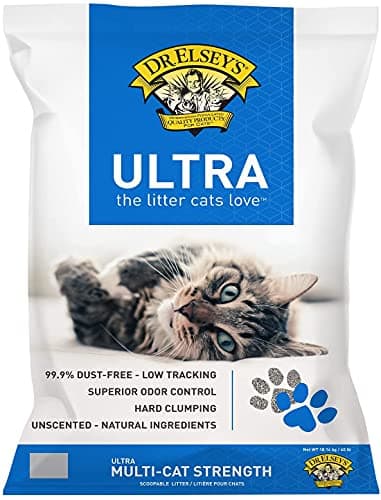
Dr. Elsey’s Ultra is the softest landing for a switch, because it matches the published preference profile on every count: unscented, medium grain, and free of the plant proteins and deodorants that get added to compete on smell. A cat moving from any ordinary clay litter usually does not notice.
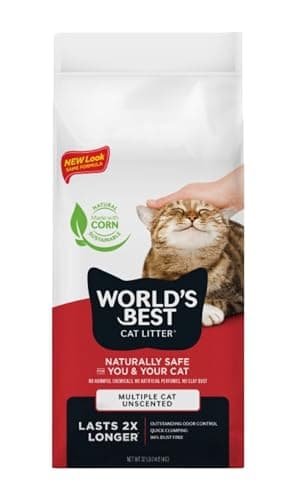
World’s Best is a bigger step -- corn granules feel different underfoot than clay -- but it is unscented and clumps on contact, and the 28 lb bag against clay’s 40 lb is the reason most people try it. Expect to need the full two weeks.
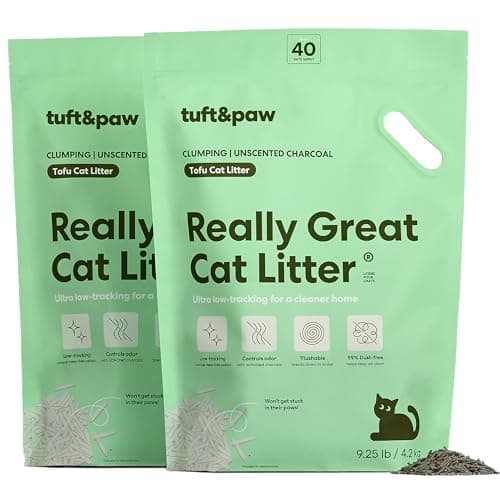
Tofu litter is the biggest texture change we recommend attempting: soybean pellets, 58 percent lighter than clay, flushable on the maker’s own third-party testing. Some cats take to it immediately and some never do, which is exactly the case for running the two-box test rather than committing a whole box to it.
When a switch fails
- Go back to the old litter immediately. Re-establish the habit first; you can try again in a month.
- Clean the accident properly with an enzyme cleaner, or the spot itself becomes the reason it keeps happening. Our enzyme cleaner page covers method.
- Check nothing else changed -- a moved box, a new deodorizer, a different depth. Two inches is the published guidance.
- If the cat is still avoiding the box after a return to the old litter, that is a vet conversation, not a litter one. The Cornell Feline Health Center lists urinating outside the box among the signs of lower urinary tract disease.
The gear discussed here
Specs are the manufacturer's own, linked to the page they came from. Prices come from a live daily check; where we have no verified price we say so rather than print a stale one.
Dr. Elsey's Ultra Unscented Clumping Clay Litter
Dr. Elsey's · Cat litter · Our score 8.8/10
#ad Price as of September 25, 2026. Prices move; we check daily. How we're funded.
Unscented, medium-grain, 99.9 percent dust-free -- which is the exact specification the veterinary guidance on litter preference describes, rather than a marketing claim.
Published specs
| Material | Natural clay |
|---|---|
| Scent | None; no perfumes or deodorants |
| Dust | 99.9 percent dust-free (Dr. Elsey's) |
| Grain | Medium grain with heavier non-tracking granules |
| Bag size | 40 lb |
| Additives | Free of plant proteins, perfumes and deodorants |
Source: Dr. Elsey's -- Ultra Litter product page
The Ohio State Indoor Pet Initiative says most cats prefer fine-grained, unscented litter and are deterred by scented or deodorant products. This litter is unscented, deodorant-free and fine-to-medium grain -- it meets all three published criteria. Very few litters marketed for odor control do.
What the specs favor
- Unscented and deodorant-free, matching the documented feline preference
- 99.9 percent dust-free by the maker's own measure
- Heavier granules specifically to reduce tracking
- Hard clumping, so waste leaves the box intact
What they don't
- Clay, so it is heavy to carry and heavy to lift out
- No added fragrance means it does nothing to mask odor between scoops
- 40 lb bag is awkward to store in a flat
You want the litter to do the odor work for you. This one is deliberately inert -- it relies on you scooping daily, which is what the veterinary guidance asks for anyway.
How it scores
Scores are our editorial weighting of the published specs above, not a test result. They are deliberately kept out of this page's structured data.
World's Best Cat Litter Multiple Cat Clumping Formula
World's Best Cat Litter · Cat litter · Our score 8.0/10
#ad Price as of September 25, 2026. Prices move; we check daily. How we're funded.
Whole-kernel corn rather than clay, which makes the bag light enough to carry up stairs and the litter light enough that a cat carries it out on its feet.
Published specs
| Material | Whole-kernel corn |
|---|---|
| Scent | Unscented |
| Form | Compressed granules |
| Dust | 99 percent dust-free (maker) |
| Formulation | Multi-cat, with an added plant derivative for odor |
| Clumping | Clumps on contact |
Source: Chewy -- World's Best Multi-Cat Unscented Clumping Corn Litter listing
The multi-cat corn formula ships in a 28 lb bag against Dr. Elsey's 40 lb clay. Same job, 12 lb less to carry, because corn is less dense than clay -- and less dense is also why it tracks further.
What the specs favor
- Unscented, matching the documented preference
- Corn base is markedly lighter than clay per bag
- Clumps on contact rather than needing time to set
- Multi-cat formulation with an added plant derivative for odor
What they don't
- Light granules track further through the house than clay
- Corn attracts pantry pests if the bag is left open in a warm room
- Costs more per pound than commodity clay
Tracking is already your worst problem. Lighter granules travel further, and this is a lighter granule than any clay on this page.
How it scores
Scores are our editorial weighting of the published specs above, not a test result. They are deliberately kept out of this page's structured data.
Tuft & Paw Really Great Cat Litter
Tuft & Paw · Tofu litter · Our score 8.0/10
#ad Price as of September 25, 2026. Prices move; we check daily. How we're funded.
The only substrate here with a published third-party flushability test and a published duration figure, which together make it the most checkable claim set in the category.
Published specs
| Material | Soybean-based (tofu) pellets |
|---|---|
| Bag size | 9.25 lb |
| Published duration | Up to 40 days for a single cat |
| Weight | 58 percent lighter than traditional clay litter |
| Dust | 99 percent dust-free |
| Flushable | Yes -- third-party tested, breaks down in water |
| Clumping | Yes |
| Scent options | Unscented charcoal, lightly scented lavender |
Tuft & Paw publishes up to 40 days per 9.25 lb bag for one cat. 365 / 40 = 9.1 bags a year, or about 84 lb of litter carried home. A clay household at our own scoop arithmetic goes through roughly a 20 lb bag every three to four weeks -- around 280 lb a year. The weight difference is the argument, and it is theirs, not ours.
What the specs favor
- Publishes a duration figure per bag, which very few litters do
- Third-party tested for flushability, stated as such rather than implied
- 58 percent lighter than clay on the maker's own figure
- Clumps, so the daily routine is unchanged from clay
What they don't
- Premium price per pound -- the most expensive substrate on this page
- Flushing cat waste is prohibited or discouraged in many municipalities regardless of the litter
- Published duration is for one cat, and multi-cat households will not see 40 days
- Pellets are large, which some cats dislike underfoot
Your local water authority discourages flushing pet waste, which many do. Without flushing you are paying a premium for weight savings alone, and wheat or corn gets you most of that for less.
How it scores
Scores are our editorial weighting of the published specs above, not a test result. They are deliberately kept out of this page's structured data.
Common questions
How long does it take to switch cat litter?
How do I transition to a new litter?
Why won't my cat use the new litter?
Can I just put out two boxes with different litters?
Should I change litter and litter box at the same time?
Sources
- Dr. Elsey's -- Ultra Litter product page
- Chewy -- World's Best Multi-Cat Unscented Clumping Corn Litter listing
- Tuft & Paw -- Really Great Cat Litter product page (soybean pellets, 9.25 lb, up to 40 days for one cat, 58 percent lighter than clay, 99 percent dust-free, third-party flushability testing)
- Ohio State University Indoor Pet Initiative -- Litter Boxes
Read next
- Clumping vs Non-Clumping Cat Litter
An attribute-by-attribute comparison of clumping and non-clumping litter, and why multi-cat homes almost always want clumping.
- Best Unscented Cat Litter (2026)
Unscented litters compared on published dust, grain and clumping, with the published guidance on what cats prefer underfoot.
- Cat Litter Types Compared
Clay, crystal, corn, wheat, pine, paper and tofu compared on published specifications, with an honest note on which figures are comparable.
- Best Cat Litter for Multiple Cats (2026)
Why the best odor-control litter is often the wrong buy for three cats, and which specification to rank on instead.
- How Often to Clean a Litter Box
The three separate cleaning jobs a litter box needs, on three different schedules, with the litter volume arithmetic per cat.