Beds, Carriers & Daily Care
Best Cat Scales (2026)
Every scale in this category advertises grams of resolution. None of them needs them. The specification that decides whether you get a usable number is the one two of the three decline to publish.
Affiliate disclosure: we earn a commission if you buy through our links, at no extra cost to you. It never changes which product we rank first — here is how we're funded.
Everyone in this category says they tested twenty litter boxes. We have not tested any, and we say so. What we do instead: compile the published specs, read the manuals, and do the arithmetic on what this gear costs to run and how it behaves once there is more than one cat using it. Every spec is linked to the document it came from. Prices are checked daily — last verified October 19, 2026. Here is exactly how we pick.
Quick picks
Ranked on the published specs and the arithmetic below. Tap any row to jump to the full write-up. We have not tested these — here is exactly how we pick.
| # | Product | Best for | Score | Price |
|---|---|---|---|---|
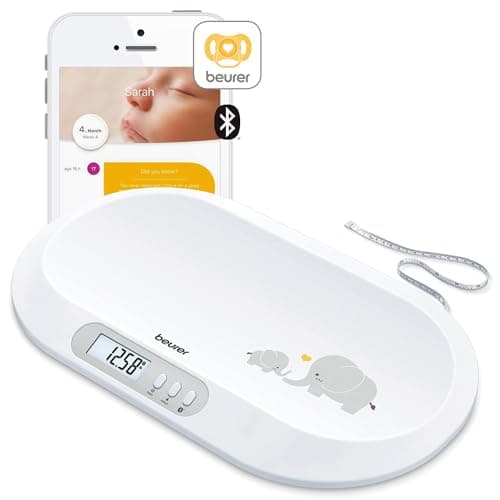
| 1 | Beurer BY90 Digital Baby & Pet Scale A medical-brand baby scale that publishes the two features a moving cat actually needs -- automatic and manual hold, and a memory that turns single readings into a trend. | The only one that publishes a hold function and keeps a trend | 8.3 | |
| 2 | 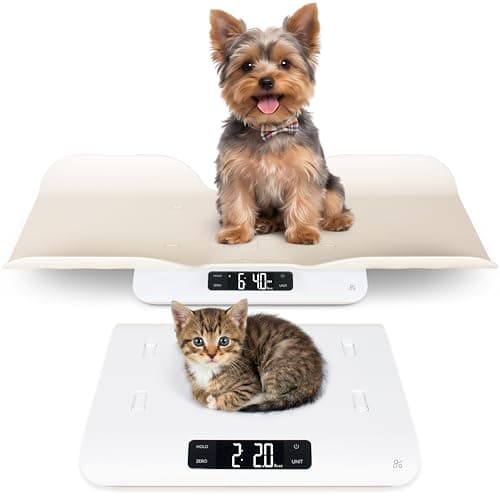 Greater Goods Wiggle-Proof Digital Pet Scale The one scale here designed around the actual problem -- a motion-averaging algorithm for an animal that moves -- rather than around resolution it does not need. | A cat that will not stand still | 7.8 | |
| 3 | 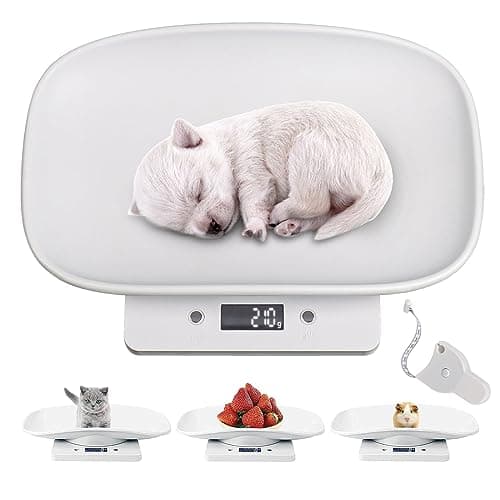 Qulable Digital Pet Scale, 33 lb The cheapest scale here publishes the finest resolution and the only platform figure in the category -- which tells you something uncomfortable about what the other two charge for. | The finest published resolution, for the least money | 7.2 |
#ad Buy links are affiliate links. Prices come from a live daily check; where we have no verified price we say "check price" rather than print a stale one.
Buy the Beurer BY90. It is the only scale here that publishes a hold function — automatic and manual — and a 10-reading memory, which are the two features that decide whether you end up with a usable number. Buy the Greater Goods if your cat genuinely will not stand still, and the Qulable if you want the finest published resolution for the least money. Resolution, which is the specification all three advertise, is the one that stops mattering first.
Why a cat site has a scale page at all
This site is written for households with more than one cat, and weight is the single thing a multi-cat household cannot read off its own floor. Food bowls are shared. A cat that eats less is invisible if another cat makes up the difference at the same bowl. Our microchip feeder page and pet camera page both answer which cat ate. Neither answers which cat is getting lighter, and that is the question that matters earlier.
Weight change is also the signal that moves first and quietly. By the time a cat looks thinner it has usually been getting thinner for a while, and a number written down monthly catches it long before an eye does. That is the entire case for a twenty-to-sixty dollar object.
What we required before a scale made this page
- A published capacity that covers a cat with headroom. Every scale here clears 33 lb, which is more than any domestic cat.
- A published resolution. Not because you need much of it, but because a maker that will not state it has told you something.
- Some stated answer to movement. A hold function, a tare, or an averaging algorithm. A scale with none of the three is a scale for objects.
- Currently purchasable. All three were checked as in stock before being written up, and each buy link goes to a specific listing rather than a search page.
We have not tested any of these and we own no reference masses. What we can do is read what each maker publishes, do the arithmetic on what a cat owner actually needs to detect, and say plainly where the two do not line up.
The resolution race, settled with arithmetic
A change worth acting on in a cat is commonly discussed as about 5 percent of body weight. Take a 10 lb cat: 5 percent is 0.5 lb, which is 227 g.
1 g scale (the Qulable): 227 / 1 = 227 times finer than the change you are looking for.
5 g scale (the Greater Goods, and the Beurer on its retailers' figure): 227 / 5 = 45 times finer.
Bathroom scale at 0.2 lb (about 91 g): 227 / 91 = 2.5 graduations. Technically visible, and sitting inside the noise of an instrument built for a 150 lb adult.
So the pet scales are not competing on something that matters. All of them are dramatically finer than the job, and the gap between 1 g and 5 g is irrelevant to any decision you will make. What is not irrelevant is whether the number holds still long enough to read, and whether you still have last month’s.
What the three publish
| Beurer BY90 | Greater Goods Wiggle-Proof | Qulable 33 lb | |
|---|---|---|---|
| Capacity | 20 kg; 44 lb per Beurer US | 44 lb | 33 lb / 15 kg |
| Resolution | 0.2 oz (Beurer US) vs 5 g (retailers) -- they disagree | 5 g | 1 g |
| Hold function | Automatic and manual | Not published; an averaging algorithm instead | Not published |
| Tare | Yes | Yes | Not published |
| Memory | 10 readings | None published | None published |
| App | Bluetooth, Beurer BabyCare | None | None |
| Platform size | Not published | Not published | 11.5" tray |
| Overall size | 560 x 230 x 47 mm, 1.5 kg (retailer) | Not published | Not published |
| Units | kg, lb, oz | Not published | Not published |
| Power | Not published in our source | Not published | 2 x AAA, not included |
| Maker spec sheet exists | Yes | Product page only | None we could find |
Makers' and retailers' published figures as named in our sources. Every 'not published' is a finding rather than a research gap. Note that only one of the three publishes a platform dimension, and it is the cheapest.
The specification nobody publishes
Here is the gap that should bother you most. A cat has to sit entirely on the platform for the reading to mean anything — a paw on the floor is a lighter cat. So the platform dimension is the figure that decides whether a scale works for your animal, and two of the three do not publish it. The only platform figure in the category comes from the cheapest scale: an 11.5 inch tray.
Eleven and a half inches is adequate for a cat sitting in a loaf and tight for a large cat that wants to stand. For reference, our carrier sizing guide works from nose-to-tail-base measured standing, and the same measurement is the one to hold against a scale tray. If you have a Maine Coon, measure it before you buy anything on this page, because none of these makers will tell you whether it fits.
The picks, and who each is for
The Beurer BY90 is the pick for almost everyone, and it wins on the two specifications the rest of the category skips. It publishes automatic and manual hold — the function that freezes a reading once it stabilizes, which is the difference between a number and a flickering display when a cat shifts its weight — plus a tare, a memory for 10 readings, and Bluetooth to the free Beurer BabyCare app. The memory is why it leads: a trend is the product here, and a scale that remembers last month means you do not need a notebook you will not keep. 20 kg capacity, kg/lb/oz switching, and a real medical-brand spec sheet. For: multi-cat homes, senior cats, any cat a vet has asked you to monitor. Skip it if: you want one number for one vet visit — the hold and the memory are tracking features and you would be paying for both. The honest cons: Beurer’s own graduation claim (0.2 oz) contradicts its retailers (5 g) and we are not going to pick between them; it publishes no platform size; the weighing surface is curved for an infant, which is the wrong shape for a cat that wants to stand flat; and it is a baby scale with pets added, so the app talks about babies.
The Greater Goods Wiggle-Proof is the pick if your cat genuinely will not settle, because it is the only product here designed around that problem rather than around resolution. The stated mechanism is a motion-averaging algorithm — the maker’s term is wiggle-proof — with a 44 lb capacity, 5 g resolution and a tare function that lets you zero out a towel or a carrier base and weigh the cat inside it. For: kittens, fidgety cats, and anyone who has given up trying to get a steady reading. Skip it if: your cat sits still on a towel, because the entire premium here is paid for motion handling. The honest cons: it is the most expensive scale here and publishes the coarsest resolution; no platform size, so large-cat fit is unknown until it arrives; it publishes an algorithm rather than a hold function, which means you cannot compare it against scales that state one; and with no memory and no app, every reading goes in a notebook or it is gone.
The Qulable 33 lb is the pick if you want the numbers for the least money, and it is genuinely good value rather than a booby prize. It publishes 1 g resolution — the finest here — a 33 lb capacity that covers every domestic cat with room to spare, an 11.5 inch tray which is the only platform figure anybody in this category discloses, and it runs on two AAA cells so there is nothing to charge. For: a calm cat, a kitten being weighed weekly, a second scale for a different room. Skip it if: your cat moves — and this is the real limitation, not the price. The honest cons: it publishes no hold and no tare, which are exactly the features a moving animal needs, so this is the scale most likely to show you a number that will not settle; there is no manufacturer spec sheet we could find, so every figure above comes from a retail listing; the batteries are not included; and there is no support story if it drifts out of calibration.
How to actually weigh a cat
- Same time of day, before food. A cat carrying a meal and water is measurably heavier than the same cat at dawn. Comparing a Tuesday evening reading with a Sunday morning one produces a change that is not real.
- Tare a towel onto the platform. Most cats will sit on a familiar towel and will not sit on cold plastic. Zero the scale with the towel on it and the towel stops existing.
- Or weigh the carrier, then the carrier plus cat. Subtract. This is the fallback for a cat that will not sit on anything, and it works on any scale with a tare — or on none, with arithmetic.
- Wait for the hold, do not chase the display. If the scale has a hold function, the number it freezes is the answer. If it does not, take three readings and use the middle one.
- Write it down with the date. One reading is a number. Three readings a month apart are information. This is the step people skip, and it is the only one that matters.
- Monthly for a healthy adult. More often only if a vet has asked. Weighing a cat weekly produces noise you will misread as a trend.
In a house with several cats
- Weigh every cat on the same day. A household trend is more readable than four separate ones, and it costs five extra minutes.
- Attribute before you intervene. If one cat is losing and another gaining on a shared bowl, that is a resource problem rather than a health one — our resource competition guide covers it, and stopping cats fighting over food handles the layout fix.
- A scale is the cheap half of the diagnosis. A microchip feeder tells you who ate what; the scale tells you what it did to them. Together they answer a question neither answers alone, which our microchip against automatic comparison sets up.
- Prescription diets make this non-optional. If one cat is on a controlled food, weight is how you find out whether the separation is actually working. See feeding cats on different diets.
What a scale is not
Related reading
For the other half of the multi-cat monitoring problem, microchip feeders control who eats and pet cameras show you who is at the bowl. For an older cat being watched more closely, beds for senior cats ranks on the step-over height that matters once mobility changes, and the multi-cat household guide sets the resource counts everything else depends on.
The picks in full
Specs are the manufacturer's own, linked to the page they came from. Prices come from a live daily check; where we have no verified price we say so rather than print a stale one.
Beurer BY90 Digital Baby & Pet Scale
Beurer · Pet scale · Our score 8.3/10
#ad Price as of October 19, 2026. Prices move; we check daily. How we're funded.
A medical-brand baby scale that publishes the two features a moving cat actually needs -- automatic and manual hold, and a memory that turns single readings into a trend.
Published specs
| Capacity | 20 kg; Beurer US states up to 44 lb |
|---|---|
| Graduation | Retailer listings say 5 g; Beurer's US page says the display moves in 0.2 oz steps. The two do not agree. |
| Hold | Automatic and manual hold functions |
| Tare | Yes |
| Memory | 10 readings |
| Units | kg, lb, oz |
| App | Bluetooth to the free Beurer BabyCare app |
| Surface | Curved weighing surface |
| Also includes | Built-in 150 cm tape measure |
| Overall size | 560 x 230 x 47 mm, 1.5 kg (retailer) |
| Platform size | Not published |
A single weight is a number, not information. Cats vary through the day with food and water in them -- a 10 lb cat carrying 100 ml of water and a meal is measurably heavier than the same cat before breakfast. So one reading cannot distinguish a real change from a full stomach. Weigh at the same time of day, before food, and look at the third reading before concluding anything. That is why the 10-reading memory on this scale matters more than its graduation does: the memory is what makes the comparison possible without a notebook.
What the specs favor
- The only scale here that publishes a hold function, and it publishes two (automatic and manual)
- Memory for 10 readings, so a trend exists without you writing anything down
- Bluetooth to a real app rather than a proprietary dead end
- Switches between kg, lb and oz, which matters when a vet quotes one and you track another
- A medical-device brand with a published spec sheet, which this category mostly lacks
What they don't
- Beurer's own graduation claim (0.2 oz) conflicts with its retailers (5 g); we report both rather than picking
- No published platform size, which for a cat that must sit entirely on it is the figure you most want
- A curved surface suits an infant and is the wrong shape for a cat that wants to stand
- It is a baby scale with pets added, not a cat product, so the app language is about infants
- Bigger than it needs to be at 560 mm long
You only need one number for the vet. A hold function and a 10-reading memory are features for tracking over months, and if you are not going to track, a cheaper scale weighs the same cat.
How it scores
Scores are our editorial weighting of the published specs above, not a test result. They are deliberately kept out of this page's structured data.
Greater Goods Wiggle-Proof Digital Pet Scale
Greater Goods · Pet scale · Our score 7.8/10
#ad Price as of October 19, 2026. Prices move; we check daily. How we're funded.
The one scale here designed around the actual problem -- a motion-averaging algorithm for an animal that moves -- rather than around resolution it does not need.
Published specs
| Capacity | 44 lb |
|---|---|
| Resolution | 5 g, per the retail listing |
| Motion handling | Wiggle-proof averaging algorithm (maker's term) |
| Tare | Yes -- zeroes out a bowl or towel on the platform |
| Intended for | Cats, dogs and small animals |
| Platform size | Not published |
| Hold function | Not published as such; the algorithm is the stated mechanism |
| Designed in | St. Louis |
What the specs favor
- Built around motion, which is the real obstacle to weighing a cat
- Tare lets you weigh a cat in a carrier or on a towel and subtract it
- 44 lb capacity covers any cat and most small dogs
- 5 g resolution is far finer than any change you need to detect
- A named brand with a product page, unlike most of this shelf
What they don't
- No published platform size, so whether a large cat fits is unknown before it arrives
- Publishes an algorithm rather than a hold function, so you cannot compare it with scales that do
- The dearest of the three and the coarsest published resolution
- No memory and no app, so every reading has to be written down
- 5 g resolution is marketing headroom rather than a usable advantage
Your cat sits still on a towel. The premium here is paid entirely for motion handling, and a calm cat does not need it.
How it scores
Scores are our editorial weighting of the published specs above, not a test result. They are deliberately kept out of this page's structured data.
Qulable Digital Pet Scale, 33 lb
Qulable · Pet scale · Our score 7.2/10
#ad Price as of October 19, 2026. Prices move; we check daily. How we're funded.
The cheapest scale here publishes the finest resolution and the only platform figure in the category -- which tells you something uncomfortable about what the other two charge for.
Published specs
| Capacity | 33 lb / 15 kg |
|---|---|
| Resolution | 1 g |
| Tray length | 11.5" -- the only published platform figure of the three |
| Display | LCD |
| Power | 2 x AAA, not included |
| Intended for | Newborn puppies and kittens, small pets |
| Hold or tare | Not published; do not assume it has either |
| Maker spec sheet | None we could find -- figures are from retail listings |
A change worth acting on in a cat is usually discussed as about 5 percent of body weight. For a 10 lb cat that is 0.5 lb, which is 227 g. A scale graduated to 1 g therefore resolves that change 227 times over, and the 5 g scales resolve it 45 times over. Both are enormously finer than the job requires. That is the whole point: resolution is the specification this category advertises and the one that stops mattering first. What decides whether you get a usable number is whether the cat holds still and whether you write it down.
What the specs favor
- 1 g published resolution, the finest of the three and far finer than needed
- The only scale here that publishes a platform dimension at all (11.5 in tray)
- 33 lb covers every domestic cat with headroom
- Cheapest of the three by a wide margin
- Runs on AAA cells, so there is no charging and no cord
What they don't
- No published hold or tare function, which are the features that matter for a moving animal
- No manufacturer spec sheet we could find; every figure here is from a retail listing
- 33 lb is the lowest capacity here, though still ample for a cat
- Batteries are not included
- An unbranded-tier product with no support story if it drifts out of calibration
Your cat will not sit still. Without a published hold function this is the scale most likely to show you a number that keeps moving, and that is the one failure that makes a scale useless.
How it scores
Scores are our editorial weighting of the published specs above, not a test result. They are deliberately kept out of this page's structured data.
Common questions
What is the best scale for weighing a cat?
Can I weigh my cat on a bathroom scale?
How accurate does a cat scale need to be?
How do you weigh a cat that will not sit still?
How often should you weigh a cat?
Why weigh cats in a multi-cat house?
Sources
- Beurer -- BY90 Bluetooth Digital Baby & Pet Scale (20 kg / up to 44 lb, automatic and manual hold, tare, memory for 10 readings, kg/lb/oz, Bluetooth to the Beurer BabyCare app, curved weighing surface, built-in 150 cm tape measure; graduation stated as 0.2 oz on Beurer's US page against 5 g on retailer listings; platform size not published)
- Retail listing -- Greater Goods Wiggle-Proof Digital Pet Scale for Cats, Dogs & Small Animals (44 lb capacity, 5 g resolution, wiggle-proof averaging algorithm, tare function, designed in St. Louis; platform dimensions not published)
- Retail listings -- Qulable Puppy Scale for Newborn Puppies & Kittens, 33 lb Digital Pet Scale (33 lb / 15 kg capacity, 1 g resolution, 11.5 in tray, LCD, 2 x AAA batteries not included; no hold or tare function published and no manufacturer spec sheet found)
- Cornell Feline Health Center -- feline health information
- Ohio State University Indoor Pet Initiative -- Food and feeding for indoor cats
Read next
- Feeding Cats on Different Diets
Four ways to feed cats different diets in one household, ranked by whether they still work when nobody is home.
- Best Microchip Cat Feeders (2026)
Selective-access feeders compared against timed and hopper feeders, and which one solves the problem you actually have.
- Best Pet Cameras for Cats (2026)
Pet cameras compared on published field of view, night vision and subscription, with where to point one in a multi-cat home.
- Best Cat Beds for Senior Cats (2026)
Beds ranked on step-over height and flat landing area rather than plushness: 312 square inches of zero-step surface against 115, and the 6-inch wall an arthritic cat has to clear.
- Resource Competition Between Cats
How to recognize resource guarding, why it rarely looks like fighting, and the environmental changes that reduce it.