Scratchers & Furniture Protection
How to Stop a Cat Scratching Doors
A cat working at a door is usually asking for something on the other side. That makes this the one scratching problem where the scratcher is not the first fix.
Affiliate disclosure: we earn a commission if you buy through our links, at no extra cost to you. It never changes which product we rank first — here is how we're funded.
Everyone in this category says they tested twenty litter boxes. We have not tested any, and we say so. What we do instead: compile the published specs, read the manuals, and do the arithmetic on what this gear costs to run and how it behaves once there is more than one cat using it. Every spec is linked to the document it came from. Prices are checked daily — last verified September 27, 2026. Here is exactly how we pick.
Carpet and sofas get scratched because they feel right. Doors get scratched because they are in the way, and that difference changes the entire fix.
Work out which door problem you have
- Access. The scratching happens at a closed door and stops when it opens. This is the common case and it is a request, not a habit.
- Threshold marking. The scratching happens at the frame of a door that is usually open, often at a boundary between territories in a multi-cat house.
- Surface preference. The cat has decided the door face is a good texture and uses it whether the door is open or shut.
The Ohio State Indoor Pet Initiative treats scratching as normal behavior to be redirected rather than stopped, and that applies to all three — but only the third is really about the surface.
If it is access, fix the access
- Move the resources to the cat’s side. A cat shut away from its litter box or water at night has a legitimate complaint, and no scratcher answers it.
- Be consistent. A door that opens after ten minutes of scratching has taught the cat exactly how long to scratch. Either it opens or it does not.
- Spend the energy earlier. A proper hunt-and-catch session before bed does more for a night-time door than anything you can stick on it — our play guide covers the sequence.
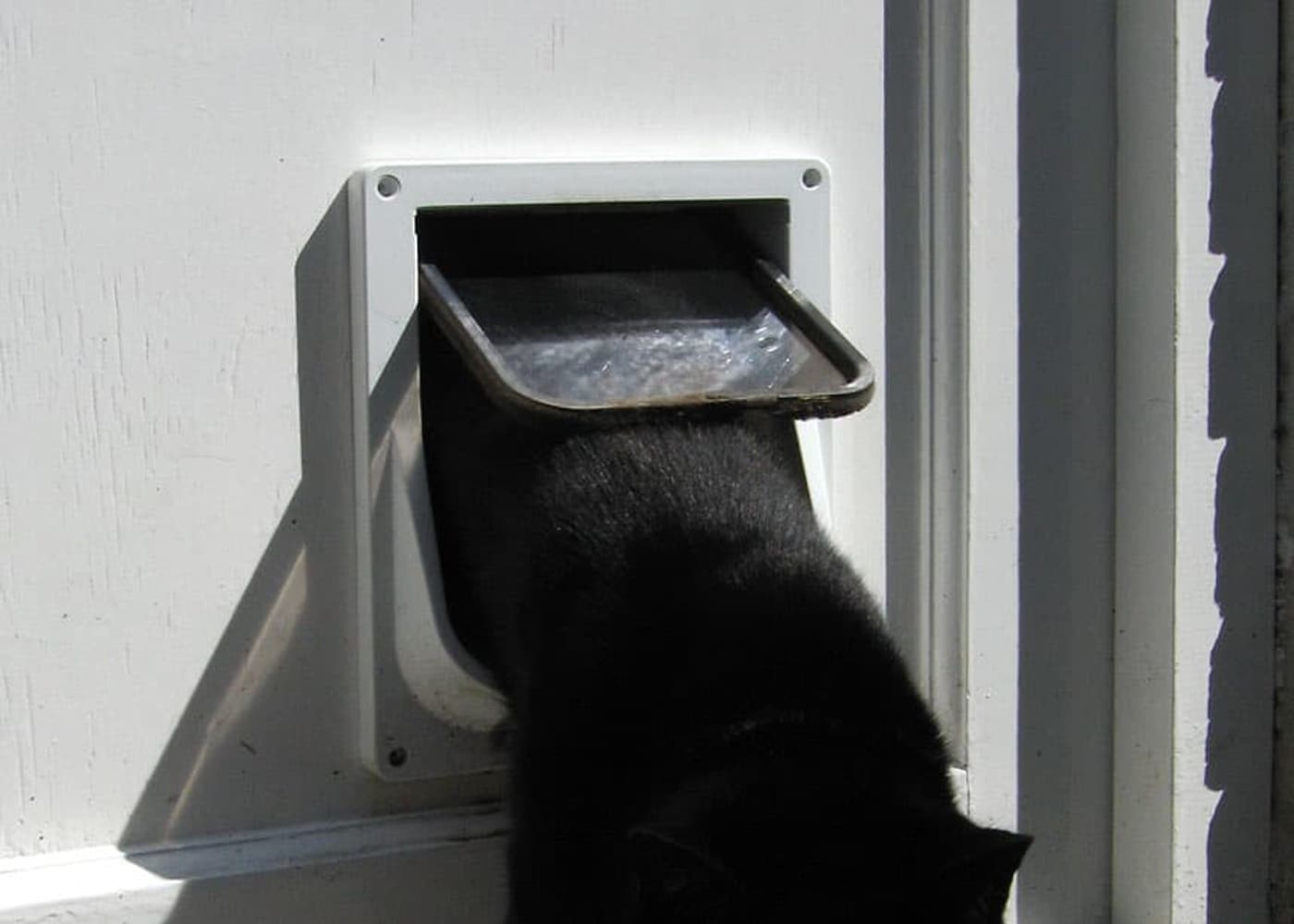
- Consider an interior cat door for rooms the cat should reach, so the door can stay shut without the negotiation.
What the protection and substitute options publish
| Product | Size | Fixing | Use |
|---|---|---|---|
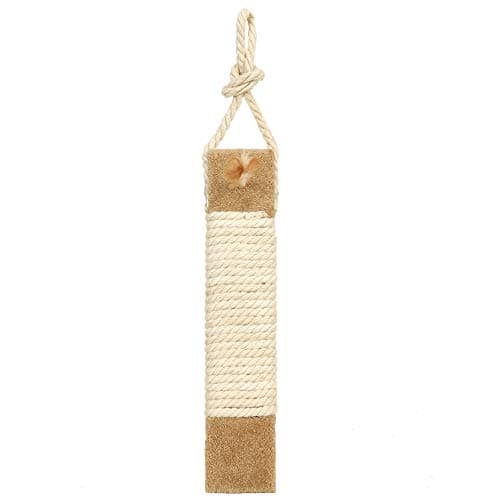
| Ware Carpeted Kitty Scratch Door Hanger | 19" long | Hangs over the door | Vertical surface, no floor used |
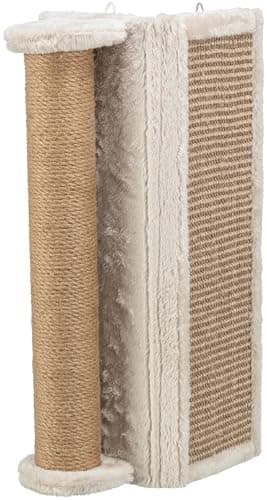
| TRIXIE Wall Mount Sisal Board | 23.6" x 12.6" x 1"; 3.2 lb | Wall hardware included; corner or flat | Beside a frame, at the threshold |
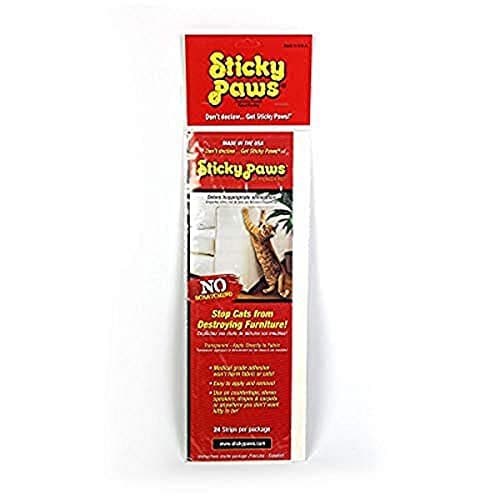
| Sticky Paws Furniture Strips | Strips about 2" x 12"; XL sheets 9" x 12" | Transparent two-sided adhesive | On the scratched area itself |
Manufacturers' published figures.
The pairing that actually works
Tape alone moves the problem to the next door. A scratcher alone leaves the original surface just as attractive as it was.
Do both at once: Sticky Paws across the scratched panel or frame, and an approved vertical surface within a paw’s reach of it — a door hanger on the door itself, or a wall board beside the frame.
Leave the tape up for a few weeks after the scratching stops. Taking it down the day the behavior pauses is how people end up doing this three times.
The gear discussed here
The Ware carpeted door hanger is the simplest substitute for a door-face scratcher: 19 inches of carpeted surface that hangs over the top of the door, using no floor at all. Honest cons: it is carpet rather than sisal, and a hanging board moves when the door does, which not every cat tolerates.
The TRIXIE wall-mounted sisal board is the steadier option for a frame or threshold: 23.6 by 12.6 inches of sisal on a board that fixes to a flat wall or a corner, with hardware included. Honest cons: it needs drilling, and TRIXIE suits it to cats up to about 15 lb.
Sticky Paws strips handle the protection half: transparent medical-grade two-sided tape in 2 by 12 inch strips, with larger sheets and a roll available for a door panel. Honest cons: adhesive on paint is always a risk worth testing in a corner first, and tape is a temporary measure by design.
Read the guide
For the other surfaces, our furniture page covers sofas and the carpet page covers floors — both follow the same protect-and-substitute pattern with different products.
The gear discussed here
Specs are the manufacturer's own, linked to the page they came from. Prices come from a live daily check; where we have no verified price we say so rather than print a stale one.
Ware Carpeted Kitty Scratch Door Hanger
Ware Manufacturing · Door-hanging scratcher · Our score 6.3/10
#ad Price as of September 27, 2026. Prices move; we check daily. How we're funded.
A 19 inch carpeted panel that hangs on a door -- simple and cheap, with the honest caveat that carpet teaches a cat that carpet is for scratching.
Published specs
| Length | 19" |
|---|---|
| Surface | Carpet |
| Mounting | Hangs on a door |
Source: Ware Manufacturing -- Carpeted Kitty Scratch Surface Door Hanger listing (19 in)
Our carpet-against-sisal page makes the case that carpet on a scratcher teaches a cat that carpet is scratchable -- including the carpet on your floor. A carpeted door hanger is cheap and it works, and it is worth knowing which lesson it is teaching.
What the specs favor
- Very cheap, and needs no tools
- Uses a door the cat may already be scratching
- No floor footprint
What they don't
- Carpet, not sisal -- it reinforces carpet scratching elsewhere
- 19" is short for a full stretch
- Swings with the door
Your cat already scratches carpet. A carpeted scratcher rewards the habit you are trying to redirect, and a sisal surface is the better lesson.
How it scores
Scores are our editorial weighting of the published specs above, not a test result. They are deliberately kept out of this page's structured data.
TRIXIE Wall Mount Sisal Scratching Board
TRIXIE · Wall-mounted scratcher · Our score 7.7/10
#ad Price as of September 27, 2026. Prices move; we check daily. How we're funded.
Under an inch thick and mountable in the exact corner a cat is already working on, which is the one placement rule our scratching pages keep coming back to.
Published specs
| Dimensions | 1" x 12.6" x 23.6" |
|---|---|
| Weight | 3.2 lb |
| Materials | MDF, sisal, plush polyester |
| Mounting | Wall hardware included; corner or flat wall |
| Suited to | Cats up to about 15 lb, per the listing |
The board is 1 inch deep and hangs on the wall, so its floor cost is nothing. It gives 23.6 inches of vertical scratch travel -- short of the 32 inches our posts page argues for a full adult stretch, but longer than most cardboard scratchers and available in places a post cannot stand.
What the specs favor
- No floor footprint at all, which no post can match
- Mounts in a corner, where cats often prefer to scratch
- Sisal over MDF is a rigid surface, so it does not flex under a pull
- Hardware included rather than sold separately
What they don't
- 23.6 inches is under the 32 inch full-stretch height for a large cat
- Needs a fixing into something solid, so it is not renter-friendly
- Fixed height, so it suits one cat's stretch rather than a household of sizes
Your cat scratches horizontally. Wall boards answer a vertical need, and a cat working on the carpet is telling you it wants the other orientation.
How it scores
Scores are our editorial weighting of the published specs above, not a test result. They are deliberately kept out of this page's structured data.
Sticky Paws Furniture Strips
Pioneer Pet · Furniture protector · Our score 6.9/10
#ad Price as of September 27, 2026. Prices move; we check daily. How we're funded.
Double-sided transparent tape that makes one arm of a sofa unpleasant -- genuinely effective, and worth nothing at all unless a scratching post goes up beside it the same day.
Published specs
| Strips | 24 per pack, roughly 2" x 12" each |
|---|---|
| XL sheets | Roughly 9" x 12" |
| On-a-Roll | Over 32 feet, cut to length |
| Adhesive | Transparent, medical grade, odor free |
| Mechanism | Two-sided tape, unpleasant to touch |
A typical sofa arm presents roughly 12 by 24 inches of scratchable face. At 2 by 12 inches a strip covers 24 square inches, so 288 / 24 = 12 strips for full coverage -- or about 6 spaced across the area cats actually target, which is the vertical face nearest the seat.
What the specs favor
- Works immediately, unlike anything that depends on the cat learning something
- Transparent, so it is not furniture-defacing while it is on
- Three formats, including a roll you can cut to any length
- Cheap enough to cover several targets at once
What they don't
- Treats the symptom -- scratching is a need, not a habit
- Adhesive can lift finish on some fabrics and leathers, so test a hidden patch
- Needs replacing as it collects hair and dust
You have not put a post up. Blocking every surface without giving a cat an approved one is how a scratching problem moves to the carpet instead of stopping.
How it scores
Scores are our editorial weighting of the published specs above, not a test result. They are deliberately kept out of this page's structured data.
Common questions
Why does my cat scratch at doors?
How do I stop a cat scratching a door at night?
What protects a door or frame from claws?
Do door-hanging scratchers work?
Should I install a cat door instead?
Sources
- Ware Manufacturing -- Carpeted Kitty Scratch Surface Door Hanger listing (19 in)
- TRIXIE -- Wall Mount Sisal Scratching Board for Corners (1 x 12.6 x 23.6 in, 3.2 lb, MDF / sisal / plush)
- Pioneer Pet -- Sticky Paws Furniture Strips listing (24 strips, approximately 2 x 12 in, transparent medical grade adhesive)
- Ohio State University Indoor Pet Initiative -- For Cat Owners
Read next
- Best Hanging Door Cat Scratchers (2026)
Door-hanging scratchers and climbers compared on published size, fit and surface, with the renter's case and the door-swing problem.
- How to Stop a Cat Scratching the Furniture
Why cats scratch furniture, the free fixes that solve most cases, and the one purchase worth making if they do not.
- How to Stop a Cat Scratching the Carpet
Why carpet scratching happens where it does, and the three-part fix: an approved surface on the spot, a deterrent on the carpet, and claws kept short.
- Best Wall Mounted Cat Scratchers (2026)
Wall-mounted scratchers compared against floor posts and horizontal pads on published height, footprint and fixing requirements.
- Best Microchip Cat Doors (2026)
Microchip and manual cat doors compared on stored identities, flap aperture and published cut-out, with the two specs that actually decide it.