Scratchers & Furniture Protection
Best Wall Mounted Cat Scratchers (2026)
A wall scratcher takes no floor at all. It also cannot be moved once it is up, and it commits you to one height forever.
Affiliate disclosure: we earn a commission if you buy through our links, at no extra cost to you. It never changes which product we rank first — here is how we're funded.
Everyone in this category says they tested twenty litter boxes. We have not tested any, and we say so. What we do instead: compile the published specs, read the manuals, and do the arithmetic on what this gear costs to run and how it behaves once there is more than one cat using it. Every spec is linked to the document it came from. Prices are checked daily — last verified October 22, 2026. Here is exactly how we pick.
Quick picks
Ranked on the published specs and the arithmetic below. Tap any row to jump to the full write-up. We have not tested these — here is exactly how we pick.
| # | Product | Best for | Score | Price |
|---|---|---|---|---|
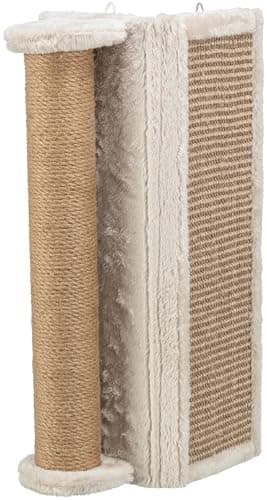
| 1 | TRIXIE Wall Mount Sisal Scratching Board Under an inch thick and mountable in the exact corner a cat is already working on, which is the one placement rule our scratching pages keep coming back to. | A corner the cat has already chosen | 7.7 | |
| 2 | 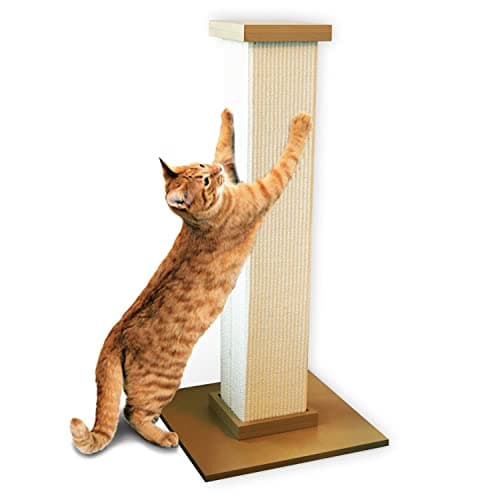 SmartCat Ultimate Scratching Post 32 inches tall on a 16-inch square base in woven sisal -- tall enough for a full stretch, which is the single reason cats reject most posts. | A cat that shreds the sofa arm | 8.9 | |
| 3 | 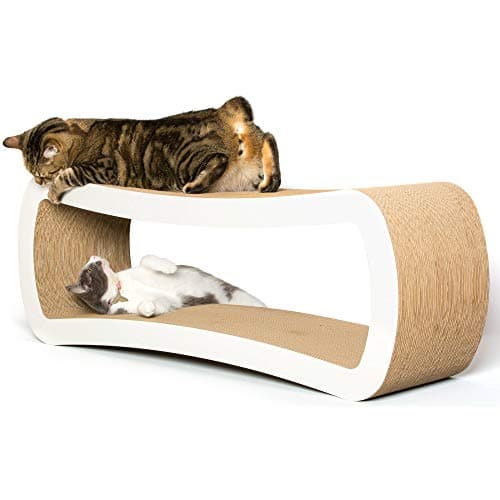 PetFusion Ultimate Cat Scratcher Lounge 34 inches of reversible corrugate -- the horizontal answer for the cat that is destroying carpet rather than furniture, and it doubles as somewhere to sleep. | Horizontal scratchers, and carpet-diggers | 8.0 |
#ad Buy links are affiliate links. Prices come from a live daily check; where we have no verified price we say "check price" rather than print a stale one.
Wall scratchers solve the one problem floor posts cannot: they cost nothing in floor space, in a category where a good post has a 16 inch square base.
Floor cost against height
| Product | Scratch height | Floor footprint | Orientation |
|---|---|---|---|
| TRIXIE wall board | 23.6" | None | Vertical |
| SmartCat Ultimate Post | 32" | 16" x 16" = 256 sq in | Vertical |
| PetFusion Lounge | Low | See product page | Horizontal |
Manufacturers' published figures. The wall board buys its zero footprint with 8.4 inches less scratch height.
The fixing is the product
This is the same argument as our shelf mounting guide, and it matters more here because a scratching cat pulls downward with real force rather than resting on the fixing.
- Into a stud where you can. A cat scratching applies a repeated shock load several times its body weight.
- Proper anchors where you cannot. Not the plastic plugs that came with a picture frame.
- Check the fixings after a fortnight, then seasonally. A board that has started to move will be abandoned.
- Nothing adhesive-only for a scratcher. A shelf carries weight downward onto a fixing; a scratcher pulls a fixing out of the wall.
Getting the height right
A cat scratches by reaching up and pulling down through its full stretch. The usable height is measured from the cat’s standing reach downward, not from the floor upward.
An average adult cat reaches roughly 30 to 34 inches up a vertical surface. Put the top of the board at that height and let the bottom sit wherever it lands — a 23.6 inch board then starts a few inches off the floor, which is fine.
Mounting a board with its bottom edge on the floor is the common error. It puts the top at 23.6 inches, below the cat’s reach, and the cat goes back to the sofa arm.
The two formats it competes with
The SmartCat Ultimate Post publishes 32 inches on a 16 inch square base — the height a wall board cannot match, at the cost of 256 square inches of floor. For a big cat that trade is worth making, and our large cat page makes the case.
A horizontal lounge answers a different need entirely. A cat working on the carpet wants a horizontal surface, and no amount of vertical board will satisfy it.
Placement still beats product
The Ohio State Indoor Pet Initiative treats scratching as territorial marking as well as claw maintenance, which is why the position of an approved surface matters as much as its specification. A wall board’s real advantage is that it can go exactly where a post cannot — the corner behind a door, the wall beside the sofa arm.
Pair it with the approach in our furniture protectors page: make the wrong surface unpleasant on the same day you make the right one available.
The picks in full
Specs are the manufacturer's own, linked to the page they came from. Prices come from a live daily check; where we have no verified price we say so rather than print a stale one.
TRIXIE Wall Mount Sisal Scratching Board
TRIXIE · Wall-mounted scratcher · Our score 7.7/10
#ad Price as of October 22, 2026. Prices move; we check daily. How we're funded.
Under an inch thick and mountable in the exact corner a cat is already working on, which is the one placement rule our scratching pages keep coming back to.
Published specs
| Dimensions | 1" x 12.6" x 23.6" |
|---|---|
| Weight | 3.2 lb |
| Materials | MDF, sisal, plush polyester |
| Mounting | Wall hardware included; corner or flat wall |
| Suited to | Cats up to about 15 lb, per the listing |
The board is 1 inch deep and hangs on the wall, so its floor cost is nothing. It gives 23.6 inches of vertical scratch travel -- short of the 32 inches our posts page argues for a full adult stretch, but longer than most cardboard scratchers and available in places a post cannot stand.
What the specs favor
- No floor footprint at all, which no post can match
- Mounts in a corner, where cats often prefer to scratch
- Sisal over MDF is a rigid surface, so it does not flex under a pull
- Hardware included rather than sold separately
What they don't
- 23.6 inches is under the 32 inch full-stretch height for a large cat
- Needs a fixing into something solid, so it is not renter-friendly
- Fixed height, so it suits one cat's stretch rather than a household of sizes
Your cat scratches horizontally. Wall boards answer a vertical need, and a cat working on the carpet is telling you it wants the other orientation.
How it scores
Scores are our editorial weighting of the published specs above, not a test result. They are deliberately kept out of this page's structured data.
SmartCat Ultimate Scratching Post
Pioneer Pet · Scratching post · Our score 8.9/10
#ad Price as of October 22, 2026. Prices move; we check daily. How we're funded.
32 inches tall on a 16-inch square base in woven sisal -- tall enough for a full stretch, which is the single reason cats reject most posts.
Published specs
| Dimensions | 32" H x 16" W x 16" D |
|---|---|
| Base | 16" x 16" |
| Surface | Woven sisal fabric |
| Orientation | Vertical |
Source: Pioneer Pet -- #3832 The Ultimate Scratching Post product page
A large domestic cat stretched from front claws to hind feet runs roughly 30 inches. At 32 inches this post clears that; a typical 20-inch post from a pet-shop shelf does not, which is why the cat goes back to the sofa arm -- the sofa is tall enough and the post is not.
What the specs favor
- 32 inches is taller than the great majority of retail posts
- 16 x 16 inch base, which is what stops it rocking mid-scratch
- Woven sisal fabric rather than carpet, so it does not teach the cat that carpet is for scratching
- Nothing on it to wear out but the sisal
What they don't
- Only one scratching surface
- Vertical only, and some cats are horizontal scratchers
- Plain -- it looks like what it is
Your cat scratches the carpet rather than the furniture. That is a horizontal scratcher, and a vertical post will not redirect it.
How it scores
Scores are our editorial weighting of the published specs above, not a test result. They are deliberately kept out of this page's structured data.
PetFusion Ultimate Cat Scratcher Lounge
PetFusion · Cardboard scratcher · Our score 8.0/10
#ad Price as of October 22, 2026. Prices move; we check daily. How we're funded.
34 inches of reversible corrugate -- the horizontal answer for the cat that is destroying carpet rather than furniture, and it doubles as somewhere to sleep.
Published specs
| Dimensions | 34" L x 10.5" W x 10.5" H |
|---|---|
| Weight | 7.5 lb |
| Material | Recycled cardboard, corn-starch glue |
| Reversible | Yes -- both sides scratchable |
Source: Chewy -- PetFusion Ultimate Cat Scratcher Lounge listing
Reversible means both faces are usable, so one lounge is two pads. Against the flat single-sided cardboard pads sold in threes, that is twice the surface before it goes in the recycling -- the entire economic argument for buying one good scratcher instead of a stack of cheap ones.
What the specs favor
- 34 inches long -- a cat can lie on it and scratch at the same time
- Reversible, doubling usable life
- Corn-starch glue, so nothing unpleasant when the cat chews the edge
- Wide enough that two cats occasionally tolerate sharing it
What they don't
- Cardboard sheds, and it sheds where the cat scratches
- Consumable by design -- it is a wear part
- Will not redirect a cat that scratches vertically
Your problem is the sofa arm. That is a vertical target and this is a horizontal product; the two are not interchangeable.
How it scores
Scores are our editorial weighting of the published specs above, not a test result. They are deliberately kept out of this page's structured data.
Common questions
Do wall mounted cat scratchers work?
How high should a wall scratcher be mounted?
Are wall scratchers good for renters?
Can a wall scratcher replace a scratching post?
Where should you mount a cat scratcher on the wall?
Sources
- TRIXIE -- Wall Mount Sisal Scratching Board for Corners (1 x 12.6 x 23.6 in, 3.2 lb, MDF / sisal / plush)
- Pioneer Pet -- #3832 The Ultimate Scratching Post product page (32 in, 16 x 16 in base)
- Chewy -- PetFusion Ultimate Cat Scratcher Lounge listing
- Ohio State University Indoor Pet Initiative -- For Cat Owners
Read next
- Best Cat Scratching Posts (2026)
Ranked on the three published specs that predict whether a cat uses a post: height, base width and surface material.
- Where to Put a Scratching Post
Why prominence beats tidiness, how many scratchers a multi-cat home needs, and how to move one without losing the habit.
- Best Furniture Protectors for Cats (2026)
Furniture protectors compared, with the coverage arithmetic per sofa arm and the post that has to go up alongside.
- Mounting Cat Shelves Safely
Studs, anchors, shelf depth and rise spacing -- the practical detail that decides whether a shelf run is safe and whether an old cat will use it.
- Best Furniture Style Cat Scratchers (2026)
Scratchers built to look like furniture, compared on published surface and dimensions, and whether the styling costs the cat anything.
- Best Hanging Door Cat Scratchers (2026)
Door-hanging scratchers and climbers compared on published size, fit and surface, with the renter's case and the door-swing problem.