Scratchers & Furniture Protection
Best Furniture Protectors for Cats (2026)
Tape on the sofa arm buys you two weeks. What you do with those two weeks decides whether the problem moves or ends.
Affiliate disclosure: we earn a commission if you buy through our links, at no extra cost to you. It never changes which product we rank first — here is how we're funded.
Everyone in this category says they tested twenty litter boxes. We have not tested any, and we say so. What we do instead: compile the published specs, read the manuals, and do the arithmetic on what this gear costs to run and how it behaves once there is more than one cat using it. Every spec is linked to the document it came from. Prices are checked daily — last verified October 21, 2026. Here is exactly how we pick.
Quick picks
Ranked on the published specs and the arithmetic below. Tap any row to jump to the full write-up. We have not tested these — here is exactly how we pick.
| # | Product | Best for | Score | Price |
|---|---|---|---|---|
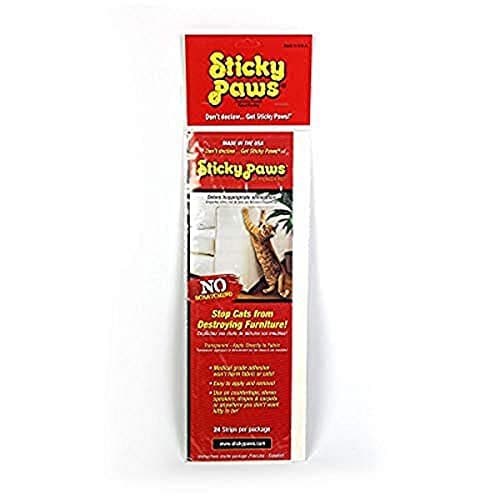
| 1 | Sticky Paws Furniture Strips Double-sided transparent tape that makes one arm of a sofa unpleasant -- genuinely effective, and worth nothing at all unless a scratching post goes up beside it the same day. | Buying time while a post is being introduced | 6.9 | |
| 2 | 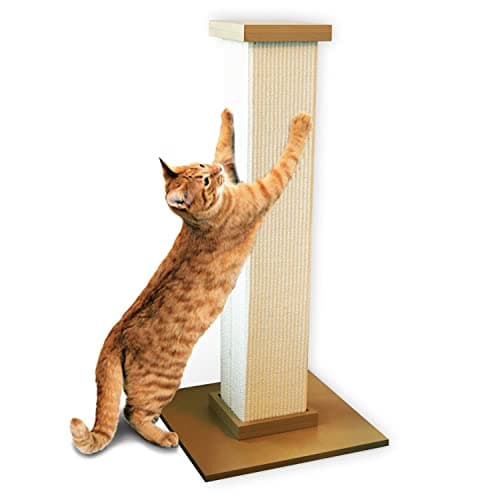 SmartCat Ultimate Scratching Post 32 inches tall on a 16-inch square base in woven sisal -- tall enough for a full stretch, which is the single reason cats reject most posts. | A cat that shreds the sofa arm | 8.9 | |
| 3 | 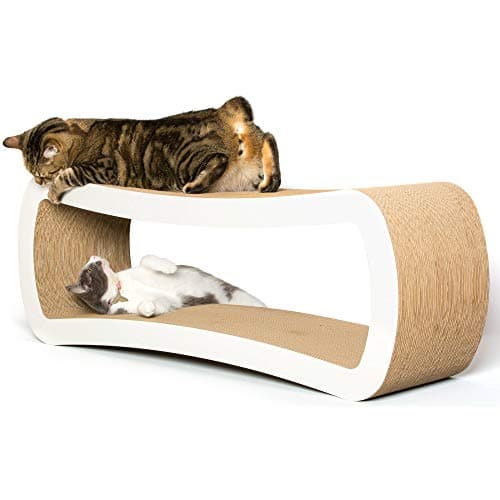 PetFusion Ultimate Cat Scratcher Lounge 34 inches of reversible corrugate -- the horizontal answer for the cat that is destroying carpet rather than furniture, and it doubles as somewhere to sleep. | Horizontal scratchers, and carpet-diggers | 8.0 |
#ad Buy links are affiliate links. Prices come from a live daily check; where we have no verified price we say "check price" rather than print a stale one.
Furniture protectors are the most effective product in this category and the one most likely to disappoint, because they are almost always bought as the whole solution when they are half of one.
Why tape works at all
A cat scratching a sofa arm is doing three things at once: stripping old claw sheath, stretching, and leaving both a visual mark and scent from the glands in its paws. It is maintenance and it is territorial signaling, which is why it persists through being told off.
Double-sided tape interrupts the first two mechanically. The texture on the paw pads is unpleasant, and the cat withdraws before completing the stroke. That is a real and immediate effect — but the need is still there, so the cat looks for somewhere else.
How much you actually need
Sticky Paws publishes 24 strips per pack at roughly 2 by 12 inches each, so a strip covers about 24 square inches.
A typical sofa arm presents roughly 12 by 24 inches of vertical scratchable face = 288 square inches. 288 / 24 = 12 strips for complete coverage.
In practice cats target the vertical face nearest the seat, so about 6 strips per arm covers the real target. One 24-strip pack does two arms. Two sofas means two packs, and that arithmetic surprises people at the till.
There are two other formats worth knowing: XL sheets at roughly 9 by 12 inches for large flat areas such as the back of a sofa or a rug, and an On-a-Roll version with over 32 feet you cut to length, which is the economical choice past about two pieces of furniture.
The other half of the job
A protector without an alternative is a cat with nowhere legitimate to scratch. The alternative has to satisfy the same requirements the sofa arm did, and our posts page works through the published specs in detail. The short version:
- Tall enough for a full stretch. This is the spec most posts fail, and it is why the sofa arm was winning.
- Stable enough not to move. A post that rocks gets abandoned after one attempt.
- Within a foot of the protected furniture. Not across the room. The scratching happened there for a reason.
- The right orientation. A cat that scratches a carpet needs a horizontal option, not a vertical post.
Pioneer Pet’s Ultimate Scratching Post is the vertical answer on published height and base. For a horizontal scratcher, the PetFusion Lounge is furniture in its own right, which matters when the reason the post is across the room is that nobody wants to look at it.
Applying it without wrecking anything
- Test a hidden patch for 24 hours. Under the seat cushion, on the back. Leather and waxed finishes are the ones to worry about.
- Clean and dry the surface first. Adhesive on dusty fabric fails within days.
- Cover the target, not the furniture. Look for the frayed area and cover that plus a hand’s width around it.
- Put the post up on the same day. Not next week. The relocation happens immediately.
- Replace strips as they collect hair. A tacky strip that has gone furry has stopped working and looks worse than the scratching.
- Remove after four to six weeks and watch. If the cat has moved to the post, you are done. If it goes back, the post is wrong rather than the tape.
What we would not buy
Plastic corner guards that screw into upholstery cause more damage than they prevent. Scent-based deterrent sprays are sold on claims we cannot check and that no manufacturer substantiates with a published test. Anything marketed as startling a cat — compressed air, ultrasonic, motion-triggered — is punishing a normal behavior the cat cannot stop performing, and the Ohio State Indoor Pet Initiativeis clear that stress is the reliable outcome of that approach.
The picks in full
Specs are the manufacturer's own, linked to the page they came from. Prices come from a live daily check; where we have no verified price we say so rather than print a stale one.
Sticky Paws Furniture Strips
Pioneer Pet · Furniture protector · Our score 6.9/10
#ad Price as of October 21, 2026. Prices move; we check daily. How we're funded.
Double-sided transparent tape that makes one arm of a sofa unpleasant -- genuinely effective, and worth nothing at all unless a scratching post goes up beside it the same day.
Published specs
| Strips | 24 per pack, roughly 2" x 12" each |
|---|---|
| XL sheets | Roughly 9" x 12" |
| On-a-Roll | Over 32 feet, cut to length |
| Adhesive | Transparent, medical grade, odor free |
| Mechanism | Two-sided tape, unpleasant to touch |
A typical sofa arm presents roughly 12 by 24 inches of scratchable face. At 2 by 12 inches a strip covers 24 square inches, so 288 / 24 = 12 strips for full coverage -- or about 6 spaced across the area cats actually target, which is the vertical face nearest the seat.
What the specs favor
- Works immediately, unlike anything that depends on the cat learning something
- Transparent, so it is not furniture-defacing while it is on
- Three formats, including a roll you can cut to any length
- Cheap enough to cover several targets at once
What they don't
- Treats the symptom -- scratching is a need, not a habit
- Adhesive can lift finish on some fabrics and leathers, so test a hidden patch
- Needs replacing as it collects hair and dust
You have not put a post up. Blocking every surface without giving a cat an approved one is how a scratching problem moves to the carpet instead of stopping.
How it scores
Scores are our editorial weighting of the published specs above, not a test result. They are deliberately kept out of this page's structured data.
SmartCat Ultimate Scratching Post
Pioneer Pet · Scratching post · Our score 8.9/10
#ad Price as of October 21, 2026. Prices move; we check daily. How we're funded.
32 inches tall on a 16-inch square base in woven sisal -- tall enough for a full stretch, which is the single reason cats reject most posts.
Published specs
| Dimensions | 32" H x 16" W x 16" D |
|---|---|
| Base | 16" x 16" |
| Surface | Woven sisal fabric |
| Orientation | Vertical |
Source: Pioneer Pet -- #3832 The Ultimate Scratching Post product page
A large domestic cat stretched from front claws to hind feet runs roughly 30 inches. At 32 inches this post clears that; a typical 20-inch post from a pet-shop shelf does not, which is why the cat goes back to the sofa arm -- the sofa is tall enough and the post is not.
What the specs favor
- 32 inches is taller than the great majority of retail posts
- 16 x 16 inch base, which is what stops it rocking mid-scratch
- Woven sisal fabric rather than carpet, so it does not teach the cat that carpet is for scratching
- Nothing on it to wear out but the sisal
What they don't
- Only one scratching surface
- Vertical only, and some cats are horizontal scratchers
- Plain -- it looks like what it is
Your cat scratches the carpet rather than the furniture. That is a horizontal scratcher, and a vertical post will not redirect it.
How it scores
Scores are our editorial weighting of the published specs above, not a test result. They are deliberately kept out of this page's structured data.
PetFusion Ultimate Cat Scratcher Lounge
PetFusion · Cardboard scratcher · Our score 8.0/10
#ad Price as of October 21, 2026. Prices move; we check daily. How we're funded.
34 inches of reversible corrugate -- the horizontal answer for the cat that is destroying carpet rather than furniture, and it doubles as somewhere to sleep.
Published specs
| Dimensions | 34" L x 10.5" W x 10.5" H |
|---|---|
| Weight | 7.5 lb |
| Material | Recycled cardboard, corn-starch glue |
| Reversible | Yes -- both sides scratchable |
Source: Chewy -- PetFusion Ultimate Cat Scratcher Lounge listing
Reversible means both faces are usable, so one lounge is two pads. Against the flat single-sided cardboard pads sold in threes, that is twice the surface before it goes in the recycling -- the entire economic argument for buying one good scratcher instead of a stack of cheap ones.
What the specs favor
- 34 inches long -- a cat can lie on it and scratch at the same time
- Reversible, doubling usable life
- Corn-starch glue, so nothing unpleasant when the cat chews the edge
- Wide enough that two cats occasionally tolerate sharing it
What they don't
- Cardboard sheds, and it sheds where the cat scratches
- Consumable by design -- it is a wear part
- Will not redirect a cat that scratches vertically
Your problem is the sofa arm. That is a vertical target and this is a horizontal product; the two are not interchangeable.
How it scores
Scores are our editorial weighting of the published specs above, not a test result. They are deliberately kept out of this page's structured data.
Common questions
Do cat furniture protectors work?
How much Sticky Paws do I need for a sofa?
Will Sticky Paws damage my furniture?
What is the best way to stop a cat scratching furniture?
Are furniture protectors cruel?
Sources
- Pioneer Pet -- Sticky Paws Furniture Strips listing (24 strips, approximately 2 x 12 in, transparent medical grade adhesive)
- Pioneer Pet -- #3832 The Ultimate Scratching Post product page
- Chewy -- PetFusion Ultimate Cat Scratcher Lounge listing
- Ohio State University Indoor Pet Initiative -- For Cat Owners
Read next
- How to Stop a Cat Scratching the Furniture
Why cats scratch furniture, the free fixes that solve most cases, and the one purchase worth making if they do not.
- Where to Put a Scratching Post
Why prominence beats tidiness, how many scratchers a multi-cat home needs, and how to move one without losing the habit.
- Best Cat Scratching Posts (2026)
Ranked on the three published specs that predict whether a cat uses a post: height, base width and surface material.
- Sisal vs Cardboard Scratchers
Vertical sisal against horizontal cardboard: which damage each one fixes, what each costs over a year, and why most homes want both.
- Best Cardboard Cat Scratchers (2026)
Why reversibility is the specification that matters on a consumable, plus the mess and placement realities nobody mentions.
- Best Sofa Corner Cat Scratchers (2026)
Sofa arm protectors, corner-mount scratchers and deterrent tape compared, with the three-part plan that stops the sofa being the target.