Scratchers & Furniture Protection
Best Cat Scratching Posts (2026)
A cat rejects a post for one of three reasons, and all three are published specs you can check before buying.
Affiliate disclosure: we earn a commission if you buy through our links, at no extra cost to you. It never changes which product we rank first — here is how we're funded.
Everyone in this category says they tested twenty litter boxes. We have not tested any, and we say so. What we do instead: compile the published specs, read the manuals, and do the arithmetic on what this gear costs to run and how it behaves once there is more than one cat using it. Every spec is linked to the document it came from. Prices are checked daily — last verified October 19, 2026. Here is exactly how we pick.
Quick picks
Ranked on the published specs and the arithmetic below. Tap any row to jump to the full write-up. We have not tested these — here is exactly how we pick.
| # | Product | Best for | Score | Price |
|---|---|---|---|---|
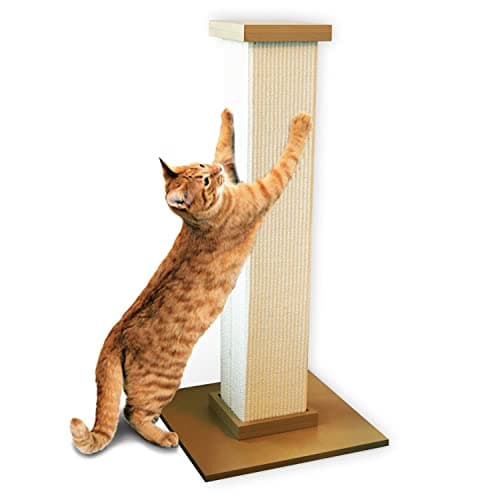
| 1 | SmartCat Ultimate Scratching Post 32 inches tall on a 16-inch square base in woven sisal -- tall enough for a full stretch, which is the single reason cats reject most posts. | A cat that shreds the sofa arm | 8.9 | |
| 2 | 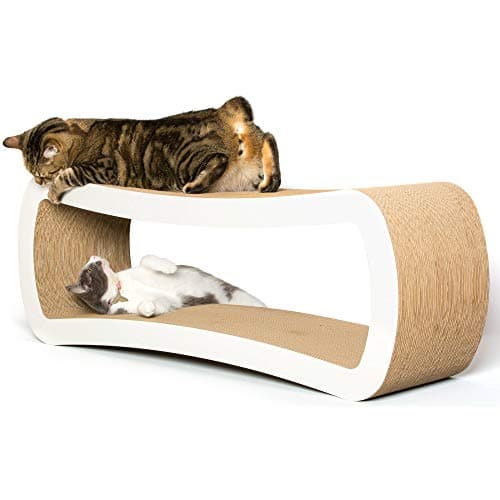 PetFusion Ultimate Cat Scratcher Lounge 34 inches of reversible corrugate -- the horizontal answer for the cat that is destroying carpet rather than furniture, and it doubles as somewhere to sleep. | Horizontal scratchers, and carpet-diggers | 8.0 | |
| 3 | 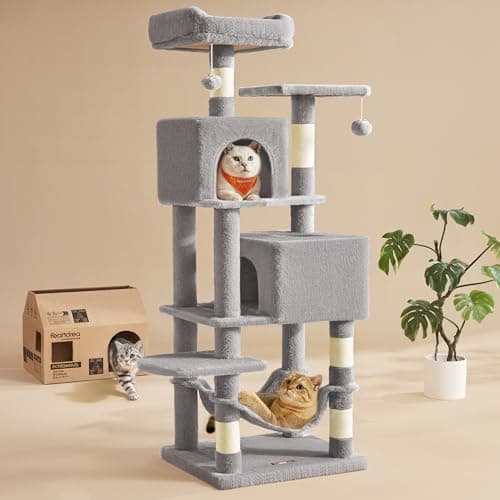 FEANDREA 67-inch Multi-Level Cat Tree The best base-to-height ratio of any tree here, and base-to-height is the only spec that predicts whether a tree rocks when a 15 lb cat lands on the top perch. | Two or three cats sharing one tree | 8.6 |
#ad Buy links are affiliate links. Prices come from a live daily check; where we have no verified price we say "check price" rather than print a stale one.
A cat destroying the sofa is not misbehaving. It is choosing the best available scratching surface in the house, and in most houses the sofa genuinely is the best available scratching surface. That reframes the purchase entirely: you are not buying a deterrent, you are buying something that beats the sofa on the specs the cat is judging.
What the cat is actually comparing
| Surface | Height | Rocks under load? | In the main room? |
|---|---|---|---|
| Sofa arm | About 26" | No | Yes |
| Typical retail post | About 20" | Often | Usually tucked away |
| SmartCat Ultimate | 32" | No -- 16" square base | Wherever you put it |
| Carpet (horizontal) | n/a | No | Yes |
Sofa arm height is a general furniture dimension for illustration, not a measurement of your sofa. Post heights are the manufacturers' published figures.
Three columns, and the mass-market post loses on all three. That is not a quality problem, it is a design problem, and it is why the height specification is the first thing to check on any post you are considering. If the listing does not publish a height, do not buy it.
The stretch arithmetic
The second spec: base width
A cat braces and drags downward with real force. A post that rocks under that load is a post the cat stops trusting, and it will find something that does not move — furniture, again.
The SmartCat publishes a 16 by 16 inch base for a 32-inch post. That ratio is the same logic as the cat tree stability index: base width relative to height is what resists tipping and rocking. A tall post on a small base is the most common failed design in this category.
The third spec: orientation
A cat destroying the carpet and a cat destroying the sofa arm are doing two different things. A vertical post does nothing for the first. Buying the wrong orientation is the second most common reason a scratcher is ignored, after height.
| Where the damage is | What you need | Example |
|---|---|---|
| Sofa arms, chair backs, door frames | Vertical, taller than the cat's stretch | SmartCat Ultimate, 32 in |
| Carpet, rugs, stair treads | Horizontal corrugate | PetFusion Lounge, 34 in long |
| Both | One of each | Not a compromise product -- buy two |
In a multi-cat house you are certain to have differing preferences, so covering both orientations is not indulgent — it is the cheapest way to avoid guessing wrong for one of your cats.
Material, briefly
Sisal on vertical surfaces. Carpet on a post teaches a cat that carpeted vertical surfaces are appropriate scratching targets, and your stairs are a carpeted vertical surface. The full argument is in carpet versus sisal, and the vertical-versus-horizontal material question is in sisal versus cardboard.
Placement outranks the product
A perfect post in the spare room loses to a mediocre one next to the sofa the cat is currently destroying. Scratching is partly territorial marking, which means it happens where the household is, in prominent places, not in tucked- away corners. The Ohio State Indoor Pet Initiative frames indoor cat needs around resources being available where the cat lives, and a scratching surface is a resource like any other.
The practical rules are in where to place a scratching post, and they are free to follow.
Verdict
- Furniture is being shredded: SmartCat Ultimate, 32 inches, placed beside the furniture in question.
- Carpet is being dug up: PetFusion Ultimate Lounge, horizontal, reversible.
- You want scratching plus vertical territory: a tree with thick sisal posts — FEANDREA publishes 3.4-inch posts, which is thick enough for a large cat to brace on.
- Multi-cat house: at least one of each orientation, in different rooms.
The picks in full
Specs are the manufacturer's own, linked to the page they came from. Prices come from a live daily check; where we have no verified price we say so rather than print a stale one.
SmartCat Ultimate Scratching Post
Pioneer Pet · Scratching post · Our score 8.9/10
#ad Price as of October 19, 2026. Prices move; we check daily. How we're funded.
32 inches tall on a 16-inch square base in woven sisal -- tall enough for a full stretch, which is the single reason cats reject most posts.
Published specs
| Dimensions | 32" H x 16" W x 16" D |
|---|---|
| Base | 16" x 16" |
| Surface | Woven sisal fabric |
| Orientation | Vertical |
Source: Pioneer Pet -- #3832 The Ultimate Scratching Post product page
A large domestic cat stretched from front claws to hind feet runs roughly 30 inches. At 32 inches this post clears that; a typical 20-inch post from a pet-shop shelf does not, which is why the cat goes back to the sofa arm -- the sofa is tall enough and the post is not.
What the specs favor
- 32 inches is taller than the great majority of retail posts
- 16 x 16 inch base, which is what stops it rocking mid-scratch
- Woven sisal fabric rather than carpet, so it does not teach the cat that carpet is for scratching
- Nothing on it to wear out but the sisal
What they don't
- Only one scratching surface
- Vertical only, and some cats are horizontal scratchers
- Plain -- it looks like what it is
Your cat scratches the carpet rather than the furniture. That is a horizontal scratcher, and a vertical post will not redirect it.
How it scores
Scores are our editorial weighting of the published specs above, not a test result. They are deliberately kept out of this page's structured data.
PetFusion Ultimate Cat Scratcher Lounge
PetFusion · Cardboard scratcher · Our score 8.0/10
#ad Price as of October 19, 2026. Prices move; we check daily. How we're funded.
34 inches of reversible corrugate -- the horizontal answer for the cat that is destroying carpet rather than furniture, and it doubles as somewhere to sleep.
Published specs
| Dimensions | 34" L x 10.5" W x 10.5" H |
|---|---|
| Weight | 7.5 lb |
| Material | Recycled cardboard, corn-starch glue |
| Reversible | Yes -- both sides scratchable |
Source: Chewy -- PetFusion Ultimate Cat Scratcher Lounge listing
Reversible means both faces are usable, so one lounge is two pads. Against the flat single-sided cardboard pads sold in threes, that is twice the surface before it goes in the recycling -- the entire economic argument for buying one good scratcher instead of a stack of cheap ones.
What the specs favor
- 34 inches long -- a cat can lie on it and scratch at the same time
- Reversible, doubling usable life
- Corn-starch glue, so nothing unpleasant when the cat chews the edge
- Wide enough that two cats occasionally tolerate sharing it
What they don't
- Cardboard sheds, and it sheds where the cat scratches
- Consumable by design -- it is a wear part
- Will not redirect a cat that scratches vertically
Your problem is the sofa arm. That is a vertical target and this is a horizontal product; the two are not interchangeable.
How it scores
Scores are our editorial weighting of the published specs above, not a test result. They are deliberately kept out of this page's structured data.
FEANDREA 67-inch Multi-Level Cat Tree
FEANDREA · Cat tree · Our score 8.6/10
#ad Price as of October 19, 2026. Prices move; we check daily. How we're funded.
The best base-to-height ratio of any tree here, and base-to-height is the only spec that predicts whether a tree rocks when a 15 lb cat lands on the top perch.
Published specs
| Dimensions | 24" L x 19.3" W x 67" H |
|---|---|
| Assembled weight | 57.5 lb |
| Materials | Particleboard, plush, sisal rope |
| Post diameter | 3.4" sisal-wrapped |
| Per-platform rating | Not published in the retail listing |
Source: Chewy -- FEANDREA 67-in Multi-Level Cat Tree listing
Our figure, not the maker's: shortest base dimension divided by height, multiplied by assembled weight. 19.3 / 67 = 0.288, x 57.5 lb = 16.5. The Yaheetech 72-inch scores 8.7 on the same sum and the Go Pet Club F2081 scores 15.9. Higher is harder to tip. Redo it yourself on any tree from two published numbers.
What the specs favor
- Heaviest tree here at 57.5 lb, and weight is what resists tipping
- Widest base relative to height of the three trees on this page
- 3.4-inch sisal posts are thick enough for a large cat to actually pull against
- Multiple platforms so two cats are not forced to share one
What they don't
- Particleboard, so it does not survive being moved often
- 57.5 lb is a two-person assembly
- FEANDREA does not publish a per-platform weight rating in the retail listing
You move house often or rearrange furniture. Particleboard trees come apart badly and go back together worse.
How it scores
Scores are our editorial weighting of the published specs above, not a test result. They are deliberately kept out of this page's structured data.
Common questions
What is the best cat scratching post?
How tall should a cat scratching post be?
Why won't my cat use the scratching post?
Should a scratching post be sisal or carpet?
Do I need more than one scratching post?
Sources
- Pioneer Pet -- #3832 The Ultimate Scratching Post (32 in tall, 16 x 16 in base, woven sisal)
- Chewy -- PetFusion Ultimate Cat Scratcher Lounge (34 x 10.5 x 10.5 in, 7.5 lb, reversible recycled cardboard)
- Chewy -- FEANDREA 67-in Multi-Level Cat Tree (3.4 in sisal posts)
- Ohio State University Indoor Pet Initiative -- For Cat Owners
Read next
- How to Stop a Cat Scratching the Furniture
Why cats scratch furniture, the free fixes that solve most cases, and the one purchase worth making if they do not.
- Where to Put a Scratching Post
Why prominence beats tidiness, how many scratchers a multi-cat home needs, and how to move one without losing the habit.
- Sisal vs Cardboard Scratchers
Vertical sisal against horizontal cardboard: which damage each one fixes, what each costs over a year, and why most homes want both.
- Carpet vs Sisal on a Cat Tree
Why carpet-covered posts undermine the rest of your furniture, and what to look for in sisal instead.
- Best Cat Trees (2026)
The whole vertical category ranked together -- trees, wall shelves and window perches -- on the specs each maker publishes.
- Best Cat Scratching Posts With a Perch or Bed (2026)
Perch and bed posts compared on published base size and height, with the stability arithmetic a plain post never has to pass.
- How Many Scratching Posts Per Cat?
A count rule for scratching posts built from waking spots, entrances and existing damage -- plus the orientation split most households get wrong.
- Best Scratching Posts for Senior Cats (2026)
Three scratching surfaces for older cats on published heights and footprints, from a floor mat to a full-stretch post, with the stability argument worked.