Litter & Litter Tech
How Much Cat Litter Do You Need Per Month?
You can compute this properly from two numbers you already have. What you cannot do is convert a bag weight into a box fill, because nobody publishes the density.
Affiliate disclosure: we earn a commission if you buy through our links, at no extra cost to you. It never changes which product we rank first — here is how we're funded.
Everyone in this category says they tested twenty litter boxes. We have not tested any, and we say so. What we do instead: compile the published specs, read the manuals, and do the arithmetic on what this gear costs to run and how it behaves once there is more than one cat using it. Every spec is linked to the document it came from. Prices are checked daily — last verified September 27, 2026. Here is exactly how we pick.
Every answer you find to this question is an average of somebody else’s house. You can do better in two minutes, because the inputs are your box and your scoop.
Start with the fill, not the bag
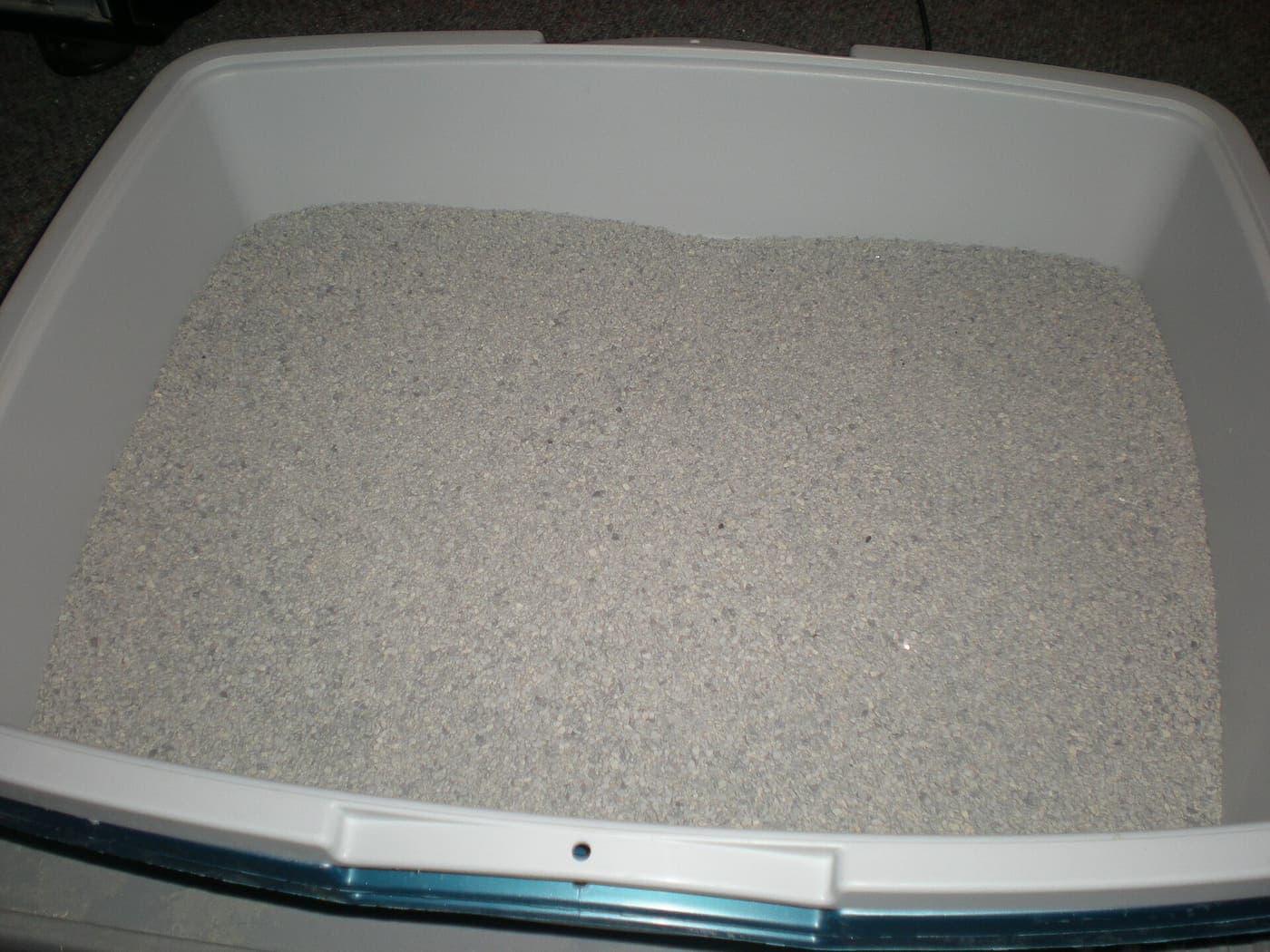
The amount of litter in play at any moment is the volume of the bed: box floor area multiplied by depth. Both are numbers you have.
The IRIS XX-Large box is 30.18 x 20.13 inches, about 607 square inches of floor.
At a 3 inch depth that is 1,822 cubic inches, or about 1.05 cubic feet, to fill it once.
At 2 inches it is about 0.7 cubic feet. So the depth you prefer swings the standing volume by half as much again — before a single cat has used it.
The figure the category does not publish
Here is where every guide quietly starts estimating, and we are not going to. To turn that 1.05 cubic feet into “how many bags”, you need the density of the litter. No maker on this site publishes it.
| Litter | Published bag size | Published density | Material |
|---|---|---|---|
| Dr. Elsey's Ultra Unscented | 40 lb | Not published | Natural clay |
| Arm & Hammer Clump & Seal Multi-Cat | 19 lb multi-cat | Not published | Clay with baking soda |
| World's Best Multiple Cat | Not published in the listing | Not published | Whole-kernel corn |
Manufacturers' published figures. Bag weight is not convertible to fill volume without a density figure, and none is published.
This matters practically, not just pedantically. Clay is heavy for its volume and corn is light for its volume, so a 40 lb clay bag and a much lighter corn bag can fill a similar number of boxes. Comparing litters by price per pound, which is how they are sold, is therefore not the same as comparing them by price per fill.
What actually leaves the box each month
With clumping litter, monthly consumption is the sum of two things:
- What you scoop out. Every clump removed is litter that leaves and has to be replaced. This scales directly with the number of cats using the box.
- What you throw away at a full change. How often that happens depends on the litter and the household, and our cleaning schedule page covers the three clocks involved.
There is a third, invisible term: what the cat carries out on its paws. That is not a rounding error in a house with several cats, and it is the one you can actually reduce — our tracking page and the litter mat page both attack it.
The multi-cat correction
The Ohio State guidance is one litter box per cat, plus one. That means going from one cat to two usually takes you from two boxes to three — so your standing volume rises by half before you count the extra waste.
Two cats in a three-box house at 3 inches of depth in large boxes is therefore roughly three cubic feet of litter in circulation, plus the replacement of everything scooped. This is the real reason multi-cat households buy in bulk, and why our multi-cat litter page treats clumping strength as an economic property rather than a convenience one.
How to use less without the cat noticing
- Scoop daily rather than every few days. A clump left to break up spreads waste through the bed, and then you replace litter that did not need replacing.
- Do not exceed about three inches. Depth beyond what a cat needs to dig mostly ends up on your floor.
- Use a well-matched scoop. Slots that are too wide drop clean litter with the clumps; our scoop page covers that.
- Mat the exit. Litter caught on a mat goes back in the box rather than into the hall.
- Do not stretch a full change to save a bag. This is the saving that ends in a cat choosing the rug, which is the most expensive outcome available.
Read the guide
For which litter to put in the box in the first place, our litter types comparison covers clay, crystal, corn, wheat, pine, paper and tofu on the specifications each maker does publish — and is honest about the ones none of them do.
The gear discussed here
Specs are the manufacturer's own, linked to the page they came from. Prices come from a live daily check; where we have no verified price we say so rather than print a stale one.
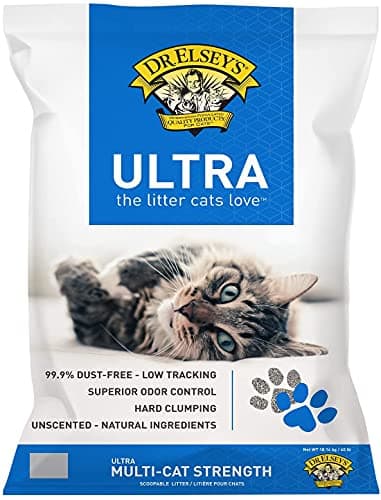
Dr. Elsey's Ultra Unscented Clumping Clay Litter
Dr. Elsey's · Cat litter · Our score 8.8/10
#ad Price as of September 27, 2026. Prices move; we check daily. How we're funded.
Unscented, medium-grain, 99.9 percent dust-free -- which is the exact specification the veterinary guidance on litter preference describes, rather than a marketing claim.
Published specs
| Material | Natural clay |
|---|---|
| Scent | None; no perfumes or deodorants |
| Dust | 99.9 percent dust-free (Dr. Elsey's) |
| Grain | Medium grain with heavier non-tracking granules |
| Bag size | 40 lb |
| Additives | Free of plant proteins, perfumes and deodorants |
Source: Dr. Elsey's -- Ultra Litter product page
The Ohio State Indoor Pet Initiative says most cats prefer fine-grained, unscented litter and are deterred by scented or deodorant products. This litter is unscented, deodorant-free and fine-to-medium grain -- it meets all three published criteria. Very few litters marketed for odor control do.
What the specs favor
- Unscented and deodorant-free, matching the documented feline preference
- 99.9 percent dust-free by the maker's own measure
- Heavier granules specifically to reduce tracking
- Hard clumping, so waste leaves the box intact
What they don't
- Clay, so it is heavy to carry and heavy to lift out
- No added fragrance means it does nothing to mask odor between scoops
- 40 lb bag is awkward to store in a flat
You want the litter to do the odor work for you. This one is deliberately inert -- it relies on you scooping daily, which is what the veterinary guidance asks for anyway.
How it scores
Scores are our editorial weighting of the published specs above, not a test result. They are deliberately kept out of this page's structured data.
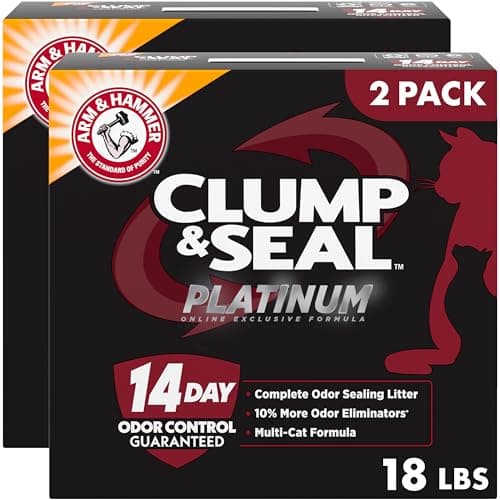
Arm & Hammer Clump & Seal Multi-Cat
Arm & Hammer · Cat litter · Our score 7.7/10
#ad Price as of September 27, 2026. Prices move; we check daily. How we're funded.
One of only two litters here whose maker puts a number on the odor claim -- seven days -- which at least makes the claim checkable.
Published specs
| Odor claim | 7 days, guaranteed by the maker |
|---|---|
| Material | Clay with baking soda and plant-derived particles |
| Dust | 99.9 percent dust-free (maker) |
| Scent | Scented |
| Bag size | 19 lb multi-cat |
| Mechanism | Moisture-activated micro-granules seal around waste |
Source: Arm & Hammer -- Clump & Seal Multi-Cat 19 lb product page
Arm & Hammer guarantees 7 days; Purina guarantees 10 on Tidy Cats 24/7 Performance. Those are the only two published numbers in this category, so they are the only two you can hold a maker to. Everything else is adjectives.
What the specs favor
- Publishes a specific 7-day odor guarantee
- 99.9 percent dust-free by the maker's measure
- Baking soda plus a sealing micro-granule, two mechanisms rather than fragrance alone
- Widely stocked, so the price stays honest
What they don't
- Scented, which the published guidance says many cats are deterred by
- Clay, so heavy
- The guarantee is per household use, not per cat -- three cats will not get seven days
Your cat has already started going outside the box. Adding fragrance to a litter a cat is avoiding is the wrong direction; strip back to unscented first.
How it scores
Scores are our editorial weighting of the published specs above, not a test result. They are deliberately kept out of this page's structured data.
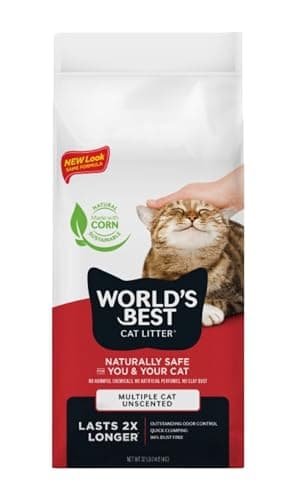
World's Best Cat Litter Multiple Cat Clumping Formula
World's Best Cat Litter · Cat litter · Our score 8.0/10
#ad Price as of September 27, 2026. Prices move; we check daily. How we're funded.
Whole-kernel corn rather than clay, which makes the bag light enough to carry up stairs and the litter light enough that a cat carries it out on its feet.
Published specs
| Material | Whole-kernel corn |
|---|---|
| Scent | Unscented |
| Form | Compressed granules |
| Dust | 99 percent dust-free (maker) |
| Formulation | Multi-cat, with an added plant derivative for odor |
| Clumping | Clumps on contact |
Source: Chewy -- World's Best Multi-Cat Unscented Clumping Corn Litter listing
The multi-cat corn formula ships in a 28 lb bag against Dr. Elsey's 40 lb clay. Same job, 12 lb less to carry, because corn is less dense than clay -- and less dense is also why it tracks further.
What the specs favor
- Unscented, matching the documented preference
- Corn base is markedly lighter than clay per bag
- Clumps on contact rather than needing time to set
- Multi-cat formulation with an added plant derivative for odor
What they don't
- Light granules track further through the house than clay
- Corn attracts pantry pests if the bag is left open in a warm room
- Costs more per pound than commodity clay
Tracking is already your worst problem. Lighter granules travel further, and this is a lighter granule than any clay on this page.
How it scores
Scores are our editorial weighting of the published specs above, not a test result. They are deliberately kept out of this page's structured data.
Common questions
How much litter should go in a box?
How much cat litter does one cat use in a month?
Why can't I just convert pounds of litter into inches of depth?
Does clumping litter last longer than non-clumping?
How does a second cat change the amount?
Sources
Read next
- How Often to Clean a Litter Box
The three separate cleaning jobs a litter box needs, on three different schedules, with the litter volume arithmetic per cat.
- Cat Litter Types Compared
Clay, crystal, corn, wheat, pine, paper and tofu compared on published specifications, with an honest note on which figures are comparable.
- Best Cat Litter for Multiple Cats (2026)
Why the best odor-control litter is often the wrong buy for three cats, and which specification to rank on instead.
- Clumping vs Non-Clumping Cat Litter
An attribute-by-attribute comparison of clumping and non-clumping litter, and why multi-cat homes almost always want clumping.
- How Many Litter Boxes Per Cat?
The n+1 rule, its published source, a count-by-household table, and why four boxes in a row is really only one box.