Litter & Litter Tech
Best Sifting Litter Box Systems (2026)
Every sifting system replaces the scoop with something. The question is whether you would rather buy pads, lift a pan or plug in a motor.
Affiliate disclosure: we earn a commission if you buy through our links, at no extra cost to you. It never changes which product we rank first — here is how we're funded.
Everyone in this category says they tested twenty litter boxes. We have not tested any, and we say so. What we do instead: compile the published specs, read the manuals, and do the arithmetic on what this gear costs to run and how it behaves once there is more than one cat using it. Every spec is linked to the document it came from. Prices are checked daily — last verified September 25, 2026. Here is exactly how we pick.
Quick picks
Ranked on the published specs and the arithmetic below. Tap any row to jump to the full write-up. We have not tested these — here is exactly how we pick.
| # | Product | Best for | Score | Price |
|---|---|---|---|---|
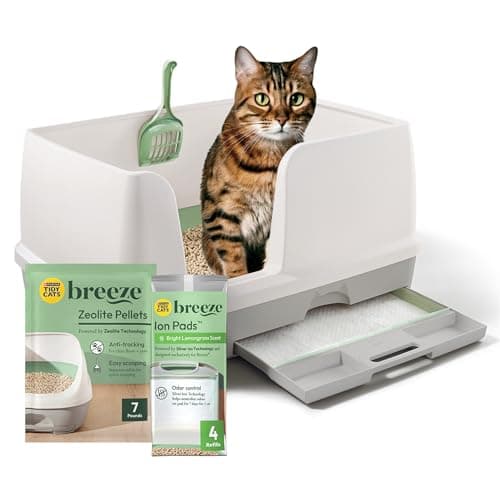
| 1 | Tidy Cats Breeze Litter System Urine passes through zeolite pellets onto an absorbent pad in a drawer below, and solids stay on top -- the only system here that separates the two by design rather than by scooping. | Separating urine from solids without clumps | 7.4 | |
| 2 | 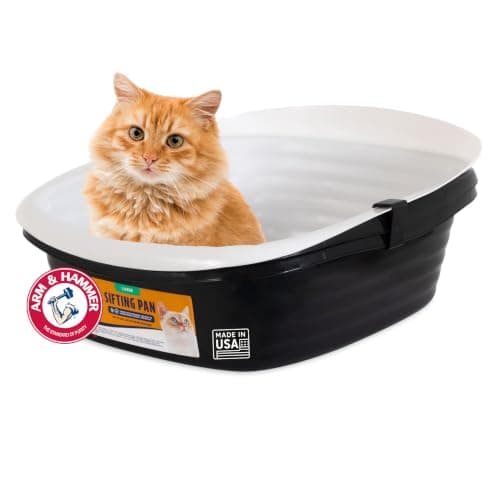 Arm & Hammer Large Sifting Litter Pan Three nested pans, one of them slotted: lift the slotted pan, clean litter falls through, clumps stay behind. No pads, no pellets, no motor -- and it works with the litter you already buy. | Sifting any clumping litter by hand, without a scoop | 7.2 | |
| 3 | 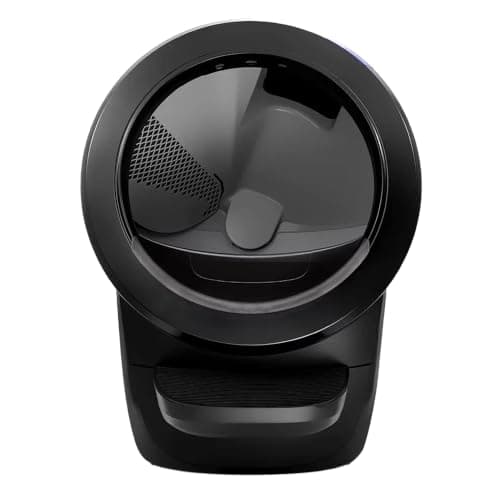 Whisker Litter-Robot 4 The biggest entryway and the largest published cat-weight range of the enclosed units, and the only one whose maker publishes an actual power-supply spec you can cost out. | Three or four cats | 8.1 |
#ad Buy links are affiliate links. Prices come from a live daily check; where we have no verified price we say "check price" rather than print a stale one.
Scooping is the one litter job nobody likes. Every sifting system is a different answer to the same question: what would you rather do instead?
Three ways to sift
The word “sifting” covers three designs, and they differ in what they ask of you:
- Nested pans. Two solid pans and one slotted pan. Lift the slotted pan, shake, and clean clumping litter falls into the pan below; clumps stay behind. Pour them out, and the stack goes back together. No consumable beyond the litter.
- Pellet and pad. Large non-clumping pellets on a grate, with an absorbent pad in a drawer below. Urine runs through to the pad; solids stay on the pellets and are scooped. The pad and pellets are proprietary.
- Powered. The box sifts itself. The Litter-Robot 4 rotates its globe to separate clumps into a drawer. The labor is almost gone; the cost moves to the purchase price and a power socket.
What each swaps for the scoop
Breeze: Purina publishes seven days of ammonia control per pad for one cat. Urine volume scales with cat count, so three cats get roughly a third of that — a pad every two to three days. The pad is the consumable, and its interval decides the running cost.
Nested pan: no proprietary consumable. The recurring job is a lift and shake, and the running cost is ordinary clumping litter — with less of it thrown away, because clean litter is kept rather than scooped out with the clumps.
Powered: the drawer emptied every few days, plus electricity. Our running costs page has the figures.
What the three publish
| Product | Size | Mechanism | Consumable |
|---|---|---|---|
| Tidy Cats Breeze | 20.3" x 15.2" x 11.8" | Zeolite pellets over an absorbent pad | Breeze pads and pellets |
| Arm & Hammer Sifting Pan | 19" x 15" x 8" | Three nested pans, one slotted | Any clumping litter |
| Litter-Robot 4 | 22" W x 27" D x 29.5" H | Rotating globe, waste drawer | Any clumping litter, power |
Manufacturers' and retailers' published figures. Whisker publishes a 3 to 25 lb cat range for the Litter-Robot 4.
The picks
The Breeze system is the most distinctive design here and the only one that separates urine from solids by design. The pellets are published at 99.9 percent dust free and are large enough to track far less than clay granules. The drawbacks are the consumables — pads and pellets you can only buy from one brand — and the texture: some cats refuse pellets underfoot.
The Arm & Hammer sifting pan is the classic design and the cheapest to run. It works with the litter you already buy, it has no moving parts, and the third pan means there is always a spare. At 19 by 15 inches — 285 square inches — it is smaller than the Petmate Jumbo Pan, so it suits an average cat better than a large one. It also depends on the litter: clumps that break on the lift fall straight back through.
The Litter-Robot 4 is sifting with a motor. It has the largest entry here, 15.75 inches, and Whisker publishes the cat weight range. It is on this page as the ceiling of the category; our automatic box roundup compares it with the alternatives.
The litter decides whether it works
A sifting pan is only as good as the clumps. Our clumping against non-clumping page covers the materials: firm clay clumps survive a lift; some plant litters make softer clumps that crumble. If you buy a nested pan, choose a litter that clumps hard and quickly.
- Nested pan: firm-clumping litter only. Soft clumps defeat it.
- Breeze: Breeze pellets only. Clumping litter blocks the grate.
- Powered: clumping litter to the maker’s guidance — our litter for automatic boxes page covers it.
Switching a cat to a sifting system
- Keep the old box while the new one goes in. A cat that refuses a new box needs somewhere to go.
- For Breeze, mix in some familiar litter on top at first. Pellets are the biggest texture change on this site.
- Place it where the old box was, then remove the old one once the new one is being used reliably.
- Keep the cleaning schedule. Our cleaning schedule still applies: solids out daily, whatever the mechanism.
The picks in full
Specs are the manufacturer's own, linked to the page they came from. Prices come from a live daily check; where we have no verified price we say so rather than print a stale one.
Tidy Cats Breeze Litter System
Purina Tidy Cats · Sifting litter system · Our score 7.4/10
#ad Price as of September 25, 2026. Prices move; we check daily. How we're funded.
Urine passes through zeolite pellets onto an absorbent pad in a drawer below, and solids stay on top -- the only system here that separates the two by design rather than by scooping.
Published specs
| Box dimensions | 20.3" x 15.2" x 11.8" |
|---|---|
| Pellets | Zeolite, non-clumping, 99.9 percent dust free |
| Pad | Ion pad in a separate tray; prevents ammonia odor 7 days, one cat |
| Solids | Dehydrated by the pellets, scooped from the top |
| Kit | Box, pellets, scoop and pads |
Purina publishes 7 days of ammonia control per pad for one cat. Urine volume scales roughly with cat count, so three cats get about a third of that -- two to three days per pad. The pad is the consumable, and its interval is the figure that decides what the system costs to run.
What the specs favor
- Urine and solids separated by design, which no clumping box does
- Pellets published at 99.9 percent dust free
- Pellets are large and track far less than clay granules
- Published pad interval, so the running cost can be worked out
What they don't
- Proprietary pads and pellets, a recurring cost with no substitute
- Published pad interval is for one cat only
- Some cats refuse the pellet texture underfoot
- Box footprint is modest for a large cat
Your cat has refused a change of litter texture before. Pellets are the largest texture change on this site, and a refused box is a much worse outcome than scooping.
How it scores
Scores are our editorial weighting of the published specs above, not a test result. They are deliberately kept out of this page's structured data.
Arm & Hammer Large Sifting Litter Pan
Petmate / Arm & Hammer · Sifting litter pan · Our score 7.2/10
#ad Price as of September 25, 2026. Prices move; we check daily. How we're funded.
Three nested pans, one of them slotted: lift the slotted pan, clean litter falls through, clumps stay behind. No pads, no pellets, no motor -- and it works with the litter you already buy.
Published specs
| Dimensions | 19" L x 15" W x 8" H |
|---|---|
| Pans | Three: one sifting pan and two solid pans |
| Mechanism | Lift, shake and pour; clean litter falls through the slots |
| Material | Plastic with a reinforced bottom, Microban antimicrobial protection |
| Litter | Clumping litter; no proprietary consumable |
19 x 15 = 285 square inches. The Petmate Jumbo Pan we list elsewhere gives about 365. A sifting pan buys a scoop-free routine with a smaller box, which matters for a large cat and is fine for an average one.
What the specs favor
- Works with any clumping litter, so there is no proprietary consumable
- No moving parts, no power, nothing to break
- Three pans means a spare is always in rotation
- Clean litter is kept rather than thrown out with each scoop
What they don't
- 19 by 15 inches is a modest box for a large cat
- Clumps that break on the lift fall back through the slots
- Slots clog with wet litter if a clump is not fully set
Your litter makes soft or crumbly clumps. A sifting pan depends on clumps staying whole when lifted, and a weak-clumping litter falls straight back into the clean pan.
How it scores
Scores are our editorial weighting of the published specs above, not a test result. They are deliberately kept out of this page's structured data.
Whisker Litter-Robot 4
Whisker · Automatic litter box · Our score 8.1/10
Reference link This one sells direct and we earn nothing on it. We link it anyway because it belongs in the comparison. How we're funded.
The biggest entryway and the largest published cat-weight range of the enclosed units, and the only one whose maker publishes an actual power-supply spec you can cost out.
Published specs
| Entryway | 15.75" x 15.75" |
|---|---|
| Footprint / height | 22" W x 27" D x 29.5" H |
| Weight, empty | 24 lb |
| Cat weight range | 3-25 lb |
| Power supply | 15 V DC, 400-1000 mA (6-15 W) |
| Warranty | 1 year, 3-year plan optional |
| Globe / drawer capacity | Not published by Whisker |
Source: Whisker -- Litter-Robot 4 product page and power supply spec article
Whisker's own spec sheet accepts a 15 V supply between 0.4 A and 1.0 A. Take the 1.0 A ceiling: 15 W x 24 h x 365 = 131.4 kWh, x $0.1834 = $24.10. That assumes the motor runs flat out every hour of the year, which it does not -- so the real figure is well below this. The consumables are the actual cost.
What the specs favor
- Largest published entryway of the enclosed units here, at 15.75 inches square
- Whisker publishes a real power-supply rating, so running cost is computable
- Cat weight range published as 3-25 lb
- Three-year extended warranty available at purchase
What they don't
- Whisker does not publish globe or waste-drawer capacity, which is the number that actually decides how often you empty it with three cats
- Waste drawer liners are a proprietary consumable at $25 per 25-pack
- Carbon filter is a separate monthly consumable
- Sells mainly direct, so there is no reliable Amazon price to track
You have five cats. Whisker rates the newer Litter-Robot 5 for up to five and this one carries no published cat-count rating at all -- buying the older unit for a bigger household is guessing.
How it scores
Scores are our editorial weighting of the published specs above, not a test result. They are deliberately kept out of this page's structured data.
Common questions
What is a sifting litter box?
Do sifting litter boxes work?
How often do you change the Breeze pad?
Can you use regular litter in a Breeze system?
Is an automatic litter box a sifting box?
Sources
- Purina -- Tidy Cats Breeze System (20.3 x 15.2 x 11.8 in box, 99.9 percent dust-free zeolite pellets, Ion pad 7 days for one cat)
- Petmate -- Arm & Hammer Sifting Litter Box product page (three pans: one sifting pan and two solid pans; 19 x 15 x 8 in listed by retailers)
- Whisker -- Litter-Robot 4 product page and power supply spec article
Read next
- Clumping vs Non-Clumping Cat Litter
An attribute-by-attribute comparison of clumping and non-clumping litter, and why multi-cat homes almost always want clumping.
- Cat Litter Types Compared
Clay, crystal, corn, wheat, pine, paper and tofu compared on published specifications, with an honest note on which figures are comparable.
- Best Automatic Litter Boxes (2026)
The head-term roundup, ranked on published capacity and consumable model rather than app features.
- How Often to Clean a Litter Box
The three separate cleaning jobs a litter box needs, on three different schedules, with the litter volume arithmetic per cat.
- Best Cat Litter Scoops (2026)
Litter scoops compared on construction and blade width, and why the bundled plastic one always breaks in the same place.