Beds, Carriers & Daily Care
Best Cat-Proof Window Screens (2026)
Standard insect screen was designed to stop a mosquito, not a cat. Pet screen is much stronger -- and it only works if the frame holding it is too.
Affiliate disclosure: we earn a commission if you buy through our links, at no extra cost to you. It never changes which product we rank first — here is how we're funded.
Everyone in this category says they tested twenty litter boxes. We have not tested any, and we say so. What we do instead: compile the published specs, read the manuals, and do the arithmetic on what this gear costs to run and how it behaves once there is more than one cat using it. Every spec is linked to the document it came from. Prices are checked daily — last verified November 12, 2026. Here is exactly how we pick.
Quick picks
Ranked on the published specs and the arithmetic below. Tap any row to jump to the full write-up. We have not tested these — here is exactly how we pick.
| # | Product | Best for | Score | Price |
|---|---|---|---|---|
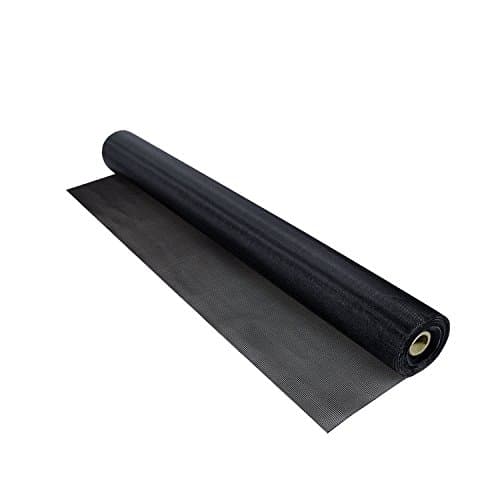
| 1 | Phifer PetScreen Vinyl-coated polyester published at seven times the strength of standard insect screen -- the difference between a window you can open and one you have to keep shut. | An open window a cat will not claw through | 7.8 | |
| 2 | No photo K&H EZ Mount Window Hammock Kitty Sill A 50 lb published suction rating on a hammock that folds flat against the glass without coming off, which is the detail that lets it share a window with curtains. | A sunny window and no floor to spare | 7.8 | |
| 3 | 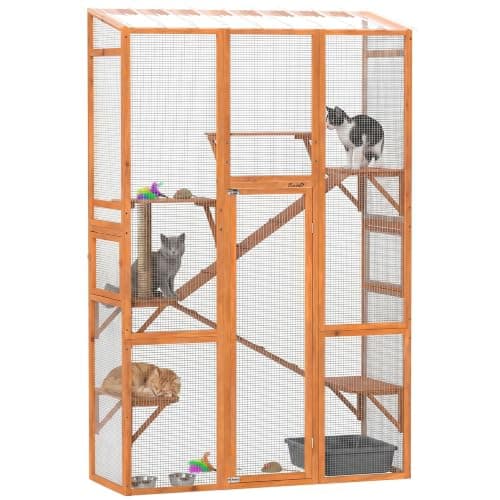 PawHut Outdoor Catio Cat Enclosure, 99 in A fir-wood catio that goes up rather than out: a published 63.8 by 24.2 inch footprint carrying six jumping platforms and two ramps to 99.2 inches, with a waterproof roof and window access. | Outdoor air for an indoor cat, safely | 7.2 |
#ad Buy links are affiliate links. Prices come from a live daily check; where we have no verified price we say "check price" rather than print a stale one.
A cat at an open window is one of the nicest sights in a house. It is also the easiest way for an indoor cat to get outside, or fall — and the screen is the only thing in between.
A screen fails in two ways
The mesh can tear, or the frame can come out. Standard insect screen is made of thin strands designed to stop insects, and a cat that climbs it or claws at a bird can go straight through. That is the failure pet screen solves.
The second failure is the frame. Many window screens are held only by friction or small tension clips, and a cat leaning its weight against the screen can push the whole frame out. Stronger mesh does nothing for that. It has to be fixed separately, and it is the check most cat owners miss.
What pet screen trades for strength
Phifer publishes PetScreen as seven times stronger than standard insect screening: vinyl-coated polyester at 11.2 ounces per square yard and 0.036 inches thick.
It also publishes about 36 percent openness and about 64 percent UV blockage. The thicker, coated strands that make it strong also make it less open, so it lets through less air and less view than insect screen.
That trade is worth making on the windows a cat sits at, and not necessarily on every window in the house.
What the three publish
| Product | Key figure | Size | Notable |
|---|---|---|---|
| Phifer PetScreen | 7x stronger than insect screen | Widths 30" to 60"; rolls 84" to 100 ft | About 36 percent openness, 0.036" thick |
| K&H EZ Mount Window Hammock | Suction up to 50 lb | 12" x 23" x 14" | Folds without removal; washable pad |
| PawHut Outdoor Catio | 22 lb published load | 63.8" x 24.2" x 99.2" | Six platforms and two ramps, waterproof roof; wire spacing not published |
Manufacturers' published figures.
The picks
Phifer PetScreen is the screen. It publishes a full specification — strength, weight, thickness, openness, UV blockage, widths and roll lengths — which is unusual for a building material, and it is sold in DIY rolls. It is thicker than insect screen and harder to spline in, and it costs some airflow. On the windows your cat uses, those are small prices.
K&H’s window hammock gives a cat a seat at the screened window, so it is not climbing the screen to see out. It mounts by suction rated to 50 lb and folds up without being removed. Our hammock page covers the category.
A catio is the answer if what you really want is a window wide open. It gives the air and sounds of outside with a whole structure in between, rather than a screen the cat leans on. Our catio roundup covers it.
Securing the frame
- Check how the frame is held. Push gently from inside. If the frame moves or bows out, the fixing is the weak point.
- Add screws or retainers. Screen frames can be secured with small screws or turn-button retainers into the window frame. In a rental, ask first.
- Open the window from the top, if you can. A sash opened at the top keeps the gap above where a cat usually sits.
- Use window stops. A window that only opens a few inches is safer than one that opens fully.
- Check after rescreening. A new, thicker screen can change how a frame sits.
Which windows to do
- The windows the cat sits at. Watch for a week; it is usually two or three.
- Any window above ground floor that you open.
- Windows with a bird feeder outside. Our window feeder page recommends keeping those closed or properly screened.
- Not the window you are giving the cat as a door. A sash window insert occupies the opening it is fitted into — our no-cut cat doors page covers that route, and it is a different product from screening a window you still open.
The picks in full
Specs are the manufacturer's own, linked to the page they came from. Prices come from a live daily check; where we have no verified price we say so rather than print a stale one.
Phifer PetScreen
Phifer · Pet-resistant screen · Our score 7.8/10
#ad Price as of November 12, 2026. Prices move; we check daily. How we're funded.
Vinyl-coated polyester published at seven times the strength of standard insect screen -- the difference between a window you can open and one you have to keep shut.
Published specs
| Strength | 7x stronger than standard insect screening |
|---|---|
| Material | Vinyl-coated polyester |
| Weight | 11.2 oz per square yard |
| Thickness | 0.036" |
| Openness | About 36 percent |
| UV blockage | About 64 percent |
| Widths | 30", 36", 48", 60" (wider in black) |
| Roll lengths | 84 in, 25 ft, 50 ft, 100 ft |
Phifer publishes about 36 percent openness. Standard insect screen is far more open, because its strands are much thinner. The thicker, coated strand is where the strength comes from, and it is paid for in airflow and visibility -- a trade worth making on a window a cat sits in, and not on every window in the house.
What the specs favor
- Published strength comparison against standard screen
- Full material and performance specification published
- Available in several widths and roll lengths
- Resists both claws and punctures
What they don't
- About 36 percent openness reduces airflow and view
- It is a screen, not a barrier -- it does not stop a push-out of a loose frame
- Requires rescreening, which is a DIY or installer job
Your screens are held in by friction clips. The frame, not the mesh, is how most cats get out, and pet screen in a frame that pops out solves the wrong half.
How it scores
Scores are our editorial weighting of the published specs above, not a test result. They are deliberately kept out of this page's structured data.
K&H EZ Mount Window Hammock Kitty Sill
K&H Pet Products · Window hammock · Our score 7.8/10
#ad No verified live price right now, so we show none rather than a stale one. How we're funded.
A 50 lb published suction rating on a hammock that folds flat against the glass without coming off, which is the detail that lets it share a window with curtains.
Published specs
| Dimensions | 12" x 23" x 14" |
|---|---|
| Suction rating | Up to 50 lb (K&H) |
| Weight | 2.235 lb |
| Material | Polyester |
| Included | 2 Twist n' Turn and 2 regular suction cups |
| Folding | Folds up without removing it from the window |
| Pad | Washable K&H Amazin' Kitty Pad, insulating |
K&H publishes the same 50 lb suction figure for its flat single-level sill and this hammock. The rating is identical because the cups are identical -- what differs is the shape the cat lies in. A hammock cradles; a flat sill lets a cat stretch out. Neither is safer than the other.
What the specs favor
- Folds flat without dismounting, so curtains and blinds still work
- 50 lb published suction figure, the same as K&H's rigid sills
- Insulating washable pad, which matters on cold glass
- 2.2 lb, so the hardware is carrying almost nothing but the cat
What they don't
- Suction fails on textured, dirty or very cold glass
- Cradled shape suits one cat, not two
- Needs a large clear pane, and K&H publishes the glass requirement
You have two cats and one window. A hammock is a single-occupancy shape -- the double-stack sill exists for exactly this reason.
How it scores
Scores are our editorial weighting of the published specs above, not a test result. They are deliberately kept out of this page's structured data.
PawHut Outdoor Catio Cat Enclosure, 99 in
PawHut · Catio · Our score 7.2/10
#ad Price as of November 12, 2026. Prices move; we check daily. How we're funded.
A fir-wood catio that goes up rather than out: a published 63.8 by 24.2 inch footprint carrying six jumping platforms and two ramps to 99.2 inches, with a waterproof roof and window access.
Published specs
| Overall | 63.8" W x 24.2" D x 99.2" H |
|---|---|
| Footprint | About 10.7 sq ft |
| Platforms | Six, plus two ramps |
| Published max load | 22 lb |
| Rated for | 2 to 3 cats |
| Frame | Fir wood |
| Roof | Waterproof |
| Mesh grid | Not published |
63.8 x 24.2 inches is 1,544 square inches, about 10.7 square feet. Split across the two to three cats PawHut rates it for, that is 5.4 square feet each at two and 3.6 at three. The six platforms are what make that workable -- floor alone would be tight at three.
What the specs favor
- Publishes a load figure, which most enclosures do not
- Six platforms and two ramps give real vertical territory
- Waterproof roof
- Window access, so it can be connected to the house
What they don't
- Does not publish the wire spacing, the safety-critical specification
- The 22 lb load figure is published without saying whether it is per platform or overall
- Fir wood needs treating to last outdoors
- Assembly is substantial and it is a permanent-looking object
You cannot connect it to a window or door. A catio a cat is carried to and left in is a cage in the garden, and a supervised window perch may serve that cat better.
How it scores
Scores are our editorial weighting of the published specs above, not a test result. They are deliberately kept out of this page's structured data.
Common questions
Can cats claw through window screens?
What is the best cat-proof window screen?
Does pet screen reduce airflow?
Can a cat push a window screen out?
Can I install pet screen myself?
Sources
- Phifer -- PetScreen Pet Resistant Screening (7x stronger than insect screen, vinyl-coated polyester, 11.2 oz/yd2, 0.036 in, about 36 percent openness)
- K&H Pet Products -- EZ Mount Window Hammock Kitty Sill (12 x 23 x 14 in, 50 lb suction, 2.235 lb, washable insulating pad)
- PawHut -- Outdoor Catio Cat Enclosure listing, 99 in (63.8 x 24.2 x 99.2 in, 22 lb max load, six jumping platforms, two ramps, fir frame, waterproof roof; wire spacing not published)
Read next
- Best Cord Protectors for Cats (2026)
Cord protectors on the one figure that separates them: cost per covered foot, from $1.50 to $2.83 for the same job -- plus the 27 percent premium that appears twice in one brand's line with nothing published behind it.
- Cat-Proofing Your Home
Room-by-room cat-proofing for blinds, carpet, cables and furniture, with the free fixes first and product last.
- Best Cat Window Perches (2026)
Window perches compared on published suction rating and ledge length, including whether two cats can genuinely share one.
- Best Window Bird Feeders for Cats (2026)
A window bird feeder paired with the perches that let a cat watch it, compared on published suction ratings and glass size.
- Best Outdoor Cat Enclosures and Catios (2026)
An outdoor catio compared with a harness and a stroller on space, mesh and safety -- three ways to give an indoor cat the outdoors.
- Best Cat Hammocks (2026)
Window hammocks and flat perches compared on published suction rating and ledge size, and which posture suits which cat.
- Best No-Cut Cat Doors for Renters (2026)
No-cut cat doors compared on published flap aperture, fit range and step height -- including the 11.5 inches of doorway a patio panel costs, which the maker publishes itself.