Beds, Carriers & Daily Care
Best Cat Nail Clippers (2026)
The difference between a cat clipper and a dog clipper is how much claw fits in the jaws. That is not a marketing distinction.
Affiliate disclosure: we earn a commission if you buy through our links, at no extra cost to you. It never changes which product we rank first — here is how we're funded.
Everyone in this category says they tested twenty litter boxes. We have not tested any, and we say so. What we do instead: compile the published specs, read the manuals, and do the arithmetic on what this gear costs to run and how it behaves once there is more than one cat using it. Every spec is linked to the document it came from. Prices are checked daily — last verified October 22, 2026. Here is exactly how we pick.
Quick picks
Ranked on the published specs and the arithmetic below. Tap any row to jump to the full write-up. We have not tested these — here is exactly how we pick.
| # | Product | Best for | Score | Price |
|---|---|---|---|---|
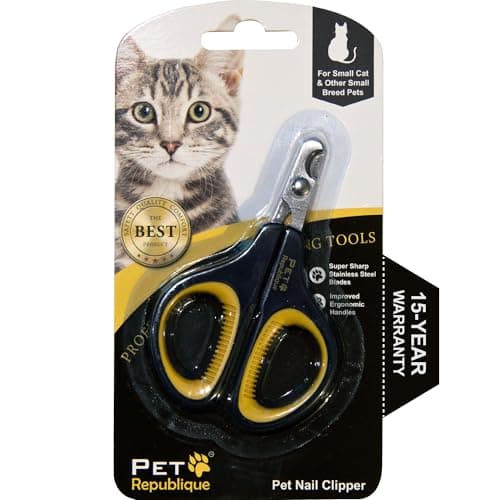
| 1 | Pet Republique Cat Nail Clipper A concave half-moon notch rather than a straight edge, which seats the claw tip in the curve and admits nothing else -- the geometry is the safety feature, not the sharpness. | Short, controlled cuts on a cat that will not sit still | 7.8 | |
| 2 | 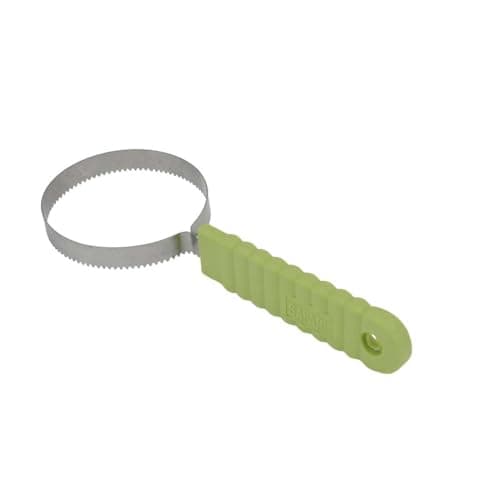 Safari Cat Shedding Comb Alternating long and short teeth in stainless steel on a wooden handle -- no mechanism, nothing to break, and the tool most likely to find a knot while it is still small. | Finding mats before they become mats | 7.6 | |
| 3 | 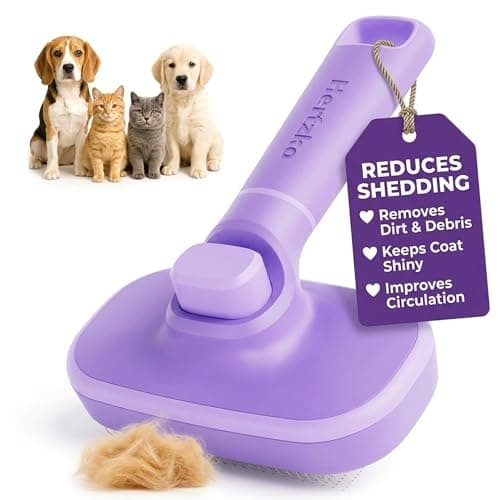 Hertzko Self-Cleaning Slicker Brush Fine angled bristles that retract at the push of a button, which turns the worst part of brushing a cat -- picking matted hair out of a brush -- into one movement. | Daily brushing a cat will tolerate | 7.4 |
#ad Buy links are affiliate links. Prices come from a live daily check; where we have no verified price we say "check price" rather than print a stale one.
Nail trimming goes wrong in one specific way, and the tool you buy either makes that failure easy or makes it hard. That is genuinely the whole product decision.
Why a small blade is safer
A large blade admits the whole claw before it closes. The cut happens all at once, and by the time you feel resistance the blade has already passed the point where the quick begins.
A short cat-sized blade only admits the tip. The geometry limits how much claw can be in the jaws, so the worst realistic outcome is a cut that is too shallow rather than one that is too deep.
That is the argument for buying a cat clipper rather than a dog one, and it is a mechanical argument rather than a marketing one.
What to look for
Pet Republique publishes stainless steel blades, a concave half-moon cutting edge and a non-slip ergonomic handle, sized for cats. All three matter: stainless holds an edge, the notch decides how much claw can enter the jaws at all, and grip matters at the exact moment a cat pulls its paw back mid-cut.
What no manufacturer in this category publishes is a blade aperture figure, which is frustrating given that the opening is the safety feature. Buy the one explicitly sold for cats and accept that the specification is a shape rather than a number.
The routine that makes it possible
- Handle paws for weeks before you cut anything. A few seconds a day, no clippers present. This is the actual work.
- Press gently on the pad to extend the claw. Look for the pink quick inside it.
- Cut only the clear hook, well clear of the pink.
- One or two claws per session at first. There is no rule that all eighteen happen at once.
- Stop while it is still going well. Not when the cat has had enough.
- Keep styptic powder in the room. You will need it eventually and it is much worse to need it and not have it.
Trimming does not replace a post
Trimming shortens the claw. Scratching sheds the worn outer sheath, stretches the cat and marks territory, and our scratching page covers why none of those needs go away. A trimmed cat still needs somewhere to scratch, and a cat with a good post still needs trimming.
The rest of the kit
A comb and a slicker belong in the same drawer, because the same handling tolerance carries all three tasks. A cat that accepts being combed accepts having paws held, and our grooming schedule puts the whole routine on one calendar.
The picks in full
Specs are the manufacturer's own, linked to the page they came from. Prices come from a live daily check; where we have no verified price we say so rather than print a stale one.
Pet Republique Cat Nail Clipper
Pet Republique · Nail clipper · Our score 7.8/10
#ad Price as of October 22, 2026. Prices move; we check daily. How we're funded.
A concave half-moon notch rather than a straight edge, which seats the claw tip in the curve and admits nothing else -- the geometry is the safety feature, not the sharpness.
Published specs
| Blades | Stainless steel |
|---|---|
| Blade edge | Concave half-moon notch |
| Style | Scissor-style clipper sized for cat claws |
| Handle | Non-slip ergonomic grip |
| Overall size | 4.72" x 2.36" x 0.5" |
| Suits | Cats, kittens, hamsters, rabbits, birds, small breeds |
| Blade aperture | Not published |
A straight blade lets you come at the claw from any angle, including the one that takes the whole nail. A concave notch seats the tip in the curve and nothing else fits, so the cut lands across the hook rather than through the base. The worst case becomes a trim that is too short rather than one that is too deep -- which is the entire reason to buy a cat clipper rather than a dog one.
What the specs favor
- The notch positions the claw instead of leaving the angle to you
- Stainless blades, named on the spec
- Non-slip ergonomic handle, which matters when a cat pulls mid-cut
- Cheap enough that replacing a dulled pair is not a decision
What they don't
- No blade aperture figure published, so the working size is a shape rather than a number
- Steel grade is not published either -- "stainless" is the whole specification
- Blunts with use and there is no indicator except feel
- No nail file or safety guard, both of which rivals at this price include
Your cat has never had its paws handled. Start with handling and touch, not with a tool -- and if the claws are already overgrown or ingrown, that is a veterinary visit.
How it scores
Scores are our editorial weighting of the published specs above, not a test result. They are deliberately kept out of this page's structured data.
Safari Cat Shedding Comb
Safari by Coastal · Grooming tool · Our score 7.6/10
#ad Price as of October 22, 2026. Prices move; we check daily. How we're funded.
Alternating long and short teeth in stainless steel on a wooden handle -- no mechanism, nothing to break, and the tool most likely to find a knot while it is still small.
Published specs
| Length | 7.2" |
|---|---|
| Teeth | Stainless steel, rounded tips, alternating long and short |
| Handle | Contoured wood |
| Published usage | Daily on long-haired cats, weekly on short-haired cats |
The long teeth reach the underlayers and lift loose hair, while the short teeth collect what the long ones released nearer the surface. One pass does the work of two, which matters when the cat's patience is the limiting resource.
What the specs favor
- No moving parts, so nothing to break
- Published usage frequency by coat length
- Rounded tooth tips rather than cut ends
- Finds mats early, when they still comb out
What they don't
- Slower than a slicker over a large area
- Wooden handle should not go in a dishwasher
- Removes far less bulk loose hair per pass than a deshedding edge
You want one tool and one tool only. A comb is the diagnostic instrument in a grooming kit rather than the workhorse.
How it scores
Scores are our editorial weighting of the published specs above, not a test result. They are deliberately kept out of this page's structured data.
Hertzko Self-Cleaning Slicker Brush
Hertzko · Grooming tool · Our score 7.4/10
#ad Price as of October 22, 2026. Prices move; we check daily. How we're funded.
Fine angled bristles that retract at the push of a button, which turns the worst part of brushing a cat -- picking matted hair out of a brush -- into one movement.
Published specs
| Bristles | Fine angled stainless steel |
|---|---|
| Self-cleaning | Button retracts the bristles to release collected hair |
| Handle | Comfort-grip, non-slip |
| Suits | Long-haired and short-haired cats |
| Head dimensions | Not consistently published |
A slicker's fine bent bristles lift and separate the topcoat. A deshedding edge like the FURminator reaches under it. They are not competing purchases: the slicker is the daily tool and the deshedder is the weekly one, which is why the published FURminator protocol says 1 to 2 times a week rather than daily.
What the specs favor
- Retractable bristles make cleaning the brush a one-second job
- Works on both coat lengths, so one brush covers a mixed household
- Bent bristles lift tangles without the pulling a comb does
What they don't
- Head size is not consistently published across listings
- Fine bristles can scratch skin if pressed
- Plastic retract mechanism is the part that fails first
Your cat has serious mats. A slicker will pull at them rather than open them, and matting past a certain point is a groomer or veterinary job, not a brush job.
How it scores
Scores are our editorial weighting of the published specs above, not a test result. They are deliberately kept out of this page's structured data.
Common questions
What are the best nail clippers for cats?
Can you use human nail clippers on a cat?
How often should you trim a cat's claws?
What happens if you cut a cat's nail too short?
Do indoor cats need their claws trimmed?
Sources
- Pet Republique -- Cat Nail Clipper listing (stainless steel, concave blade edge, non-slip ergonomic handles, 4.72 x 2.36 x 0.5 in)
- Coastal Pet -- Safari Cat Shedding Comb (7.2 in, stainless steel alternating teeth)
- Hertzko -- Self Cleaning Slicker Brush listing (retractable self-cleaning button)
- Ohio State University Indoor Pet Initiative -- For Cat Owners
Read next
- Best Cat Nail Caps (2026)
Nail caps compared on published sizing and wear window, who they genuinely suit, and what they do not replace.
- Cat Grooming Schedule
A grooming calendar built from published manufacturer intervals, with the total time cost per cat per year.
- Best Cat Brushes and Grooming Tools (2026)
Deshedder, slicker and comb compared on what each actually reaches, with the FURminator 90 percent claim costed in hours a year.
- Why Cats Scratch
The four jobs scratching does for a cat, and what each one implies about where and what to provide.
- Best Cat Scratching Posts (2026)
Ranked on the three published specs that predict whether a cat uses a post: height, base width and surface material.
- Best Cat Nail Grinders (2026)
Nail grinders compared on published noise, speed range and battery life, against the silent clipper alternative.
- How to Trim Cat Nails
Where the quick is, how much to take off, and a one-claw-a-day routine that turns claw trimming into something a cat tolerates.