Beds, Carriers & Daily Care
Best Cat Brushes and Grooming Tools (2026)
One tool here publishes the schedule its own claim depends on. Work that schedule out in hours and the claim looks different.
Affiliate disclosure: we earn a commission if you buy through our links, at no extra cost to you. It never changes which product we rank first — here is how we're funded.
Everyone in this category says they tested twenty litter boxes. We have not tested any, and we say so. What we do instead: compile the published specs, read the manuals, and do the arithmetic on what this gear costs to run and how it behaves once there is more than one cat using it. Every spec is linked to the document it came from. Prices are checked daily — last verified October 21, 2026. Here is exactly how we pick.
Quick picks
Ranked on the published specs and the arithmetic below. Tap any row to jump to the full write-up. We have not tested these — here is exactly how we pick.
| # | Product | Best for | Score | Price |
|---|---|---|---|---|
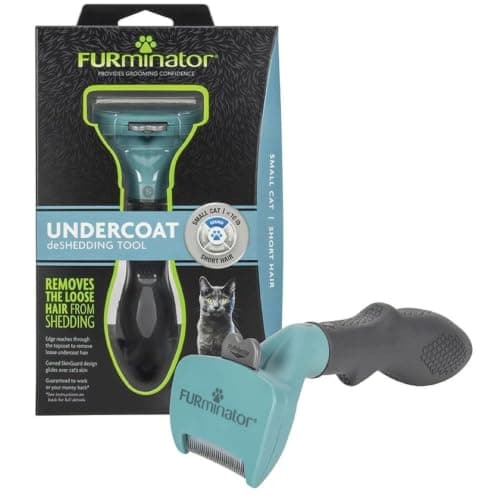
| 1 | FURminator Undercoat deShedding Tool, Small Cat, Short Hair The only tool here with a published usage protocol attached to its claim -- 1 to 2 sessions a week of 10 to 20 minutes for up to 90 percent less loose hair -- which makes the claim checkable rather than decorative. | Undercoat, on a schedule | 8.2 | |
| 2 | 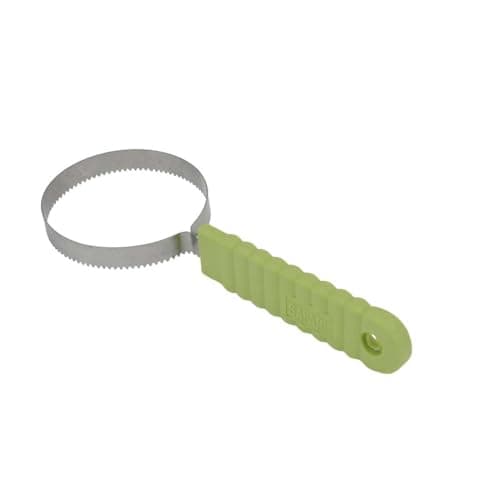 Safari Cat Shedding Comb Alternating long and short teeth in stainless steel on a wooden handle -- no mechanism, nothing to break, and the tool most likely to find a knot while it is still small. | Finding mats before they become mats | 7.6 | |
| 3 | 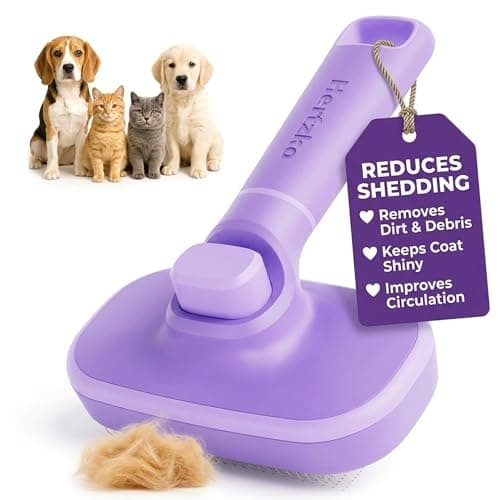 Hertzko Self-Cleaning Slicker Brush Fine angled bristles that retract at the push of a button, which turns the worst part of brushing a cat -- picking matted hair out of a brush -- into one movement. | Daily brushing a cat will tolerate | 7.4 |
#ad Buy links are affiliate links. Prices come from a live daily check; where we have no verified price we say "check price" rather than print a stale one.
Grooming tools are sold on before-and-after photographs of a hairball the size of a second cat. One of these three publishes something more useful: the schedule its own headline claim is conditioned on.
The 90 percent claim, costed in hours
FURminator publishes that its undercoat deShedding tool “reduces loose hair from shedding up to 90 percent with regular use”, and separately publishes what it means by regular use: 1 to 2 times a week, 10 to 20 minutes a session.
Low end: 1 session a week x 10 minutes x 52 = 520 minutes = 8.7 hours a year.
Midpoint: 1.5 sessions x 15 minutes x 52 = 1,170 minutes = 19.5 hours a year.
High end: 2 sessions x 20 minutes x 52 = 2,080 minutes = 34.7 hours a year.
Three tools, three depths
| Tool | Reaches | Published schedule | Published dimensions |
|---|---|---|---|
| FURminator deShedding, small short-hair | Undercoat, beneath the topcoat | 1-2 times a week, 10-20 min | Cat weight and coat length only; no edge width |
| Hertzko self-cleaning slicker | Topcoat tangles at the surface | Not published | Not consistently published |
| Safari Cat Shedding Comb | Two depths per pass, alternating teeth | Daily long-haired, weekly short-haired | 7.2" overall |
Where a maker does not publish a dimension we leave it blank rather than sourcing a number from a reseller listing.
These are not three ways to buy the same thing. The comb is the diagnostic instrument — it finds a mat while a mat is still a knot. The slicker is the daily tool most cats tolerate. The deshedder is the weekly one that does the heavy lifting and is the easiest to overdo.
Why the retract button matters more than it should
The Hertzko’s bristles retract at the push of a button, and it sounds like a gimmick until you have picked matted undercoat out of a bare slicker with your fingernails. The tool that gets used is the tool with the least friction attached to using it, and clearing the brush is the friction in daily brushing.
The trade-off is honest: it is a plastic mechanism, and it is the part that eventually fails. Hertzko also does not consistently publish a head size across listings, which is why our specification table for it has a blank in it rather than a number we found on a reseller page.
Grooming in a multi-cat house
Two things change with several cats, and only one is obvious.
- The obvious one: more coat, more hair, more sessions. Three cats on the midpoint protocol is close to 60 hours a year.
- The one people miss: a brush carries scent between cats. Grooming one cat and then immediately grooming a housemate transfers scent in a direction the cats did not choose, which in a tense household is a genuinely unhelpful thing to do. Wipe the tool down between cats, or keep one per cat.
The same logic runs through our resource competition guide: almost everything that reads as a behavior problem in a multi-cat house is a scent or resource problem underneath.
Where a brush stops being the answer
The picks in full
Specs are the manufacturer's own, linked to the page they came from. Prices come from a live daily check; where we have no verified price we say so rather than print a stale one.
FURminator Undercoat deShedding Tool, Small Cat, Short Hair
FURminator · Grooming tool · Our score 8.2/10
#ad Price as of October 21, 2026. Prices move; we check daily. How we're funded.
The only tool here with a published usage protocol attached to its claim -- 1 to 2 sessions a week of 10 to 20 minutes for up to 90 percent less loose hair -- which makes the claim checkable rather than decorative.
Published specs
| Sized for | Small cats under 10 lb, short hair |
|---|---|
| Published claim | Reduces loose hair from shedding up to 90 percent with regular use |
| Edge | Stainless steel |
| Skin guard | Curved edge glides over skin, prevents digging in at edges |
| Hair release | FURejector button |
| Published protocol | 1-2 times a week, 10 to 20 minutes per session |
| Edge width | Not published |
Take the published protocol at its midpoint: 1.5 sessions a week at 15 minutes is 22.5 minutes a week, 19.5 hours a year -- call it 13 hours at the low end of the range. The 90 percent figure is conditioned on that commitment. Bought and used monthly, it is a different tool.
What the specs favor
- Publishes the usage protocol its own claim depends on
- Sized by cat weight and hair length rather than sold as one universal tool
- Stainless steel edge and a skin guard, both named on the spec
- Hair-release button, which matters at the volumes this pulls
What they don't
- No published edge width, so sizing across the range is by name only
- Over-use on a thin-coated cat can irritate skin
- Four variants means it is easy to buy the wrong one
Your cat is single-coated or elderly with thin fur. A deshedding edge is designed to reach an undercoat, and on a cat that does not have much of one it is the wrong instrument.
How it scores
Scores are our editorial weighting of the published specs above, not a test result. They are deliberately kept out of this page's structured data.
Safari Cat Shedding Comb
Safari by Coastal · Grooming tool · Our score 7.6/10
#ad Price as of October 21, 2026. Prices move; we check daily. How we're funded.
Alternating long and short teeth in stainless steel on a wooden handle -- no mechanism, nothing to break, and the tool most likely to find a knot while it is still small.
Published specs
| Length | 7.2" |
|---|---|
| Teeth | Stainless steel, rounded tips, alternating long and short |
| Handle | Contoured wood |
| Published usage | Daily on long-haired cats, weekly on short-haired cats |
The long teeth reach the underlayers and lift loose hair, while the short teeth collect what the long ones released nearer the surface. One pass does the work of two, which matters when the cat's patience is the limiting resource.
What the specs favor
- No moving parts, so nothing to break
- Published usage frequency by coat length
- Rounded tooth tips rather than cut ends
- Finds mats early, when they still comb out
What they don't
- Slower than a slicker over a large area
- Wooden handle should not go in a dishwasher
- Removes far less bulk loose hair per pass than a deshedding edge
You want one tool and one tool only. A comb is the diagnostic instrument in a grooming kit rather than the workhorse.
How it scores
Scores are our editorial weighting of the published specs above, not a test result. They are deliberately kept out of this page's structured data.
Hertzko Self-Cleaning Slicker Brush
Hertzko · Grooming tool · Our score 7.4/10
#ad Price as of October 21, 2026. Prices move; we check daily. How we're funded.
Fine angled bristles that retract at the push of a button, which turns the worst part of brushing a cat -- picking matted hair out of a brush -- into one movement.
Published specs
| Bristles | Fine angled stainless steel |
|---|---|
| Self-cleaning | Button retracts the bristles to release collected hair |
| Handle | Comfort-grip, non-slip |
| Suits | Long-haired and short-haired cats |
| Head dimensions | Not consistently published |
A slicker's fine bent bristles lift and separate the topcoat. A deshedding edge like the FURminator reaches under it. They are not competing purchases: the slicker is the daily tool and the deshedder is the weekly one, which is why the published FURminator protocol says 1 to 2 times a week rather than daily.
What the specs favor
- Retractable bristles make cleaning the brush a one-second job
- Works on both coat lengths, so one brush covers a mixed household
- Bent bristles lift tangles without the pulling a comb does
What they don't
- Head size is not consistently published across listings
- Fine bristles can scratch skin if pressed
- Plastic retract mechanism is the part that fails first
Your cat has serious mats. A slicker will pull at them rather than open them, and matting past a certain point is a groomer or veterinary job, not a brush job.
How it scores
Scores are our editorial weighting of the published specs above, not a test result. They are deliberately kept out of this page's structured data.
Common questions
What is the best cat brush?
How often should I brush my cat?
Does the FURminator really remove 90 percent of loose hair?
Is a deshedding tool bad for cats?
How do I get mats out of a cat's fur?
Sources
- FURminator -- Undercoat deShedding Tool, Small Cat Short Hair (under 10 lb, up to 90 percent, 1-2 times a week for 10-20 minutes)
- Coastal Pet -- Safari Cat Shedding Comb (7.2 in, stainless steel alternating teeth, contoured wooden handle)
- Hertzko -- Self Cleaning Slicker Brush listing (fine angled stainless bristles, retractable self-cleaning button)
- Cornell Feline Health Center -- Do I Need a Cat Carrier?
Read next
- Best Flea Combs for Cats (2026)
Flea combs compared on tooth spacing and handling, with the white-towel method for telling flea dirt from dandruff.
- Best Cat Beds (2026)
Cat beds compared on the measurement that matters -- usable interior, not outside diameter -- with the rim arithmetic shown.
- The Multi-Cat Household Guide
The pillar guide: resource counts by household size, why separation beats quantity, and the order to fix things in.
- Best Cat Carriers (2026)
Three carriers compared on published interior space, weight limits and crash certification -- and which of the three jobs each one is for.
- How to Stop a Cat Scratching the Furniture
Why cats scratch furniture, the free fixes that solve most cases, and the one purchase worth making if they do not.
- How to Brush a Cat That Hates It
Why cats object to brushing, the glove-first route back, and the rule about mats that keeps a grooming session out of the emergency vet.
- Best Grooming Tools for Long-Haired Cats (2026)
The three-tool kit for a long coat, ranked on what each reaches -- with honest cons, including the one most cats refuse.