Beds, Carriers & Daily Care
How to Brush a Cat That Hates It
A cat that swats the brush is usually objecting to something specific: the wrong tool, the wrong part of its body, or a session that went on too long.
Affiliate disclosure: we earn a commission if you buy through our links, at no extra cost to you. It never changes which product we rank first — here is how we're funded.
Everyone in this category says they tested twenty litter boxes. We have not tested any, and we say so. What we do instead: compile the published specs, read the manuals, and do the arithmetic on what this gear costs to run and how it behaves once there is more than one cat using it. Every spec is linked to the document it came from. Prices are checked daily — last verified September 25, 2026. Here is exactly how we pick.
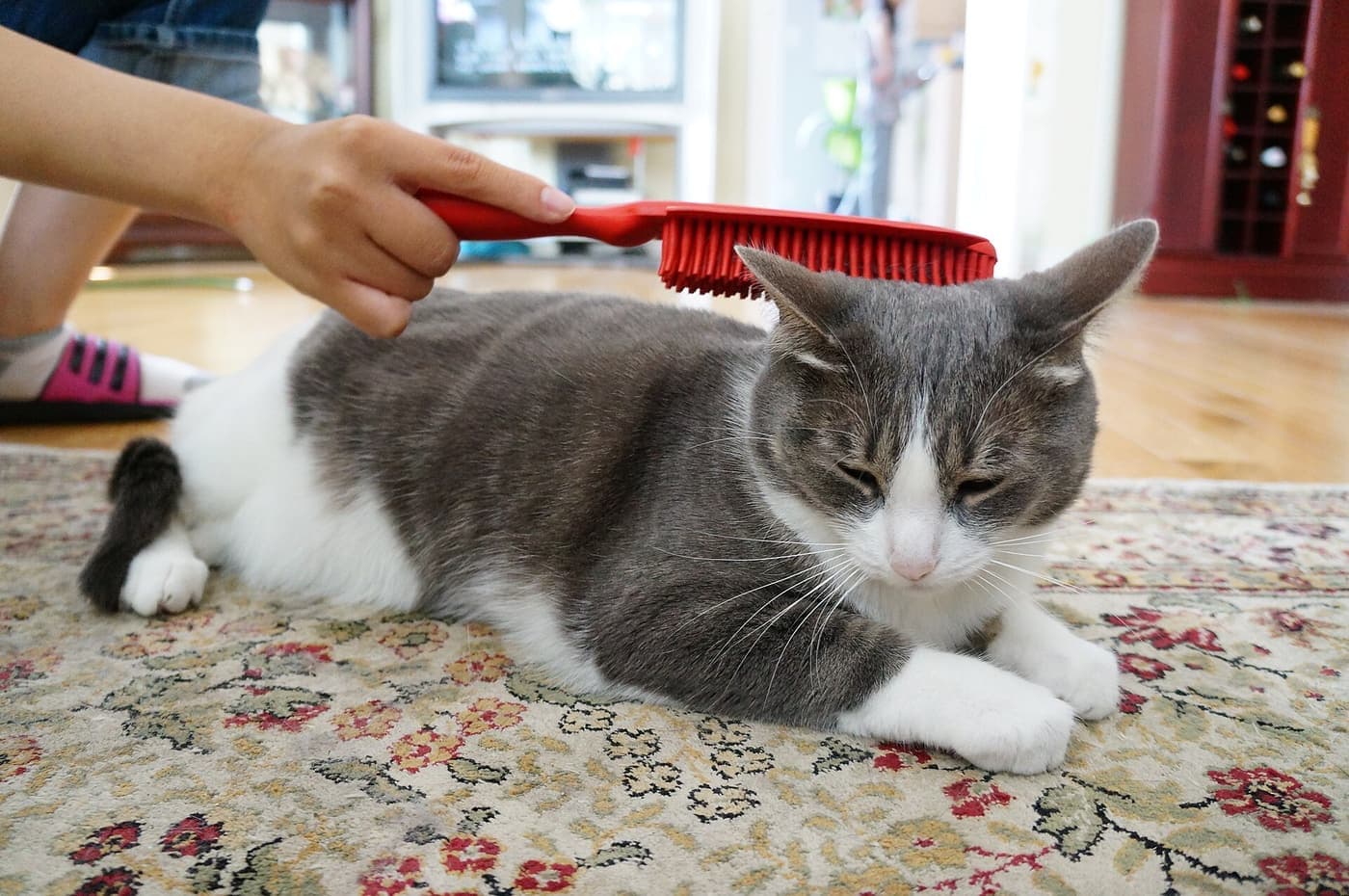
Brushing is the grooming job cats object to most, and the objection is nearly always specific rather than general. Find which of the three it is and the problem usually goes away.
The three objections
| Objection | Sign | Fix |
|---|---|---|
| The tool | Flinching as it touches, before any pulling | Switch to a glove or a wide comb; check pin stiffness |
| The area | Fine on the back, hostile at the belly or tail base | Stay on cheeks, chin and spine; leave the rest |
| The length | Good for a minute, then done | Two-minute sessions, ending before the cat does |
Compiled from the patterns readers describe; the fix column is where we would start in each case.
The route back
- Week 1: the glove. A grooming glove reads as stroking, which means the cat is not being asked to accept a new object at all. It reaches topcoat only, which is exactly right for a cat that is suspicious.
- Week 2: introduce the real tool between glove strokes. A few passes, then back to the glove, then stop.
- Week 3: short tool-only sessions on the areas the cat likes.
- Then extend, slowly, toward the flanks. The belly may never be on the list, and that is an acceptable outcome.
The tools, and what each is for
A slicker brush lifts loose undercoat and is the workhorse for most coats. Let the weight of the brush do the work -- pressing is what makes a slicker feel unpleasant on skin.
A shedding comb is the tool for finding trouble early: it snags on a forming mat before you can see one, especially behind the ears, in the armpits and along the trousers. Our brush roundup covers which tool reaches which layer.
For a long-haired cat that has got ahead of you, our long-hair tool page covers the kit that actually keeps a full coat in order.
The mat rule
A mat pulls the skin up into itself. Scissors slide under it far more easily than anyone expects, and cutting a cat’s skin is a common and entirely avoidable injury.
- Work the edge with a comb, holding the base of the mat against the skin so you are not pulling.
- Split a mat with your fingers into smaller sections before combing.
- If it is tight to the skin, stop. A groomer or vet with clippers will have it off in a minute with no risk.
- A sudden increase in matting is worth a vet mention -- a cat that has stopped grooming itself is telling you something.
The gear discussed here
Specs are the manufacturer's own, linked to the page they came from. Prices come from a live daily check; where we have no verified price we say so rather than print a stale one.
DELOMO Pet Grooming Gloves
DELOMO · Grooming glove · Our score 7.7/10
#ad No verified live price right now, so we show none rather than a stale one. How we're funded.
Publishes a tip count and a tip length, which is more specification than most brushes on this site carry -- and 0.314 inches is the number that decides whether it reaches anything.
Published specs
| Tips | 255 silicone grooming tips per glove |
|---|---|
| Tip length | 0.314" |
| Fit | One size, adjustable wrist strap |
| Design | Five fingers, for face and tail |
| Pack | One left and one right glove |
| Wet use | Yes, usable during bathing |
A third of an inch of soft silicone reaches loose surface hair and no further. It is not an undercoat tool -- FURminator's deshedding edge exists for that. The glove's advantage is acceptance: a cat that flinches from a slicker will often accept what feels like being stroked, and hair removed with cooperation beats hair not removed at all.
What the specs favor
- Published tip count and tip length, which brushes rarely provide
- Feels like being stroked, so it works on cats that refuse brushes
- Five-finger design reaches the face and tail a brush cannot
- Usable wet, which very few grooming tools are
What they don't
- Reaches topcoat only -- it will not touch an undercoat
- Hair sticks to the glove and has to be peeled off by hand
- One-size fit is loose on small hands, which costs control
Your cat has a dense double coat and is shedding heavily. This will remove the top layer and leave the problem, and a deshedding tool is the right instrument.
How it scores
Scores are our editorial weighting of the published specs above, not a test result. They are deliberately kept out of this page's structured data.
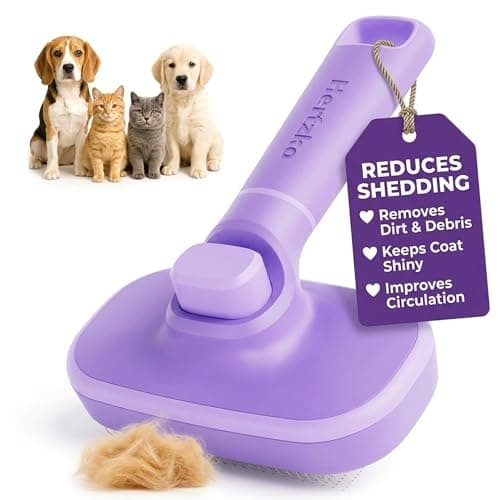
Hertzko Self-Cleaning Slicker Brush
Hertzko · Grooming tool · Our score 7.4/10
#ad Price as of September 25, 2026. Prices move; we check daily. How we're funded.
Fine angled bristles that retract at the push of a button, which turns the worst part of brushing a cat -- picking matted hair out of a brush -- into one movement.
Published specs
| Bristles | Fine angled stainless steel |
|---|---|
| Self-cleaning | Button retracts the bristles to release collected hair |
| Handle | Comfort-grip, non-slip |
| Suits | Long-haired and short-haired cats |
| Head dimensions | Not consistently published |
A slicker's fine bent bristles lift and separate the topcoat. A deshedding edge like the FURminator reaches under it. They are not competing purchases: the slicker is the daily tool and the deshedder is the weekly one, which is why the published FURminator protocol says 1 to 2 times a week rather than daily.
What the specs favor
- Retractable bristles make cleaning the brush a one-second job
- Works on both coat lengths, so one brush covers a mixed household
- Bent bristles lift tangles without the pulling a comb does
What they don't
- Head size is not consistently published across listings
- Fine bristles can scratch skin if pressed
- Plastic retract mechanism is the part that fails first
Your cat has serious mats. A slicker will pull at them rather than open them, and matting past a certain point is a groomer or veterinary job, not a brush job.
How it scores
Scores are our editorial weighting of the published specs above, not a test result. They are deliberately kept out of this page's structured data.
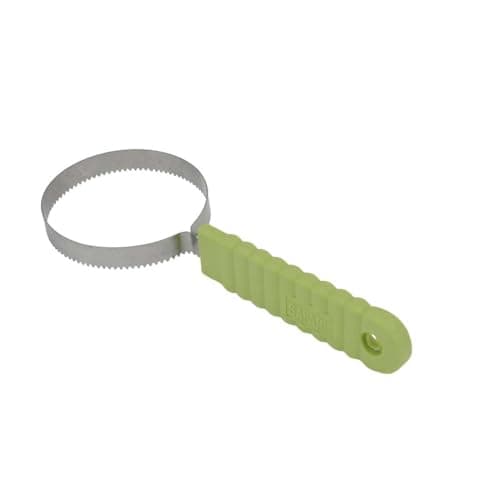
Safari Cat Shedding Comb
Safari by Coastal · Grooming tool · Our score 7.6/10
#ad Price as of September 25, 2026. Prices move; we check daily. How we're funded.
Alternating long and short teeth in stainless steel on a wooden handle -- no mechanism, nothing to break, and the tool most likely to find a knot while it is still small.
Published specs
| Length | 7.2" |
|---|---|
| Teeth | Stainless steel, rounded tips, alternating long and short |
| Handle | Contoured wood |
| Published usage | Daily on long-haired cats, weekly on short-haired cats |
The long teeth reach the underlayers and lift loose hair, while the short teeth collect what the long ones released nearer the surface. One pass does the work of two, which matters when the cat's patience is the limiting resource.
What the specs favor
- No moving parts, so nothing to break
- Published usage frequency by coat length
- Rounded tooth tips rather than cut ends
- Finds mats early, when they still comb out
What they don't
- Slower than a slicker over a large area
- Wooden handle should not go in a dishwasher
- Removes far less bulk loose hair per pass than a deshedding edge
You want one tool and one tool only. A comb is the diagnostic instrument in a grooming kit rather than the workhorse.
How it scores
Scores are our editorial weighting of the published specs above, not a test result. They are deliberately kept out of this page's structured data.
Common questions
Why does my cat hate being brushed?
How do I get a cat used to a brush?
How often should I brush my cat?
Should I cut out a mat with scissors?
Where should I not brush a cat?
Sources
- DELOMO -- Pet Grooming Gloves listing (255 silicone tips, 0.314 in tip length, one size with adjustable strap, pair)
- Hertzko -- Self Cleaning Slicker Brush listing (fine angled stainless bristles, retractable self-cleaning button)
- Coastal Pet -- Safari Cat Shedding Comb listing (7.2 in, stainless steel alternating teeth, contoured wooden handle)
- Ohio State University Indoor Pet Initiative -- For Cat Owners
Read next
- Best Cat Brushes and Grooming Tools (2026)
Deshedder, slicker and comb compared on what each actually reaches, with the FURminator 90 percent claim costed in hours a year.
- Cat Grooming Schedule
A grooming calendar built from published manufacturer intervals, with the total time cost per cat per year.
- Best Cat Grooming Gloves (2026)
Grooming gloves compared on published tip count and length, what they reach, and the cat they are genuinely the right tool for.
- Best Grooming Tools for Long-Haired Cats (2026)
The three-tool kit for a long coat, ranked on what each reaches -- with honest cons, including the one most cats refuse.
- Best Cat Hair Removal Tools (2026)
Hair removal tools compared on running cost and on where each one works, plus the upstream fix that beats all of them.