Beds, Carriers & Daily Care
Cat Grooming Schedule
Two of the tools in a grooming kit publish their own recommended frequency. Building the schedule around those is more honest than inventing one.
Affiliate disclosure: we earn a commission if you buy through our links, at no extra cost to you. It never changes which product we rank first — here is how we're funded.
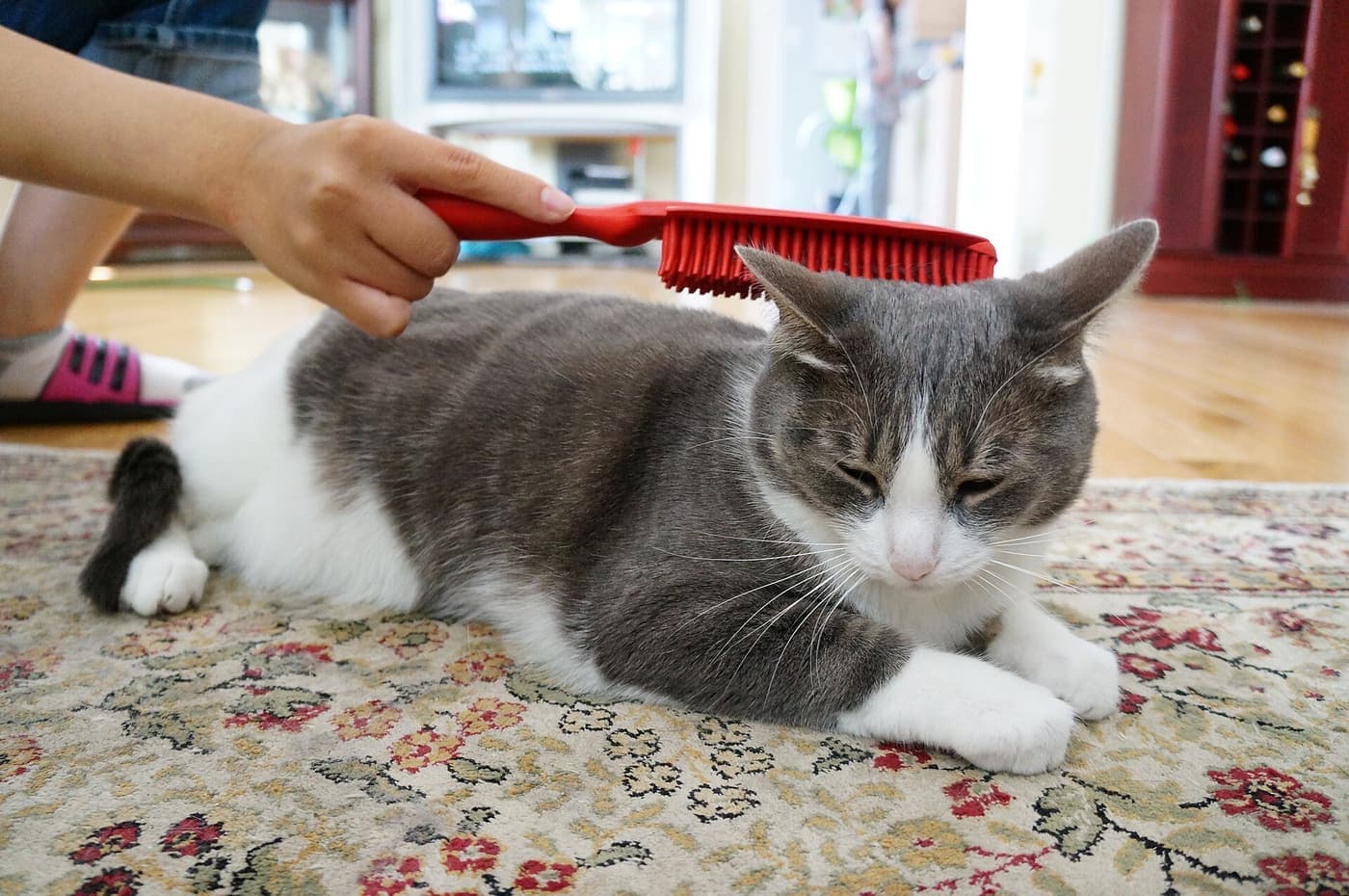
Everyone in this category says they tested twenty litter boxes. We have not tested any, and we say so. What we do instead: compile the published specs, read the manuals, and do the arithmetic on what this gear costs to run and how it behaves once there is more than one cat using it. Every spec is linked to the document it came from. Prices are checked daily — last verified October 22, 2026. Here is exactly how we pick.
Most grooming advice invents a frequency. Two of the tools in an ordinary kit publish their own, so this schedule is built from those and the gaps are labeled as ours.
What the makers publish
| Tool | Published interval | Published session length | Source |
|---|---|---|---|
| FURminator deShedding tool | 1-2 times a week | 10-20 minutes | FURminator |
| Safari Cat Shedding Comb | Daily long-haired, weekly short-haired | Not published | Coastal Pet |
| Slicker brush | Not published | Not published | - |
| Nail clipper | Not published | Not published | - |
Two of four publish an interval. The blanks are why the rest of this schedule is labeled as ours.
The schedule
| Frequency | Job | Tool | Time |
|---|---|---|---|
| Daily (long hair) | Comb through for tangles | Shedding comb | 2-3 minutes |
| Weekly (short hair) | Comb through | Shedding comb | 3-5 minutes |
| 1-2 times a week | Deshed the undercoat | Deshedding tool | 10-20 minutes |
| Weekly | Brush out the topcoat | Slicker | 3-5 minutes |
| Every 2-4 weeks | Trim claws | Cat nail clipper | 5 minutes |
| Monthly | Check ears, eyes, teeth, skin | Hands and eyes | 2 minutes |
Rows 1-3 follow the manufacturers' published intervals. Rows 4-6 are ours, and we label them as ours.
What it costs in time
Deshedding at the midpoint of the published protocol: 1.5 sessions a week x 15 minutes x 52 = 1,170 minutes = 19.5 hours.
Combing, short-haired weekly at 4 minutes: about 3.5 hours.
Nails, every three weeks at 5 minutes: about 1.5 hours.
Total, one short-haired cat: roughly 25 hours a year. A long-haired cat with daily combing is nearer 40. Three cats is a part-time commitment, and that is worth knowing before the third cat arrives.
The order within a session
- Comb first. It finds mats before another tool drags at them.
- Deshed second, if it is a deshedding day.
- Brush out third to lift what the previous two loosened.
- Nails last, because it is the part cats tolerate least and it should not end the session for everything else.
- Finish with something good. Food, or the play session the cat was waiting for.
A cat that will not be groomed
- Thirty seconds daily beats ten minutes weekly. You are building tolerance, not removing hair.
- Stop before the cat asks you to. Ending on your terms is what makes the next session easier.
- Start where the cat likes being touched. Cheeks and chin, then work outward over weeks.
- Handle paws daily with no clippers present. This is what makes nail trimming possible later — see our nail clippers page.
In a multi-cat house
Wipe tools down between cats. A brush carries scent, and transferring one cat’s scent onto another in a household with any tension in it is an unhelpful thing to do — the Ohio State Indoor Pet Initiative treats scent as central to how cats identify each other.
The gear discussed here
Specs are the manufacturer's own, linked to the page they came from. Prices come from a live daily check; where we have no verified price we say so rather than print a stale one.
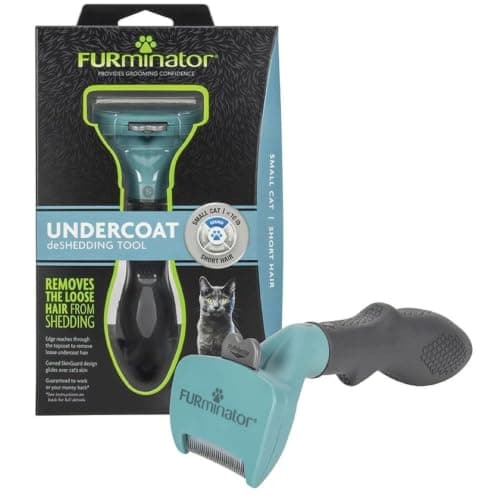
FURminator Undercoat deShedding Tool, Small Cat, Short Hair
FURminator · Grooming tool · Our score 8.2/10
#ad Price as of October 22, 2026. Prices move; we check daily. How we're funded.
The only tool here with a published usage protocol attached to its claim -- 1 to 2 sessions a week of 10 to 20 minutes for up to 90 percent less loose hair -- which makes the claim checkable rather than decorative.
Published specs
| Sized for | Small cats under 10 lb, short hair |
|---|---|
| Published claim | Reduces loose hair from shedding up to 90 percent with regular use |
| Edge | Stainless steel |
| Skin guard | Curved edge glides over skin, prevents digging in at edges |
| Hair release | FURejector button |
| Published protocol | 1-2 times a week, 10 to 20 minutes per session |
| Edge width | Not published |
Take the published protocol at its midpoint: 1.5 sessions a week at 15 minutes is 22.5 minutes a week, 19.5 hours a year -- call it 13 hours at the low end of the range. The 90 percent figure is conditioned on that commitment. Bought and used monthly, it is a different tool.
What the specs favor
- Publishes the usage protocol its own claim depends on
- Sized by cat weight and hair length rather than sold as one universal tool
- Stainless steel edge and a skin guard, both named on the spec
- Hair-release button, which matters at the volumes this pulls
What they don't
- No published edge width, so sizing across the range is by name only
- Over-use on a thin-coated cat can irritate skin
- Four variants means it is easy to buy the wrong one
Your cat is single-coated or elderly with thin fur. A deshedding edge is designed to reach an undercoat, and on a cat that does not have much of one it is the wrong instrument.
How it scores
Scores are our editorial weighting of the published specs above, not a test result. They are deliberately kept out of this page's structured data.
Safari Cat Shedding Comb
Safari by Coastal · Grooming tool · Our score 7.6/10
#ad Price as of October 22, 2026. Prices move; we check daily. How we're funded.
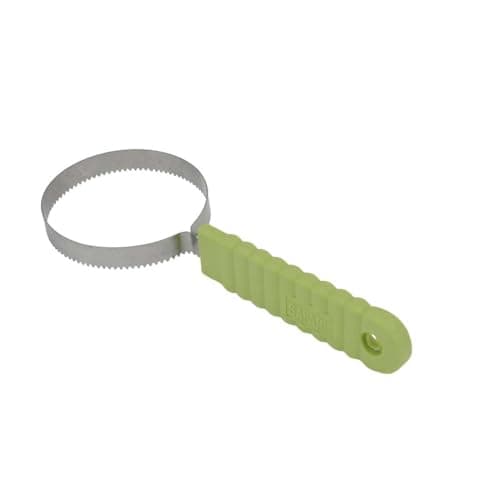
Alternating long and short teeth in stainless steel on a wooden handle -- no mechanism, nothing to break, and the tool most likely to find a knot while it is still small.
Published specs
| Length | 7.2" |
|---|---|
| Teeth | Stainless steel, rounded tips, alternating long and short |
| Handle | Contoured wood |
| Published usage | Daily on long-haired cats, weekly on short-haired cats |
The long teeth reach the underlayers and lift loose hair, while the short teeth collect what the long ones released nearer the surface. One pass does the work of two, which matters when the cat's patience is the limiting resource.
What the specs favor
- No moving parts, so nothing to break
- Published usage frequency by coat length
- Rounded tooth tips rather than cut ends
- Finds mats early, when they still comb out
What they don't
- Slower than a slicker over a large area
- Wooden handle should not go in a dishwasher
- Removes far less bulk loose hair per pass than a deshedding edge
You want one tool and one tool only. A comb is the diagnostic instrument in a grooming kit rather than the workhorse.
How it scores
Scores are our editorial weighting of the published specs above, not a test result. They are deliberately kept out of this page's structured data.
Pet Republique Cat Nail Clipper
Pet Republique · Nail clipper · Our score 7.8/10
#ad Price as of October 22, 2026. Prices move; we check daily. How we're funded.
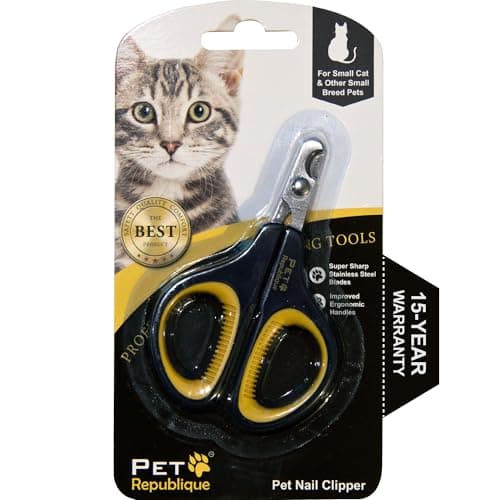
A concave half-moon notch rather than a straight edge, which seats the claw tip in the curve and admits nothing else -- the geometry is the safety feature, not the sharpness.
Published specs
| Blades | Stainless steel |
|---|---|
| Blade edge | Concave half-moon notch |
| Style | Scissor-style clipper sized for cat claws |
| Handle | Non-slip ergonomic grip |
| Overall size | 4.72" x 2.36" x 0.5" |
| Suits | Cats, kittens, hamsters, rabbits, birds, small breeds |
| Blade aperture | Not published |
A straight blade lets you come at the claw from any angle, including the one that takes the whole nail. A concave notch seats the tip in the curve and nothing else fits, so the cut lands across the hook rather than through the base. The worst case becomes a trim that is too short rather than one that is too deep -- which is the entire reason to buy a cat clipper rather than a dog one.
What the specs favor
- The notch positions the claw instead of leaving the angle to you
- Stainless blades, named on the spec
- Non-slip ergonomic handle, which matters when a cat pulls mid-cut
- Cheap enough that replacing a dulled pair is not a decision
What they don't
- No blade aperture figure published, so the working size is a shape rather than a number
- Steel grade is not published either -- "stainless" is the whole specification
- Blunts with use and there is no indicator except feel
- No nail file or safety guard, both of which rivals at this price include
Your cat has never had its paws handled. Start with handling and touch, not with a tool -- and if the claws are already overgrown or ingrown, that is a veterinary visit.
How it scores
Scores are our editorial weighting of the published specs above, not a test result. They are deliberately kept out of this page's structured data.
Common questions
How often should you groom a cat?
How long does grooming a cat take per year?
Do short haired cats need grooming?
What order should you groom a cat in?
How do you groom a cat that hates being groomed?
Sources
- FURminator -- Undercoat deShedding Tool, Small Cat Short Hair (under 10 lb, up to 90 percent, 1-2 times a week for 10-20 minutes)
- Coastal Pet -- Safari Cat Shedding Comb (7.2 in, stainless steel alternating teeth)
- Pet Republique -- Cat Nail Clipper listing (stainless steel, concave blade edge, non-slip ergonomic handles, 4.72 x 2.36 x 0.5 in)
- Ohio State University Indoor Pet Initiative -- For Cat Owners
Read next
- Best Cat Toothbrushes and Dental Kits (2026)
Cat dental kits compared, why brushing is the only mechanical plaque removal, and the introduction routine that makes it possible.
- Best Cat Brushes and Grooming Tools (2026)
Deshedder, slicker and comb compared on what each actually reaches, with the FURminator 90 percent claim costed in hours a year.
- Best Cat Nail Clippers (2026)
Cat nail clippers compared, why blade size is the safety feature, and a handling routine that makes trimming possible.
- Best Cat Hair Removal Tools (2026)
Hair removal tools compared on running cost and on where each one works, plus the upstream fix that beats all of them.
- The Multi-Cat Household Guide
The pillar guide: resource counts by household size, why separation beats quantity, and the order to fix things in.
- How to Brush a Cat That Hates It
Why cats object to brushing, the glove-first route back, and the rule about mats that keeps a grooming session out of the emergency vet.