Beds, Carriers & Daily Care
Best Cat Carriers (2026)
Only one carrier here publishes an interior dimension and an independent crash rating. Only one has a top door. They are not the same carrier.
Affiliate disclosure: we earn a commission if you buy through our links, at no extra cost to you. It never changes which product we rank first — here is how we're funded.
Everyone in this category says they tested twenty litter boxes. We have not tested any, and we say so. What we do instead: compile the published specs, read the manuals, and do the arithmetic on what this gear costs to run and how it behaves once there is more than one cat using it. Every spec is linked to the document it came from. Prices are checked daily — last verified October 21, 2026. Here is exactly how we pick.
Quick picks
Ranked on the published specs and the arithmetic below. Tap any row to jump to the full write-up. We have not tested these — here is exactly how we pick.
| # | Product | Best for | Score | Price |
|---|---|---|---|---|
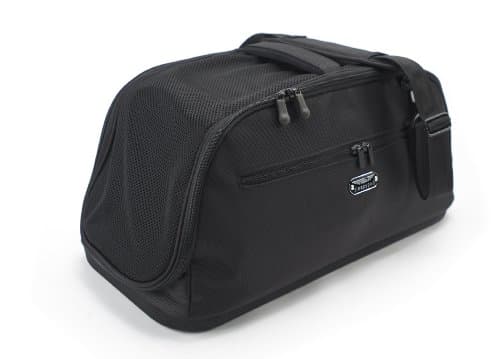
| 1 | Sleepypod Air The only carrier here with an independent crash certification attached to a published weight limit, and the only one whose length compresses from 22 inches to 16 to meet an under-seat space. | A cat that travels in a car or a cabin | 8.9 | |
| 2 | 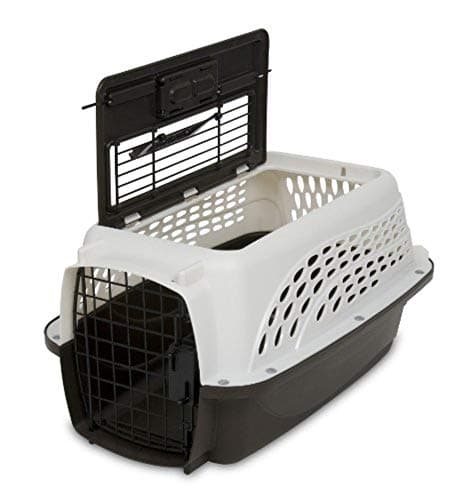 Petmate Two Door Top Load Kennel, 19 inch A hard shell with a top door, which is the single feature that decides whether loading a frightened cat is a two-minute job or a twenty-minute one. | The vet trip with a cat that will not walk in | 7.6 | |
| 3 | 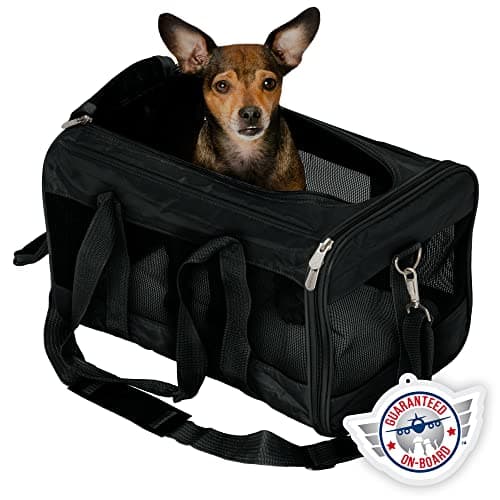 Sherpa Original Deluxe The spring wire frame lets the back end press down into an under-seat space, and the small and medium sizes carry Sherpa's own Guaranteed On Board program -- which is a commercial promise, not an aviation rule. | Flying, when the airline is the constraint | 7.8 |
#ad Buy links are affiliate links. Prices come from a live daily check; where we have no verified price we say "check price" rather than print a stale one.
A carrier gets bought once and used at the worst moments. It is worth ten minutes on the specification, because these three products are not competing — they are built for three different journeys.
Three jobs, three carriers
| Carrier | Interior | Pet weight | Crash certified |
|---|---|---|---|
| Sleepypod Air | 15 to 21" L x 9.5" W x 9.5" H | 18 lb | Yes, Center for Pet Safety, to 18 lb |
| Petmate Two Door, 19 in | 16.75" L x 11" W x 9.25" H | 10 lb | Not published |
| Sherpa Original Deluxe | Not published; pet-size figures only | 8 lb (S), 16 lb (M), 22 lb (L) | Not published |
Interior dimensions are the manufacturers' own where published. Sherpa publishes maximum pet dimensions rather than carrier interior, which is a different measurement.
The top door is the feature
Nothing on a spec sheet predicts a bad morning as well as the door layout. A cat that does not want to go in a carrier will brace all four legs against the opening of a front-loading one, and there is no technique that beats physics from that angle.
A top opening reverses the problem: the cat is lifted and lowered rather than pushed. Cornell Feline Health Center makes the same point in its carrier guidance, noting how much easier handling becomes when the top comes off or opens. The Petmate Two Door is here for that reason and largely that reason — its published 10 lb weight figure is modest, and the top door still earns it a place.
Crash certification is a real, checkable thing
“Safe” on a pet product listing usually means nothing. A Center for Pet Safety certification means an independent body ran the carrier through dynamic crash tests and published a result against a stated weight. Sleepypod publishes exactly that: a top rating for pets weighing up to 18 lb.
Two things follow. First, above 18 lb the certification does not apply — it is not a soft limit. Second, an uncertified soft carrier resting on a seat is luggage, not a restraint, and should be belted or footwell-placed on that basis.
What compressing a carrier actually removes
Sleepypod publishes an interior of 15 to 21 inches long. The spring frame lets the rear compress to meet an under-seat space, and that removes 6 of 21 inches — 29 percent of the cat’s floor length.
Sherpa uses the same idea with a patented spring wire that presses the rear end down several inches. Both are legitimate engineering. Both mean the same thing for the cat: compress it at the gate, not for the whole journey.
On the phrase “airline approved”
It has no fixed meaning. Every airline publishes its own under-seat dimensions, they vary by aircraft within the same airline, and the person applying them is a gate agent with a tape measure.
Sherpa’s Guaranteed On Board is the most concrete thing in this space, and it is worth being precise about what it is: Sherpa’s own program, covering its small and medium sizes only, with the large size excluded. It is a commercial guarantee from a manufacturer. It is not a rule any airline is bound by. Check your carrier against your airline’s published figures for your aircraft, every time.
Two cats, one carrier
The temptation is understandable and the answer is no. Every published weight limit on this page is for one animal, the crash certification is for one animal, and two cats in a confined space during a stressful event is how a bonded pair stops being a bonded pair.
Two carriers also solves a problem you have not met yet: at the vet, one cat comes back smelling of the clinic, and having somewhere separate to put it while that fades prevents a fight at home. Our reintroduction guide covers why that happens.
The picks in full
Specs are the manufacturer's own, linked to the page they came from. Prices come from a live daily check; where we have no verified price we say so rather than print a stale one.
Sleepypod Air
Sleepypod · Cat carrier · Our score 8.9/10
#ad Price as of October 21, 2026. Prices move; we check daily. How we're funded.
The only carrier here with an independent crash certification attached to a published weight limit, and the only one whose length compresses from 22 inches to 16 to meet an under-seat space.
Published specs
| Exterior | 16 to 22" L x 10.5" W x 10.5" H |
|---|---|
| Interior | 15 to 21" L x 9.5" W x 9.5" H |
| Maximum pet weight | 18 lb (8 kg) |
| Carrier weight | 4.5 lb with privacy shield, 4.9 lb with shoulder strap |
| Safety | Crash-tested and certified by the Center for Pet Safety for pets up to 18 lb |
| Shell | Luggage-grade ballistic nylon, rip-stop mesh on four sides |
| Bedding | Removable machine-washable Ultra Plush |
Interior runs 15 to 21 inches. Compressing to fit an under-seat space removes 6 of 21 inches, 29 percent of the cat's floor length. A cat that is comfortable at 21 inches is folded at 15 -- so compress it on the aircraft, not for the whole trip.
What the specs favor
- Independent crash certification tied to a published weight limit
- Interior dimensions published, not just exterior
- Mesh on four sides, which is what international carriage rules tend to ask for
- Washable bedding included rather than sold separately
What they don't
- 18 lb published ceiling rules out large breeds
- 4.5 lb empty is heavy before the cat goes in
- Compressed length is a real reduction in the cat's space, not a design trick
Your cat is over 18 lb. That figure is both the manufacturer's limit and the boundary of the crash certification, so exceeding it discards the main reason to buy this carrier.
How it scores
Scores are our editorial weighting of the published specs above, not a test result. They are deliberately kept out of this page's structured data.
Petmate Two Door Top Load Kennel, 19 inch
Petmate · Cat carrier · Our score 7.6/10
#ad Price as of October 21, 2026. Prices move; we check daily. How we're funded.
A hard shell with a top door, which is the single feature that decides whether loading a frightened cat is a two-minute job or a twenty-minute one.
Published specs
| Exterior | 19.4" x 12.8" x 10" |
|---|---|
| Interior | 16.75" L x 11" W x 9.25" H |
| Published pet weight | Up to 10 lb |
| Carrier weight | 3.8 lb |
| Doors | Front steel door and top opening |
| Material | EcoTEC plastic, minimum 90 percent pre-consumer recycled |
| Assembly | Wing-nut and bolt |
Petmate: 16.75 x 11 x 9.25 = 1,705 cubic inches. Sleepypod Air at full extension: 21 x 9.5 x 9.5 = 1,894. Close -- but the Petmate is wider and shorter, and width is what a cat turning around actually needs.
What the specs favor
- Top loading, so a cat can be lowered in rather than pushed in
- Interior dimensions published, which soft carriers often omit
- Rigid shell does not collapse when a cat braces against it
- 90 percent recycled content published
What they don't
- Published for pets up to 10 lb, which is under the average adult cat
- Wing-nut assembly loosens and wants checking before each trip
- Hard shell does not compress for an under-seat space
Your cat is over 10 lb and the trip is long. Petmate publishes that figure for the 19 inch size, and the larger sizes exist for a reason.
How it scores
Scores are our editorial weighting of the published specs above, not a test result. They are deliberately kept out of this page's structured data.
Sherpa Original Deluxe
Sherpa · Cat carrier · Our score 7.8/10
#ad Price as of October 21, 2026. Prices move; we check daily. How we're funded.
The spring wire frame lets the back end press down into an under-seat space, and the small and medium sizes carry Sherpa's own Guaranteed On Board program -- which is a commercial promise, not an aviation rule.
Published specs
| Small | 15" L x 10" W x 8.5" H, pets up to 8 lb |
|---|---|
| Medium | Pets up to 16 in long and 10 in tall, up to 16 lb |
| Large | Pets up to 18 in long and 11 in tall, up to 22 lb |
| Frame | Patented spring wire, rear end presses down several inches |
| Guaranteed On Board | Small and medium only; large is not in the program |
Sherpa publishes 8 lb for the small and 16 lb for the medium. A 12 lb cat is above the small's published limit by half again. People buy the small because it fits more under-seat spaces, and then find the published figure was the honest one.
What the specs favor
- Compresses at the rear to meet a published under-seat height
- Three sizes with a published pet weight for each
- Sherpa's own on-board guarantee covers the two smaller sizes
- Soft sides are far lighter than a comparable hard shell
What they don't
- Guaranteed On Board is Sherpa's program, not an airline rule -- the airline still decides
- Large size sits outside the guarantee entirely
- Soft sides give a determined cat something to push against
You want a carrier that doubles as car restraint. This one has no crash certification, and a soft carrier on a seat is not a restraint.
How it scores
Scores are our editorial weighting of the published specs above, not a test result. They are deliberately kept out of this page's structured data.
Common questions
What is the best cat carrier?
Should a cat carrier open from the top?
What size carrier does my cat need?
Are soft or hard cat carriers better?
Is a carrier airline approved?
Sources
- Sleepypod -- Sleepypod Air product page (16-22 x 10.5 x 10.5 in exterior, 15-21 x 9.5 x 9.5 in interior, 18 lb, Center for Pet Safety certified)
- Petmate -- Two Door Top Load Kennel, 19 in (19.4 x 12.8 x 10 in exterior, 16.75 x 11 x 9.25 in interior, up to 10 lb)
- Sherpa -- Original Deluxe Travel Pet Carrier listing (small 15 x 10 x 8.5 in up to 8 lb, medium up to 16 lb, large up to 22 lb)
- Cornell Feline Health Center -- Do I Need a Cat Carrier?
Read next
- Best Travel Cat Litter Boxes (2026)
Portable litter boxes compared on published dimensions and liner construction, with the road-trip routine that goes with them.
- How to Size a Cat Carrier
The two measurements to take off your cat, and how to compare them against published interior and exterior carrier dimensions.
- Best Cat Harnesses (2026)
Three cat harnesses compared on published girth ranges, closure type and the escape mechanics that decide whether any of it matters.
- How to Introduce a New Cat
A staged cat introduction, the resource counts to have in place first, and the gear each stage actually needs.
- Best Cat Beds (2026)
Cat beds compared on the measurement that matters -- usable interior, not outside diameter -- with the rim arithmetic shown.
- Sleepypod Air vs Sherpa Original Deluxe
The crash-certified carrier against the cabin specialist, on published interiors, weight limits and what each guarantee actually covers.
- Best Top-Loading Cat Carriers (2026)
Carriers that open at the top, ranked on published opening type and dimensions, with the drawer design that answers the same problem another way.
- Traveling With a Cat by Car
Securing the carrier, building up with practice trips, and what a long drive actually needs -- including the stop rule that prevents escapes.
- Best Cat Carriers for Air Travel (2026)
Three cabin carriers on published interiors, compressed lengths and weight limits, with the airline caveat stated plainly rather than buried.
- Best Crash-Tested Cat Carriers (2026)
Crash-test claims checked against the certifier's own list, with the weight ceiling that bounds every certification -- and the listings that quietly exceed it.