Beds, Carriers & Daily Care
Best Top-Loading Cat Carriers (2026)
Almost every bad carrier moment comes from the same thing: a cat being pushed head first through a hole about the size of the cat.
Affiliate disclosure: we earn a commission if you buy through our links, at no extra cost to you. It never changes which product we rank first — here is how we're funded.
Everyone in this category says they tested twenty litter boxes. We have not tested any, and we say so. What we do instead: compile the published specs, read the manuals, and do the arithmetic on what this gear costs to run and how it behaves once there is more than one cat using it. Every spec is linked to the document it came from. Prices are checked daily — last verified September 25, 2026. Here is exactly how we pick.
Quick picks
Ranked on the published specs and the arithmetic below. Tap any row to jump to the full write-up. We have not tested these — here is exactly how we pick.
| # | Product | Best for | Score | Price |
|---|---|---|---|---|
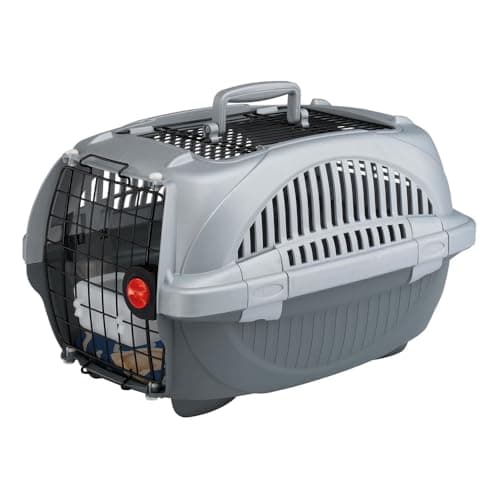
| 1 | Ferplast Atlas 20 Deluxe Open The roof itself opens on a plastic-coated steel grid, so the whole top comes away rather than a hatch -- the widest published opening of any carrier we list. | Lowering a cat in through a full-width roof | 8.1 | |
| 2 | 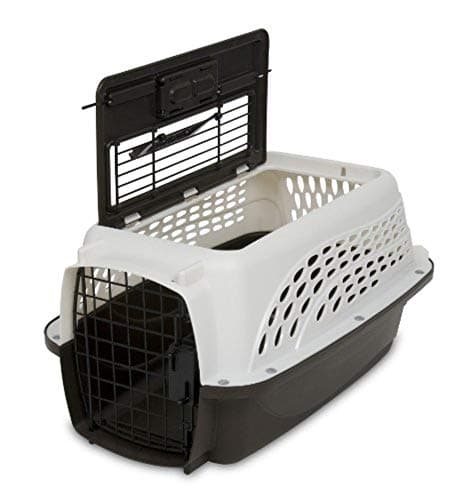 Petmate Two Door Top Load Kennel, 19 inch A hard shell with a top door, which is the single feature that decides whether loading a frightened cat is a two-minute job or a twenty-minute one. | The vet trip with a cat that will not walk in | 7.6 | |
| 3 | 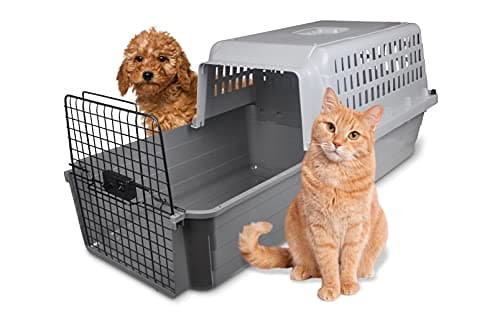 Van Ness Calm Carrier with E-Z Load Sliding Drawer Not a top-loader at all: the floor slides out like a drawer, the cat is placed on it, and the drawer slides back in. The door cannot open until the drawer comes out. | The cat that has to be lowered rather than pushed | 7.9 | |
| 4 | 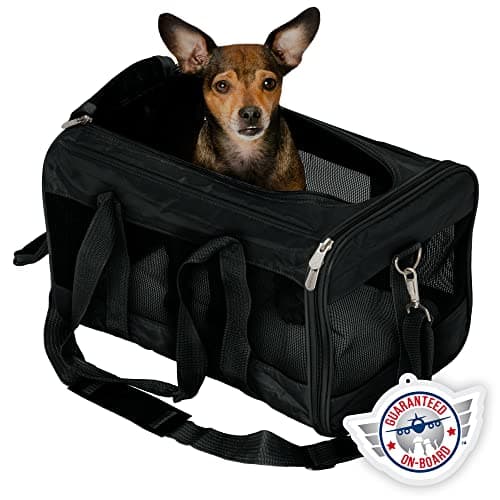 Sherpa Original Deluxe The spring wire frame lets the back end press down into an under-seat space, and the small and medium sizes carry Sherpa's own Guaranteed On Board program -- which is a commercial promise, not an aviation rule. | Flying, when the airline is the constraint | 7.8 |
#ad Buy links are affiliate links. Prices come from a live daily check; where we have no verified price we say "check price" rather than print a stale one.
The hardest thirty seconds of any vet trip is the loading. It is also the part a carrier design can actually fix, and the fix has been available for years.
Why the opening decides everything
A front-loading carrier asks a cat to walk forwards into a small dark box. When it declines, the usual next move is to push -- and a cat can brace all four legs against the opening. That is the moment people end up tipping the carrier on its end and posting the cat in tail first.
An opening at the top changes the physics. You lower the cat, gravity helps rather than fights, and you can keep a hand on the shoulders the whole way down. The Cornell Feline Health Center recommends choosing a carrier that opens from the top for this reason, alongside leaving it out at home so it is familiar rather than a signal.
What we ranked on
This is a small category with thin published specifications, so the criteria are deliberately simple and all of them are checkable before you buy:
- How it opens. A full opening roof, a top hatch, or a drawer. These are genuinely different products and the marketing word “top load” covers all three.
- How big the opening is relative to the carrier. A hatch you still have to angle a cat through has solved half the problem.
- Whether the interior is published, not just the exterior. Our sizing guide exists because the outside of a carrier overstates the inside by a couple of inches.
- A published pet weight limit. It is the one number that tells you the maker thought about load at all.
- Latch security. Spring latches and locking zippers, not friction.
- Whether it cleans. Hard plastic wipes out; fabric needs a machine.
What the four publish
| Product | How it opens | Dimensions | Published pet weight |
|---|---|---|---|
| Ferplast Atlas 20 Deluxe Open | Full opening roof, steel grid, plus front door | 57 x 37 x 33 cm (about 22.4 x 14.6 x 13 in) | Up to 8 kg (about 17.6 lb) |
| Petmate Two Door Top Load, 19 in | Top opening plus front steel door | Exterior 19.4" x 12.8" x 10"; interior 16.75" x 11" x 9.25" | Up to 10 lb |
| Van Ness Calm Carrier | Sliding E-Z Load drawer -- not a top door | About 20" x 14" x 13" | 20 lb (Amazon listing) or 25 lb (Van Ness store) |
| Sherpa Original Deluxe | Top and side zip entries, locking zippers | Small 15" x 10" x 8.5"; three sizes | 8, 16 and 22 lb by size |
Manufacturers' and retailers' published figures. Only Petmate publishes an interior dimension, which is the figure that decides whether a cat fits.
The opening, measured
The Atlas opens along the whole length of its roof, so the gap you lower a cat through is close to the carrier’s own footprint: about 22.4 by 14.6 inches.
A front door on a carrier this size is roughly a 10 inch square. An average cat is wider than that across the shoulders once it braces.
So the roof gives you somewhere around three times the opening area, and more importantly it is an opening you can use from directly above, with the cat facing away from you.
The picks
The Ferplast Atlas 20 Deluxe Open is the pick, because it is the one carrier here whose top genuinely comes away. The grid roof means a cat can see out on the way to the clinic, the shell is recycled plastic that wipes clean, and a feeder and washable cushion come in the box. The honest cons: Ferplast publishes only external dimensions, so you cannot check the interior against your cat before buying; there is no published crash testing; and the rim clips are the part that wears with heavy use.
The Petmate Two Door Top Load is the one that publishes what the others do not: an interior of 16.75 by 11 by 9.25 inches against a 19.4 inch exterior. That single figure is why it stays on this list. It is a hatch rather than a full roof, and the steel front door with an easy-squeeze latch is solid. The honest cons: the published pet weight is 10 lb, which rules out a lot of adult cats; the top opening is smaller than the Atlas’s; and the wing-nut assembly needs checking after a few trips.
The Van Ness Calm Carrier is on this page under a caveat: it is not a top-loader. The base slides out like a drawer, the cat is placed on it, and the drawer slides back in -- and the door cannot be opened until it does. For a cat that fights being lifted and lowered, that is often the better answer, and clinics can examine a cat in the open drawer. The honest cons: the roof does not open; retailers publish conflicting weight limits, 20 lb on the Amazon listing against 25 lb on Van Ness’s own store; and no interior dimension is published anywhere we could find.
The Sherpa Original Deluxe is the soft-sided option, and it does open at the top: Sherpa publishes top and side zippered entries with locking zippers so a cat cannot paw them open. It is the one here suited to cabin travel, and our Sleepypod against Sherpa page covers that comparison properly. The honest cons: soft sides give a determined cat something to push against, there is no published crash testing, and the Guaranteed On Board program covers only the two smaller sizes -- the airline still decides.
Using the opening properly
- Set the carrier down first, open, before you pick the cat up. Fumbling a latch one-handed with a cat under your arm is how loading goes wrong.
- Lower rear end first, with the cat facing away from you. A cat that cannot see the opening cannot aim for the edge of it.
- Keep a hand on the shoulders until the paws are down.
- Close the top before you congratulate yourself.
- Leave the carrier out at home the rest of the time. Cornell’s guidance and ours agree: a carrier that only appears before a vet trip becomes a warning sign. Our loading guide has the longer version.
What none of them publish
Not one carrier on this page publishes crash testing. That is normal for the category and worth knowing: in our main carrier roundup, published safety evidence is a separate ranking axis, and the only product that scores well on it is a front-loading soft carrier with an independent certification. If car safety outranks loading ease for you, that is the trade to make deliberately.
- No interior dimensions from Ferplast, Van Ness or Sherpa -- only Petmate.
- No crash testing from any of the four.
- Conflicting weight limits between retailers on the Van Ness.
The picks in full
Specs are the manufacturer's own, linked to the page they came from. Prices come from a live daily check; where we have no verified price we say so rather than print a stale one.
Ferplast Atlas 20 Deluxe Open
Ferplast · Top-loading cat carrier · Our score 8.1/10
#ad Price as of September 25, 2026. Prices move; we check daily. How we're funded.
The roof itself opens on a plastic-coated steel grid, so the whole top comes away rather than a hatch -- the widest published opening of any carrier we list.
Published specs
| External dimensions | 57 x 37 x 33 cm (about 22.4 x 14.6 x 13 in) |
|---|---|
| Published pet weight | Up to 8 kg (about 17.6 lb) |
| Top | Opening roof with a plastic-coated steel grid |
| Front | Door with grid |
| Ventilation | Grills on the side walls |
| Included | Plastic feeder and a washable cotton cushion |
| Material | Recycled plastic |
| Interior dimensions | Not published |
The Atlas opens along the full length of the roof, so the opening is close to the carrier's own 22.4 by 14.6 inch footprint. A front door is a hole roughly 10 inches square that a cat has to be posted through lengthways. That is the difference between lowering a cat in and pushing one in.
What the specs favor
- Full-width opening roof rather than a small top hatch
- Published weight limit and external dimensions
- Grid roof means the cat can see out and be seen on the way to the vet
- Feeder and washable cushion included
What they don't
- Interior dimensions are not published, only the exterior
- No published safety or crash testing
- Plastic clips around the rim wear with heavy use
- 8 kg is a modest ceiling for a very large cat
Your cat weighs more than about 17 lb. Ferplast publishes 8 kg, and a carrier used beyond its stated limit is a carrier you cannot rely on.
How it scores
Scores are our editorial weighting of the published specs above, not a test result. They are deliberately kept out of this page's structured data.
Petmate Two Door Top Load Kennel, 19 inch
Petmate · Cat carrier · Our score 7.6/10
#ad Price as of September 25, 2026. Prices move; we check daily. How we're funded.
A hard shell with a top door, which is the single feature that decides whether loading a frightened cat is a two-minute job or a twenty-minute one.
Published specs
| Exterior | 19.4" x 12.8" x 10" |
|---|---|
| Interior | 16.75" L x 11" W x 9.25" H |
| Published pet weight | Up to 10 lb |
| Carrier weight | 3.8 lb |
| Doors | Front steel door and top opening |
| Material | EcoTEC plastic, minimum 90 percent pre-consumer recycled |
| Assembly | Wing-nut and bolt |
Petmate: 16.75 x 11 x 9.25 = 1,705 cubic inches. Sleepypod Air at full extension: 21 x 9.5 x 9.5 = 1,894. Close -- but the Petmate is wider and shorter, and width is what a cat turning around actually needs.
What the specs favor
- Top loading, so a cat can be lowered in rather than pushed in
- Interior dimensions published, which soft carriers often omit
- Rigid shell does not collapse when a cat braces against it
- 90 percent recycled content published
What they don't
- Published for pets up to 10 lb, which is under the average adult cat
- Wing-nut assembly loosens and wants checking before each trip
- Hard shell does not compress for an under-seat space
Your cat is over 10 lb and the trip is long. Petmate publishes that figure for the 19 inch size, and the larger sizes exist for a reason.
How it scores
Scores are our editorial weighting of the published specs above, not a test result. They are deliberately kept out of this page's structured data.
Van Ness Calm Carrier with E-Z Load Sliding Drawer
Van Ness · Drawer-loading cat carrier · Our score 7.9/10
#ad Price as of September 25, 2026. Prices move; we check daily. How we're funded.
Not a top-loader at all: the floor slides out like a drawer, the cat is placed on it, and the drawer slides back in. The door cannot open until the drawer comes out.
Published specs
| Dimensions | About 20" x 14" x 13" (retailers list 12 to 13 in height) |
|---|---|
| Max version | 24" L x 16.6" W x 15" H |
| Published pet weight | Up to 20 lb on the Amazon listing; Van Ness's own store lists up to 25 lb |
| Max version weight | Up to 35 lb |
| Loading | Sliding E-Z Load drawer, operated one-handed |
| Door | Heavy-gauge wire with an easy-squeeze latch |
| Ventilation | Flow-through on all four sides |
| Assembly | Tool-free, wingnuts and bolts included |
Getting a frightened cat out of a front-door carrier usually ends in tipping it up. With a drawer, the base slides out and the cat is already on a flat surface -- which is also why some clinics will simply examine a cat in the open drawer rather than pulling it out at all.
What the specs favor
- Removes the forced push through a front door entirely
- Drawer works one-handed, which matters when the other hand holds a cat
- Ventilation published on all four sides
- Base and drawer nest inside the top for storage
What they don't
- It is a drawer, not a top door -- the roof does not open
- Retailers publish conflicting weight limits (20 lb against 25 lb)
- No interior dimensions published
- No published crash testing
You want to lower a cat straight down from above. That is a top-opening roof, and the Ferplast Atlas is the carrier that does it.
How it scores
Scores are our editorial weighting of the published specs above, not a test result. They are deliberately kept out of this page's structured data.
Sherpa Original Deluxe
Sherpa · Cat carrier · Our score 7.8/10
#ad Price as of September 25, 2026. Prices move; we check daily. How we're funded.
The spring wire frame lets the back end press down into an under-seat space, and the small and medium sizes carry Sherpa's own Guaranteed On Board program -- which is a commercial promise, not an aviation rule.
Published specs
| Small | 15" L x 10" W x 8.5" H, pets up to 8 lb |
|---|---|
| Medium | Pets up to 16 in long and 10 in tall, up to 16 lb |
| Large | Pets up to 18 in long and 11 in tall, up to 22 lb |
| Frame | Patented spring wire, rear end presses down several inches |
| Guaranteed On Board | Small and medium only; large is not in the program |
Sherpa publishes 8 lb for the small and 16 lb for the medium. A 12 lb cat is above the small's published limit by half again. People buy the small because it fits more under-seat spaces, and then find the published figure was the honest one.
What the specs favor
- Compresses at the rear to meet a published under-seat height
- Three sizes with a published pet weight for each
- Sherpa's own on-board guarantee covers the two smaller sizes
- Soft sides are far lighter than a comparable hard shell
What they don't
- Guaranteed On Board is Sherpa's program, not an airline rule -- the airline still decides
- Large size sits outside the guarantee entirely
- Soft sides give a determined cat something to push against
You want a carrier that doubles as car restraint. This one has no crash certification, and a soft carrier on a seat is not a restraint.
How it scores
Scores are our editorial weighting of the published specs above, not a test result. They are deliberately kept out of this page's structured data.
Common questions
Are top-loading cat carriers better?
What size opening should a top-loading carrier have?
Is a top-loading carrier airline approved?
Can the vet examine my cat in the carrier?
Top-loading or a sliding drawer?
Sources
- Ferplast -- Atlas 20 Deluxe Open Cat Carrier listing (57 x 37 x 33 cm, up to 8 kg, opening top with plastic-coated steel grid, feeder and cushion included)
- Petmate -- Two Door Top Load Kennel product page, 19 in (19.4 x 12.8 x 10 in exterior, 16.75 x 11 x 9.25 in interior, up to 10 lb)
- Van Ness Pets -- Calm Carrier product page (E-Z Load sliding drawer, heavy-gauge wire door, flow-through ventilation on four sides, tool-free assembly)
- Sherpa -- Original Deluxe Travel Pet Carrier listing (small 15 x 10 x 8.5 in up to 8 lb, medium up to 16 lb, large up to 22 lb)
- Sherpa -- Original Deluxe Travel Bag Pet Carrier product page (top and side zippered entries with locking zippers)
- Cornell Feline Health Center -- Your Cat Needs a Carrier
Read next
- Best Cat Carriers (2026)
Three carriers compared on published interior space, weight limits and crash certification -- and which of the three jobs each one is for.
- How to Size a Cat Carrier
The two measurements to take off your cat, and how to compare them against published interior and exterior carrier dimensions.
- How to Get a Cat Into a Carrier
Why top-loading carriers and a leave-it-out routine solve the carrier fight, plus what to do when there is no time to prepare.
- Sleepypod Air vs Sherpa Original Deluxe
The crash-certified carrier against the cabin specialist, on published interiors, weight limits and what each guarantee actually covers.
- Best Cat Carriers for Two Cats (2026)
A double carrier compared against two singles on published interior volume, safety evidence and what happens at the vet.