Scratchers & Furniture Protection
How to Repair a Scratching Post
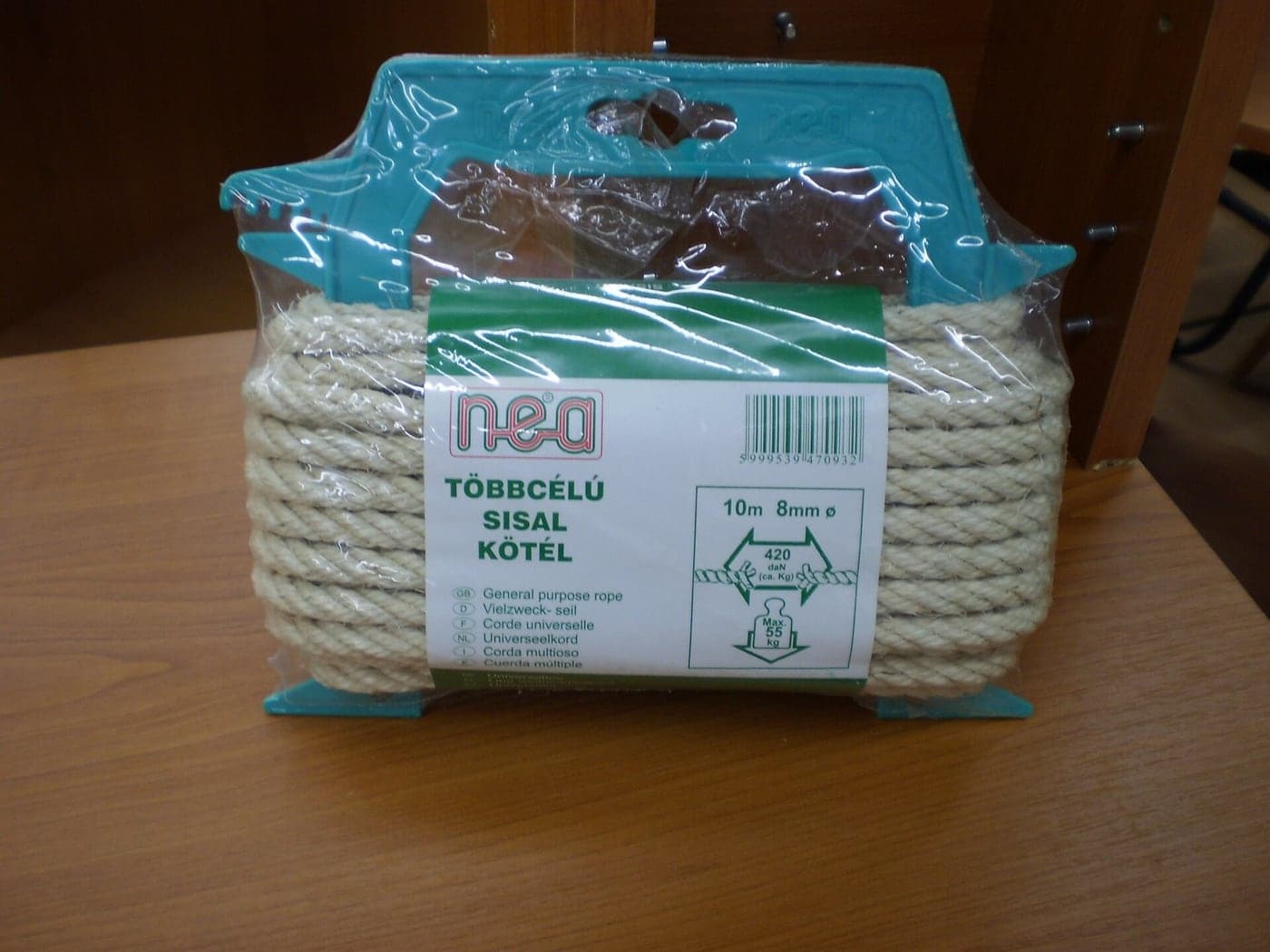
Sisal is a consumable and the post underneath it usually is not. Re-wrapping costs a few dollars and half an hour.
Affiliate disclosure: we earn a commission if you buy through our links, at no extra cost to you. It never changes which product we rank first — here is how we're funded.
Everyone in this category says they tested twenty litter boxes. We have not tested any, and we say so. What we do instead: compile the published specs, read the manuals, and do the arithmetic on what this gear costs to run and how it behaves once there is more than one cat using it. Every spec is linked to the document it came from. Prices are checked daily — last verified October 22, 2026. Here is exactly how we pick.
A scratching post is a consumable surface on a durable structure. Most people replace the whole thing when only the consumable has gone.
When to repair and when not
| Symptom | Verdict | Why |
|---|---|---|
| Sisal shredded, core showing | Re-wrap | The structure is intact; the rope is the consumable |
| Base bolt spins | Glue and dowel, then re-drill | Stripped hole, not a failed base |
| Post rocks even when tight | Replace | The base is too small for the height -- a design fault |
| Cardboard worn on both faces | Replace the insert | Reversible pads are meant to be flipped, then renewed |
Our triage. Only the third row is genuinely unrepairable, and it was a bad post to begin with.
Re-wrapping, step by step
- Strip it completely. Cut the old rope away and pull every staple. Anything left under the new wrap creates a lump the cat will catch a claw on.
- Measure and buy generously. Sisal rope is cheap and running out two turns from the bottom is a wasted afternoon. Match the diameter to the old rope.
- Fix the top end. Staple or tack it into the post so the fixing ends up under the following turns.
- Wrap downward under tension. Constant pull, each turn hard against the last. A loose wrap unravels the first time a cat pulls down through it, which is the whole load case.
- Fix the bottom end and tuck the tail under the previous turn before securing it.
- Run your hand over the whole surface. Find any protruding staple before the cat does.
A post built as a wrapped column on a wide base is designed for exactly this: the rope is the wearing part and the structure is not. That is the argument for buying a good post once rather than a cheap one repeatedly.
The base
A bolt grips particleboard by compressing fiber around the thread. Each tightening crushes that fiber further until there is nothing left to grip.
Repair: wood glue with a dowel or packed matchsticks, dried fully before re-drilling. Or a longer bolt with a washer reaching fresh material. Both work. Applying more force to a failed hole does not, and makes the next repair harder.
If the post rocks with every bolt tight, the base is simply too small for the height and no repair will change that. It is the same geometry our stability guide covers for trees.
Cardboard is a different economy
A reversible cardboard scratcher is not repairable and is not meant to be. It is designed to be flipped, which doubles the life of one purchase, and then to have the insert renewed. Our cardboard page works through why reversibility is the specification worth paying for in that format.
Wall boards sit in between: the sisal face wears, and on most of them it is not replaceable, so treat the board as a consumable and the fixings as the durable part.
The gear discussed here
Specs are the manufacturer's own, linked to the page they came from. Prices come from a live daily check; where we have no verified price we say so rather than print a stale one.
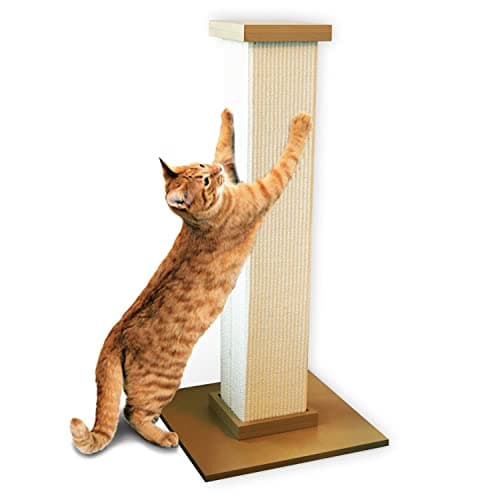
SmartCat Ultimate Scratching Post
Pioneer Pet · Scratching post · Our score 8.9/10
#ad Price as of October 22, 2026. Prices move; we check daily. How we're funded.
32 inches tall on a 16-inch square base in woven sisal -- tall enough for a full stretch, which is the single reason cats reject most posts.
Published specs
| Dimensions | 32" H x 16" W x 16" D |
|---|---|
| Base | 16" x 16" |
| Surface | Woven sisal fabric |
| Orientation | Vertical |
Source: Pioneer Pet -- #3832 The Ultimate Scratching Post product page
A large domestic cat stretched from front claws to hind feet runs roughly 30 inches. At 32 inches this post clears that; a typical 20-inch post from a pet-shop shelf does not, which is why the cat goes back to the sofa arm -- the sofa is tall enough and the post is not.
What the specs favor
- 32 inches is taller than the great majority of retail posts
- 16 x 16 inch base, which is what stops it rocking mid-scratch
- Woven sisal fabric rather than carpet, so it does not teach the cat that carpet is for scratching
- Nothing on it to wear out but the sisal
What they don't
- Only one scratching surface
- Vertical only, and some cats are horizontal scratchers
- Plain -- it looks like what it is
Your cat scratches the carpet rather than the furniture. That is a horizontal scratcher, and a vertical post will not redirect it.
How it scores
Scores are our editorial weighting of the published specs above, not a test result. They are deliberately kept out of this page's structured data.
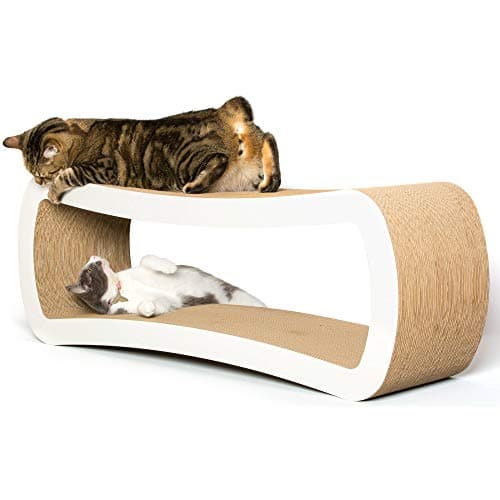
PetFusion Ultimate Cat Scratcher Lounge
PetFusion · Cardboard scratcher · Our score 8.0/10
#ad Price as of October 22, 2026. Prices move; we check daily. How we're funded.
34 inches of reversible corrugate -- the horizontal answer for the cat that is destroying carpet rather than furniture, and it doubles as somewhere to sleep.
Published specs
| Dimensions | 34" L x 10.5" W x 10.5" H |
|---|---|
| Weight | 7.5 lb |
| Material | Recycled cardboard, corn-starch glue |
| Reversible | Yes -- both sides scratchable |
Source: Chewy -- PetFusion Ultimate Cat Scratcher Lounge listing
Reversible means both faces are usable, so one lounge is two pads. Against the flat single-sided cardboard pads sold in threes, that is twice the surface before it goes in the recycling -- the entire economic argument for buying one good scratcher instead of a stack of cheap ones.
What the specs favor
- 34 inches long -- a cat can lie on it and scratch at the same time
- Reversible, doubling usable life
- Corn-starch glue, so nothing unpleasant when the cat chews the edge
- Wide enough that two cats occasionally tolerate sharing it
What they don't
- Cardboard sheds, and it sheds where the cat scratches
- Consumable by design -- it is a wear part
- Will not redirect a cat that scratches vertically
Your problem is the sofa arm. That is a vertical target and this is a horizontal product; the two are not interchangeable.
How it scores
Scores are our editorial weighting of the published specs above, not a test result. They are deliberately kept out of this page's structured data.
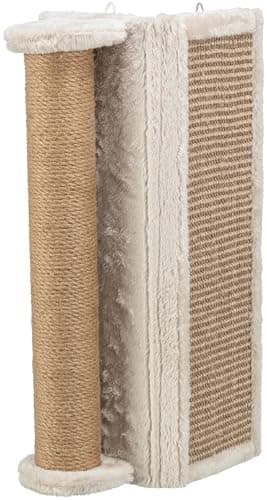
TRIXIE Wall Mount Sisal Scratching Board
TRIXIE · Wall-mounted scratcher · Our score 7.7/10
#ad Price as of October 22, 2026. Prices move; we check daily. How we're funded.
Under an inch thick and mountable in the exact corner a cat is already working on, which is the one placement rule our scratching pages keep coming back to.
Published specs
| Dimensions | 1" x 12.6" x 23.6" |
|---|---|
| Weight | 3.2 lb |
| Materials | MDF, sisal, plush polyester |
| Mounting | Wall hardware included; corner or flat wall |
| Suited to | Cats up to about 15 lb, per the listing |
The board is 1 inch deep and hangs on the wall, so its floor cost is nothing. It gives 23.6 inches of vertical scratch travel -- short of the 32 inches our posts page argues for a full adult stretch, but longer than most cardboard scratchers and available in places a post cannot stand.
What the specs favor
- No floor footprint at all, which no post can match
- Mounts in a corner, where cats often prefer to scratch
- Sisal over MDF is a rigid surface, so it does not flex under a pull
- Hardware included rather than sold separately
What they don't
- 23.6 inches is under the 32 inch full-stretch height for a large cat
- Needs a fixing into something solid, so it is not renter-friendly
- Fixed height, so it suits one cat's stretch rather than a household of sizes
Your cat scratches horizontally. Wall boards answer a vertical need, and a cat working on the carpet is telling you it wants the other orientation.
How it scores
Scores are our editorial weighting of the published specs above, not a test result. They are deliberately kept out of this page's structured data.
Common questions
Can you re-wrap a scratching post?
What rope do you use to re-wrap a cat scratching post?
Should you replace a shredded scratching post?
How do you fix a wobbly scratching post?
When should you throw away a cardboard scratcher?
Sources
- Pioneer Pet -- #3832 The Ultimate Scratching Post product page (32 in, 16 x 16 in base)
- Chewy -- PetFusion Ultimate Cat Scratcher Lounge listing
- TRIXIE -- Wall Mount Sisal Scratching Board for Corners (1 x 12.6 x 23.6 in, 3.2 lb, MDF / sisal / plush)
- Ohio State University Indoor Pet Initiative -- For Cat Owners
Read next
- Best Cat Scratching Posts (2026)
Ranked on the three published specs that predict whether a cat uses a post: height, base width and surface material.
- Sisal vs Cardboard Scratchers
Vertical sisal against horizontal cardboard: which damage each one fixes, what each costs over a year, and why most homes want both.
- How to Repair a Cat Tree
Re-wrapping sisal, fixing stripped bolt holes, and how to tell a repairable cat tree from a finished one.
- Best Cardboard Cat Scratchers (2026)
Why reversibility is the specification that matters on a consumable, plus the mess and placement realities nobody mentions.
- Why Cats Scratch
The four jobs scratching does for a cat, and what each one implies about where and what to provide.