Scratchers & Furniture Protection
Best Nail Filing Cat Scratchers (2026)
Filing takes the point off. Trimming takes the length off. Those are different problems and only one of them catches in your carpet.
Affiliate disclosure: we earn a commission if you buy through our links, at no extra cost to you. It never changes which product we rank first — here is how we're funded.
Everyone in this category says they tested twenty litter boxes. We have not tested any, and we say so. What we do instead: compile the published specs, read the manuals, and do the arithmetic on what this gear costs to run and how it behaves once there is more than one cat using it. Every spec is linked to the document it came from. Prices are checked daily — last verified September 25, 2026. Here is exactly how we pick.
Quick picks
Ranked on the published specs and the arithmetic below. Tap any row to jump to the full write-up. We have not tested these — here is exactly how we pick.
| # | Product | Best for | Score | Price |
|---|---|---|---|---|
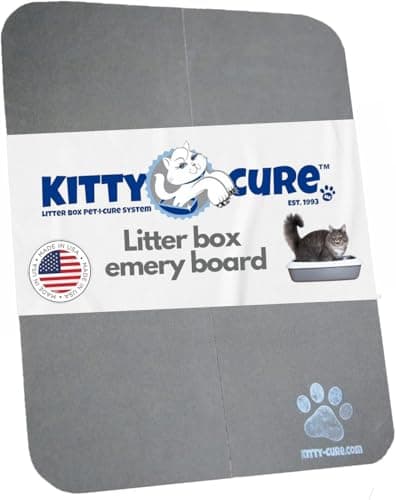
| 1 | Emery Cat Board A honeycomb surface that abrades claw tips as a cat scratches, at published dimensions -- and it is worth being precise about what abrading a tip does and does not achieve. | Blunting tips between trims, not replacing them | 6.7 | |
| 2 | 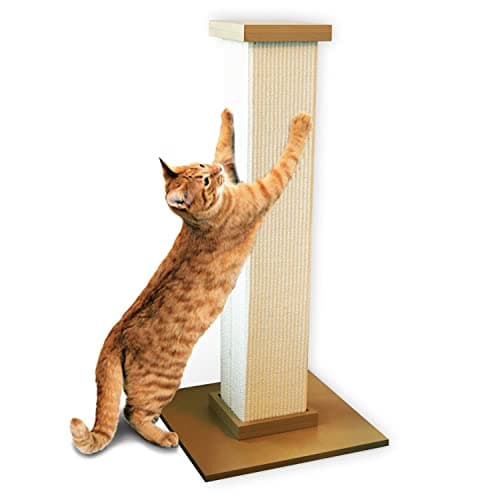 SmartCat Ultimate Scratching Post 32 inches tall on a 16-inch square base in woven sisal -- tall enough for a full stretch, which is the single reason cats reject most posts. | A cat that shreds the sofa arm | 8.9 | |
| 3 | 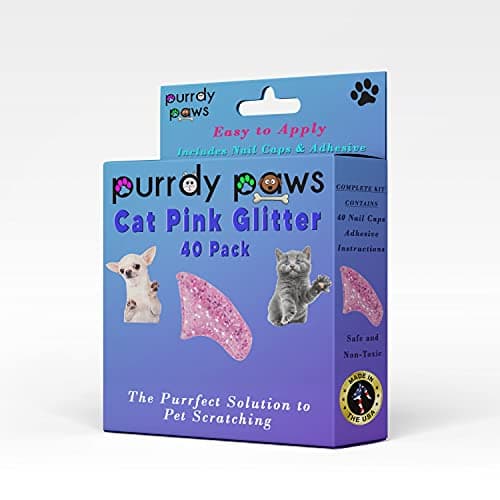 Soft Claws Cat Nail Caps Publishes a size chart by cat weight, an adhesive quantity per cap and a wear window in weeks, which makes it the only product in this category you can plan around. | Protecting a person, not the furniture | 7.3 |
#ad Buy links are affiliate links. Prices come from a live daily check; where we have no verified price we say "check price" rather than print a stale one.
This category is sold on a promise it cannot keep, which is a shame, because the product underneath the promise is a perfectly good scratcher.
Filing against trimming
A claw is a curved sheath growing from the toe. Trimming removes the end of that curve — the clear hook past the quick — and shortens the whole structure.
Filing abrades the surface of the point. The claw is the same length afterwards; it is just less sharp at the very end.
So the failure mode people actually complain about — claws catching in carpet and upholstery loops — is a length problem. A filing board does not address it, and the category's implication that you can stop cutting nails is not supported by the geometry.
What the board publishes
The Emery Cat Board publishes 18 by 12 by 2.25 inches, a patented honeycomb filing surface, an arch profile and catnip infusion. Two of those are genuinely good scratcher design regardless of the filing claim:
- The arch supports a stretch. A flat pad does not; our cardboard scratchers page covers why stretching is one of the four jobs scratching does.
- Catnip shortens the introduction for the roughly two cats in three that respond — Bol et al., BMC Veterinary Research, 2017 found one in three do not.
- 18 by 12 inches is a real footprint, enough for a cat to get its body over rather than just a paw.
- Horizontal only, which is the limitation. A vertical scratcher it is not.
Match the orientation to the cat
Cats hold a vertical or horizontal preference for life. A filing board is horizontal, so for a cat that works the sofa arm vertically it will sit unused however good the surface is.
A 32 inch vertical post on a 16 inch square base is the answer for that cat, and it is on this page because the honest recommendation for most households is a proper post first and a filing board second. Our why cats scratch page covers reading which kind of cat you have.
Where it fits in the stack
| Approach | Changes | Does not change | Effort |
|---|---|---|---|
| Filing scratcher | Sharpness of the tip | Claw length; the urge to scratch | None -- the cat does it |
| Nail clippers | Claw length | The urge to scratch | Every 2-4 weeks |
| Nail caps | What a scratch does to a surface | Claw length; the urge to scratch | Every 4-6 weeks |
Our comparison. Only the middle row addresses length, and none of the three addresses the behavior.
Nail caps are the heavier-duty option when a scratch is harming a person rather than a sofa, and our nail caps page is clear about the four-to-six-week commitment that comes with them.
The honest verdict
Buy a filing board as a second horizontal scratcher that has a useful side effect. It is a decent arch scratcher at a real size with catnip in it, and the abrasive surface is a bonus rather than a feature you should pay a premium for.
Do not buy it expecting to stop trimming. The Ohio State Indoor Pet Initiative frames scratching as maintenance and marking behavior that continues regardless of what the surface does to the claw, and the clippers stay in the drawer either way.
The picks in full
Specs are the manufacturer's own, linked to the page they came from. Prices come from a live daily check; where we have no verified price we say so rather than print a stale one.
Emery Cat Board
EmeryCat · Nail-filing scratcher · Our score 6.7/10
#ad Price as of September 25, 2026. Prices move; we check daily. How we're funded.
A honeycomb surface that abrades claw tips as a cat scratches, at published dimensions -- and it is worth being precise about what abrading a tip does and does not achieve.
Published specs
| Dimensions | 18" L x 12" W x 2.25" H |
|---|---|
| Surface | Patented honeycomb, files as the cat scratches |
| Shape | Arch, for stretching |
| Attractant | Catnip infused |
| Orientation | Horizontal |
Scratching sheds the worn outer sheath and an abrasive surface takes a little off the point. Neither shortens the claw the way a clipper does. So a filing board reduces how sharp a claw is without changing how long it is, and the marketing phrase 'no need to cut nails manually' overstates what the geometry can do.
What the specs favor
- Published dimensions, which cardboard scratchers often omit
- Arch shape supports a full stretch, which flat pads do not
- Horizontal orientation suits carpet-scratching cats
- Catnip infused, which shortens the introduction
What they don't
- Does not shorten claws -- our nail clipper page still applies
- Honeycomb surface wears and is not replaceable on most versions
- Horizontal only, so it does nothing for a cat that works vertically
- Effect depends entirely on the cat choosing to use it
You were hoping to stop trimming. Filing blunts a tip; a clipper shortens a claw, and an overgrown claw that catches in carpet is a length problem.
How it scores
Scores are our editorial weighting of the published specs above, not a test result. They are deliberately kept out of this page's structured data.
SmartCat Ultimate Scratching Post
Pioneer Pet · Scratching post · Our score 8.9/10
#ad Price as of September 25, 2026. Prices move; we check daily. How we're funded.
32 inches tall on a 16-inch square base in woven sisal -- tall enough for a full stretch, which is the single reason cats reject most posts.
Published specs
| Dimensions | 32" H x 16" W x 16" D |
|---|---|
| Base | 16" x 16" |
| Surface | Woven sisal fabric |
| Orientation | Vertical |
Source: Pioneer Pet -- #3832 The Ultimate Scratching Post product page
A large domestic cat stretched from front claws to hind feet runs roughly 30 inches. At 32 inches this post clears that; a typical 20-inch post from a pet-shop shelf does not, which is why the cat goes back to the sofa arm -- the sofa is tall enough and the post is not.
What the specs favor
- 32 inches is taller than the great majority of retail posts
- 16 x 16 inch base, which is what stops it rocking mid-scratch
- Woven sisal fabric rather than carpet, so it does not teach the cat that carpet is for scratching
- Nothing on it to wear out but the sisal
What they don't
- Only one scratching surface
- Vertical only, and some cats are horizontal scratchers
- Plain -- it looks like what it is
Your cat scratches the carpet rather than the furniture. That is a horizontal scratcher, and a vertical post will not redirect it.
How it scores
Scores are our editorial weighting of the published specs above, not a test result. They are deliberately kept out of this page's structured data.
Soft Claws Cat Nail Caps
Soft Claws · Nail caps · Our score 7.3/10
#ad Price as of September 25, 2026. Prices move; we check daily. How we're funded.
Publishes a size chart by cat weight, an adhesive quantity per cap and a wear window in weeks, which makes it the only product in this category you can plan around.
Published specs
| Pack | 40 caps and 2 tubes of adhesive |
|---|---|
| Kitten | Up to about 5 lb, about 5 months |
| Small | About 6 months, 6 to 8 lb |
| Medium | About 9 to 13 lb |
| Large | About 14 lb and up |
| Wear time | 4 to 6 weeks before reapplying |
| Removal | Remove manually if not shed by 8 weeks |
| Material | Vinyl; claws still extend and retract |
| Adhesive | Fill each cap one third full |
At a published 4 to 6 week wear window, a year needs 8.7 to 13 applications of up to 10 caps each. That is the commitment, and it is why nail caps suit a specific problem -- a person on blood thinners, a cat that has to stop scratching skin -- rather than being a general furniture answer.
What the specs favor
- Publishes sizes by cat weight, which almost no nail-cap brand does
- Publishes a wear window and a removal deadline
- Claws still extend and retract, so normal behavior continues
- Adhesive quantity per cap published, which is where most failed applications go wrong
What they don't
- Every 4 to 6 weeks, forever, on a cat that must tolerate paw handling
- Caps that stay past 8 weeks must be removed by hand, not left
- They do not stop the cat scratching -- they only blunt the result
- A cap over a claw that needed trimming first traps the overgrowth
You want the scratching itself to stop. Nail caps change what a scratch does to a surface; the need to scratch is unaffected, and a post is still required.
How it scores
Scores are our editorial weighting of the published specs above, not a test result. They are deliberately kept out of this page's structured data.
Common questions
Do nail filing cat scratchers work?
Can a scratcher replace nail trimming?
What is the Emery Cat board?
Are filing scratchers good for indoor cats?
Do filing scratchers work on cats that scratch vertically?
Sources
- EmeryCat -- Emery Cat Board listing (18 x 12 x 2.25 in, honeycomb filing surface, catnip infused)
- Pioneer Pet -- #3832 The Ultimate Scratching Post product page (32 in, 16 x 16 in base)
- Soft Claws -- Cat Nail Caps listing (40 caps, sizes by cat weight, 4-6 weeks wear)
- Ohio State University Indoor Pet Initiative -- For Cat Owners
Read next
- Best Cardboard Cat Scratchers (2026)
Why reversibility is the specification that matters on a consumable, plus the mess and placement realities nobody mentions.
- Best Cat Nail Clippers (2026)
Cat nail clippers compared, why blade size is the safety feature, and a handling routine that makes trimming possible.
- Best Cat Nail Caps (2026)
Nail caps compared on published sizing and wear window, who they genuinely suit, and what they do not replace.
- Why Cats Scratch
The four jobs scratching does for a cat, and what each one implies about where and what to provide.
- Best Cat Scratching Posts (2026)
Ranked on the three published specs that predict whether a cat uses a post: height, base width and surface material.