Litter & Litter Tech
Best Cat Litter for Kittens (2026)
A kitten that still puts litter in its mouth needs a substrate that cannot form a clump, and roughly four months later it does not.
Affiliate disclosure: we earn a commission if you buy through our links, at no extra cost to you. It never changes which product we rank first — here is how we're funded.
Everyone in this category says they tested twenty litter boxes. We have not tested any, and we say so. What we do instead: compile the published specs, read the manuals, and do the arithmetic on what this gear costs to run and how it behaves once there is more than one cat using it. Every spec is linked to the document it came from. Prices are checked daily — last verified October 19, 2026. Here is exactly how we pick.
Quick picks
Ranked on the published specs and the arithmetic below. Tap any row to jump to the full write-up. We have not tested these — here is exactly how we pick.
| # | Product | Best for | Score | Price |
|---|---|---|---|---|
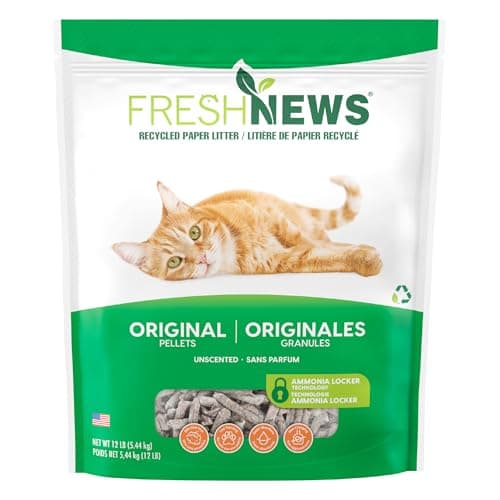
| 1 | Fresh News Original Pellet Paper Litter Recycled-paper pellets that cannot clump, publish an absorbency figure in liters rather than adjectives, and are the substrate most often named for kittens and post-surgical cats. | A kitten too young for clumping litter | 8.0 | |
| 2 | 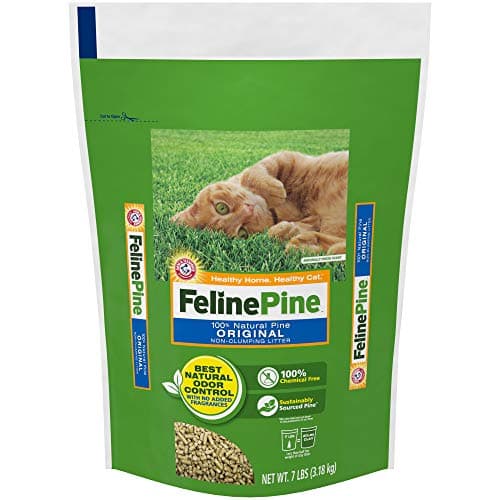 Feline Pine Original Reclaimed pine shavings that break down to sawdust rather than clumping, at less than half the weight of clay for the same volume. | A cat that reacts badly to clay dust | 7.0 | |
| 3 | 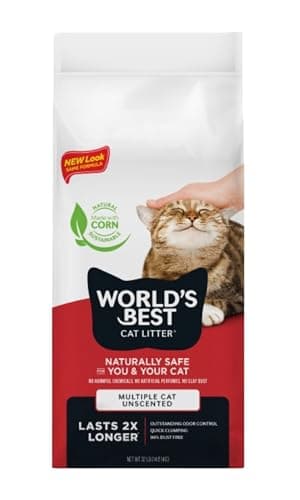 World's Best Cat Litter Multiple Cat Clumping Formula Whole-kernel corn rather than clay, which makes the bag light enough to carry up stairs and the litter light enough that a cat carries it out on its feet. | Lighter bags, multi-cat formula | 8.0 |
#ad Buy links are affiliate links. Prices come from a live daily check; where we have no verified price we say "check price" rather than print a stale one.
Buy Fresh News recycled-paper pellets for a kitten still in the mouthing stage — it cannot clump, publishes over 99 percent dust-free, and tells you its absorbency in liters rather than adjectives. Buy Feline Pine if the kitten reacts to clay dust. Move to World’s Best corn clumper once the kitten has stopped chewing the floor, somewhere past four months. The age threshold is the whole decision; the brand is secondary.
The one rule, and the one honest complication
A clumping litter works by forming a hard solid mass the moment it meets moisture. That is exactly the property you want in a scoop and exactly the property that makes people cautious about a very young kitten, which explores the world by putting it in its mouth and has not yet worked out that litter is not food.
So the conventional advice is simple: non-clumping until the kitten stops mouthing the substrate, usually around three to four months, then switch.
Why we rank the paper litter first
Not because paper is magic, but because it is the only litter on this site that publishes absorbency as a number you can plan with.
Fresh News publishes up to 15 L absorbed by a 12 lb bag and up to 30 L by a 25 lb bag.
15 / 12 = 1.25 L per pound. 30 / 25 = 1.20 L per pound.
Those two claims agree with each other to within four percent, which is a decent sign that somebody measured something. Compare it with the usual form of litter marketing — “absorbs 4x more” — which has no denominator and cannot be planned around at all.
It also publishes nearly three times the absorbency of clay, which is a comparative claim rather than a measurement, so we are quoting it as the maker’s wording rather than treating it as a figure.
The three substrates, on what each maker publishes
| Fresh News (paper) | Feline Pine Original (wood) | World's Best Multiple Cat (corn) | |
|---|---|---|---|
| Clumping | No | No | Clumps on contact |
| Material | 100% post-consumer recycled paper | 100% natural pine from reclaimed lumber | Whole-kernel corn, compressed granules |
| Published dust | Over 99% dust-free and non-allergenic | Minimal dust in use (maker's wording) | 99% dust-free |
| Published absorbency | 12 lb absorbs up to 15 L; 25 lb up to 30 L | Absorbs 4x more odor-causing liquid | Not published |
| Scent | Unscented; baking soda for odor | None added (pine smells of pine) | Unscented |
| Form | Pellets | Pellets that collapse to sawdust | Granules |
| Bag sizes | 4 lb, 12 lb, 25 lb | 7 lb, 20 lb, 40 lb | 28 lb equivalent |
| Published fill depth | Not published | At least 3 inches | Not published |
| Stage it suits | Mouthing kitten, from day one | Mouthing kitten with a clay reaction | After about four months |
Makers' and retailers' published figures as named in our sources. Dust percentages are not comparable between brands -- no maker publishes a test method.
The picks
Fresh News Original Pellet paper litter is the pick for a young kitten. It cannot clump, which is the entire specification that matters at this stage; it publishes over 99 percent dust-free and non-allergenic for a small airway; it is unscented with baking soda doing the odor work rather than perfume; and the large pellets track far less than clay granules out of a shallow kitten tray. The 4 lb bag is the right first purchase. The honest cons: non-clumping means you cannot lift urine out, so the box gets stripped rather than scooped and that is a bigger job more often; the pellets break down to a paper mush at the bottom; the dust and absorbency claims have no published test method; and some cats raised on fine clay dislike pellets underfoot.
Feline Pine Original is the pick if a clay litter has already produced sneezing or a reaction, or if you want the lightest bag on the shelf. Reclaimed pine, non-clumping, no added fragrance, less than half the weight of clay for the same volume, and it is one of the very few litters that publishes a fill depth — at least three inches — which is genuinely useful information nobody else gives you. The honest cons: the pine smell is strong and a minority of cats refuse it outright; pellets collapse to sawdust, which tracks differently rather than less; the “4x more odor-causing liquid” claim has no test behind it; and a three-inch fill is deep for a very small kitten to walk in.
World’s Best Multiple Cat Clumping Formula is the litter to switch to, not to start on. Once the kitten reliably uses the box and has stopped chewing the substrate, a clumping litter makes the daily job an order of magnitude easier, and this is the gentlest route into one: whole-kernel corn rather than mined clay, unscented, 99 percent dust-free, clumping on contact, and 28 lb to carry instead of 40. The honest cons: it is a clumping litter, so the timing is on you; 99 percent is the lowest published dust figure here; it costs more per pound than clay; and corn needs to be kept dry in storage.
Switching without losing the box
- Wait for the behavior, not the birthday. The signal is a kitten that no longer chews or bats litter around, not a date on a calendar.
- Mix, do not swap. A quarter new litter for a few days, then half, then most. The box should never feel completely unfamiliar on one day.
- Change one thing at a time. New litter and a new box in the same week is how a reliable kitten becomes an unreliable one.
- Keep the old box available. During the switch, two boxes with two substrates lets the kitten vote.
- Shallower than you think. An inch to an inch and a half while the kitten is small; judge by whether it can walk normally.
Our switching guide has the full schedule, and clumping against non-clumping covers the mechanism difference in detail.
The box matters at least as much
A kitten cannot use a box it cannot climb into, and the Ohio State Indoor Pet Initiative reports that cats generally prefer large uncovered boxes — which for a kitten means low-sided and open rather than hooded or top-entry. Get the box right and most litter problems do not arise. Our kitten litter box page ranks on entry height, and box training covers the first week.
For everything else a new kitten needs, the kitten shopping list is the one-page version.
The picks in full
Specs are the manufacturer's own, linked to the page they came from. Prices come from a live daily check; where we have no verified price we say so rather than print a stale one.
Fresh News Original Pellet Paper Litter
Fresh News · Paper litter · Our score 8.0/10
#ad Price as of October 19, 2026. Prices move; we check daily. How we're funded.
Recycled-paper pellets that cannot clump, publish an absorbency figure in liters rather than adjectives, and are the substrate most often named for kittens and post-surgical cats.
Published specs
| Material | 100 percent post-consumer recycled paper |
|---|---|
| Clumping | No |
| Scent | Unscented; odor control from added baking soda |
| Published absorbency | 12 lb bag absorbs up to 15 L; 25 lb bag up to 30 L |
| Against clay | Nearly three times the absorbency of clay (maker) |
| Dust | Over 99 percent dust-free and non-allergenic (maker) |
| Bag sizes | 4 lb, 12 lb, 25 lb |
| Made in | USA |
Fresh News is one of the only litters that publishes absorbency as a volume rather than a multiplier: 15 L from a 12 lb bag and 30 L from a 25 lb bag. Dividing gives 1.25 and 1.20 liters per pound -- close enough that the two claims are consistent with each other, which is more than can be said for most litter marketing. It is also a number you can plan a month around, unlike 'absorbs 4x more'.
What the specs favor
- Cannot clump, which is the whole point for a kitten that still mouths litter
- Publishes absorbency in liters, so a month's supply is arithmetic rather than guesswork
- Over 99 percent dust-free claim, relevant for a kitten's airways
- Unscented, with odor control from baking soda rather than fragrance
- Pellets are large and track far less than clay granules
What they don't
- Non-clumping, so urine cannot be lifted out and the box needs stripping more often
- Pellets break down to a paper mush at the bottom of the box
- The dust and absorbency claims have no published test method behind them
- A pellet size some cats dislike underfoot, especially cats raised on fine clay
Your kitten is past about four months, has stopped mouthing the litter and tolerates clay. At that point a clumping litter is the easier daily job and you can switch.
How it scores
Scores are our editorial weighting of the published specs above, not a test result. They are deliberately kept out of this page's structured data.
Feline Pine Original
Feline Pine · Wood litter · Our score 7.0/10
#ad Price as of October 19, 2026. Prices move; we check daily. How we're funded.
Reclaimed pine shavings that break down to sawdust rather than clumping, at less than half the weight of clay for the same volume.
Published specs
| Material | 100 percent natural pine from reclaimed lumber |
|---|---|
| Bag sizes | 7 lb, 20 lb, 40 lb |
| Clumping | No |
| Published absorbency | Absorbs 4x more odor-causing liquid |
| Weight | Less than half the weight of clay litter |
| Dust | Minimal dust in use (maker's wording) |
| Fragrance | None added |
| Fill depth | At least 3 inches |
A clumping litter lets you lift urine out as a solid. Pine pellets absorb it and collapse into sawdust that falls to the bottom of the box. That means sifting rather than scooping, and stripping the box more often than the three to four weeks our cleaning schedule assumes for clumping clay.
What the specs favor
- No added fragrance, which matters for a cat that has refused scented litter
- Less than half the weight of clay for the same volume
- Made from reclaimed lumber rather than mined clay
- Publishes a fill depth, which almost no litter does
What they don't
- Non-clumping, so urine cannot be lifted out and the box needs stripping more often
- Pellets collapse to sawdust, which tracks differently rather than less
- Pine scent is strong and some cats dislike it
- The 4x absorbency claim has no published test behind it
Your routine depends on scooping clumps. Switching to a non-clumping substrate is a change to the daily job, not just to the bag you buy.
How it scores
Scores are our editorial weighting of the published specs above, not a test result. They are deliberately kept out of this page's structured data.
World's Best Cat Litter Multiple Cat Clumping Formula
World's Best Cat Litter · Cat litter · Our score 8.0/10
#ad Price as of October 19, 2026. Prices move; we check daily. How we're funded.
Whole-kernel corn rather than clay, which makes the bag light enough to carry up stairs and the litter light enough that a cat carries it out on its feet.
Published specs
| Material | Whole-kernel corn |
|---|---|
| Scent | Unscented |
| Form | Compressed granules |
| Dust | 99 percent dust-free (maker) |
| Formulation | Multi-cat, with an added plant derivative for odor |
| Clumping | Clumps on contact |
Source: Chewy -- World's Best Multi-Cat Unscented Clumping Corn Litter listing
The multi-cat corn formula ships in a 28 lb bag against Dr. Elsey's 40 lb clay. Same job, 12 lb less to carry, because corn is less dense than clay -- and less dense is also why it tracks further.
What the specs favor
- Unscented, matching the documented preference
- Corn base is markedly lighter than clay per bag
- Clumps on contact rather than needing time to set
- Multi-cat formulation with an added plant derivative for odor
What they don't
- Light granules track further through the house than clay
- Corn attracts pantry pests if the bag is left open in a warm room
- Costs more per pound than commodity clay
Tracking is already your worst problem. Lighter granules travel further, and this is a lighter granule than any clay on this page.
How it scores
Scores are our editorial weighting of the published specs above, not a test result. They are deliberately kept out of this page's structured data.
Common questions
What litter is best for kittens?
Is clumping litter safe for kittens?
When can a kitten switch to normal cat litter?
Is dusty litter bad for kittens?
How deep should a kitten's litter be?
Sources
- Chewy -- Fresh News Unscented Non-Clumping Paper Cat Litter listing (100 percent post-consumer recycled paper, unscented with baking soda, over 99 percent dust-free and non-allergenic, 12 lb absorbs up to 15 L and 25 lb up to 30 L, nearly 3x the absorbency of clay, made in USA)
- Chewy -- Feline Pine Original Non-Clumping Wood Cat Litter listing (100 percent natural pine, 7/20/40 lb, absorbs 4x more odor-causing liquid, fill at least 3 in)
- Chewy -- World's Best Multi-Cat Unscented Clumping Corn Litter listing
- Dr. Elsey's -- Ultra Litter product page
- Dr. Elsey's -- Kitten Attract product page (clumping clay with a kitten-specific herbal attractant, ground to a granule size and texture for a kitten's paws, 100 percent bentonite, 99 percent dust-free, 20 lb). Noted on this page as the counter-example to blanket non-clumping advice; not stocked on Amazon at the time of writing, so it is cited rather than recommended.
- Cornell Feline Health Center -- feline health information
- Ohio State University Indoor Pet Initiative -- Litter Boxes
Read next
- Best Litter Boxes for Kittens (2026)
Kitten litter boxes compared on published entry height and floor size, with the case for buying the adult box on day one.
- Clumping vs Non-Clumping Cat Litter
An attribute-by-attribute comparison of clumping and non-clumping litter, and why multi-cat homes almost always want clumping.
- How to Switch Cat Litter
The gradual mix, the two-box method and the rule that keeps a failed switch diagnosable -- plus which litters cats accept most readily.
- How to Get a Cat to Use the Litter Box
The vet check first, then box height, litter texture, placement and count -- the causes of box refusal in the order worth testing them.
- New Kitten Shopping List
The first-week kitten list by category, with the buy-once rule and the few things that genuinely need to be kitten-sized.